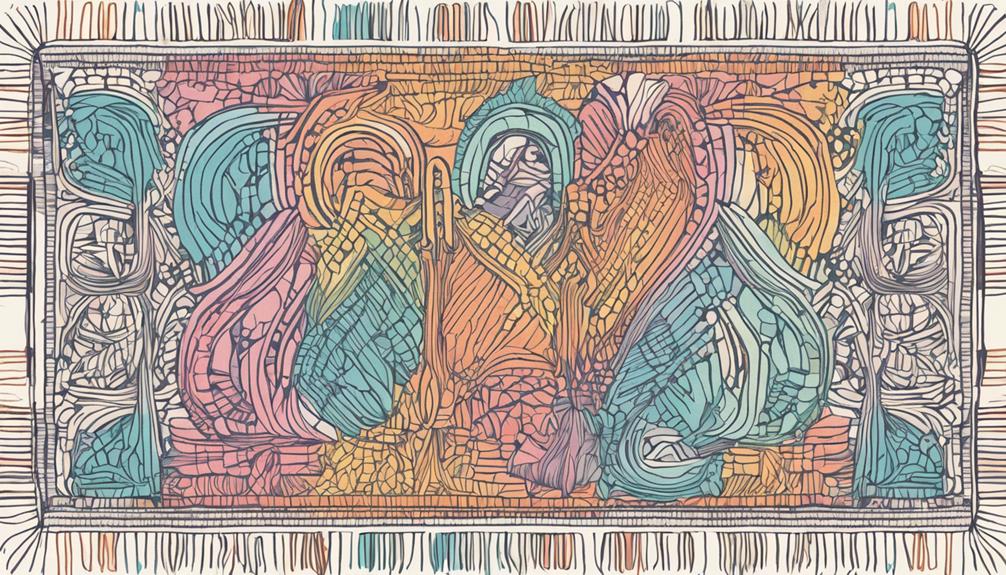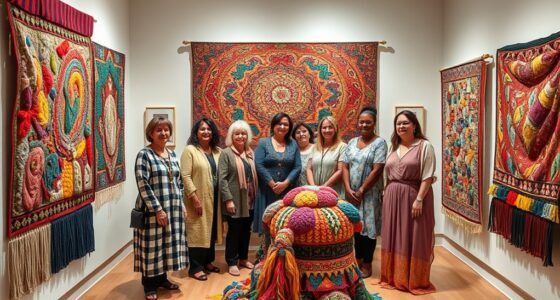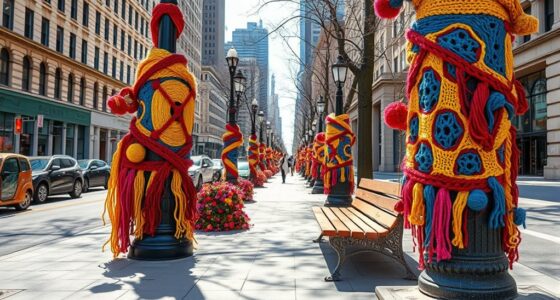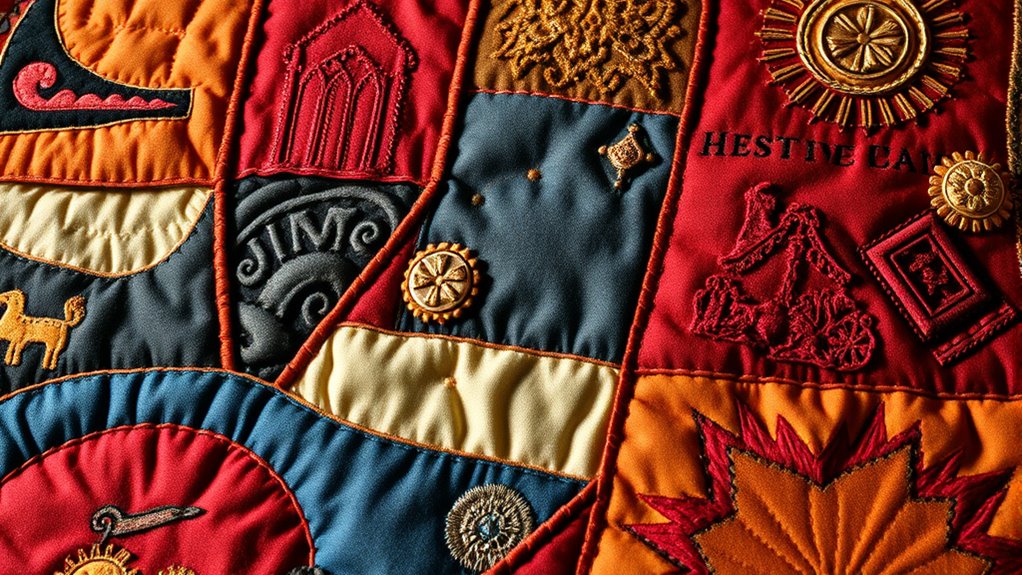

Quilting as art allows you to transform fabric into compelling visual stories that connect tradition with personal expression. Through techniques like appliqué, embroidery, and fabric painting, you can add depth and meaning to your quilts. Incorporating cultural symbols and motifs enhances storytelling and creates layered, impactful pieces. These quilts become more than cozy blankets—they serve as powerful art forms that reflect history, memory, and emotion. Keep exploring to discover how your fabric stories can inspire others.
Key Takeaways
- Story quilts use appliqué, embroidery, and fabric painting to create layered visual narratives.
- They incorporate cultural symbols, motifs, and colors to convey tradition and personal stories.
- Artistic techniques like fabric manipulation and contrasting patterns add depth and dimension.
- These quilts elevate functional craft into visual art, fostering emotional connections and interpretation.
- They serve as cultural artifacts, blending craftsmanship with storytelling to preserve history and inspire.
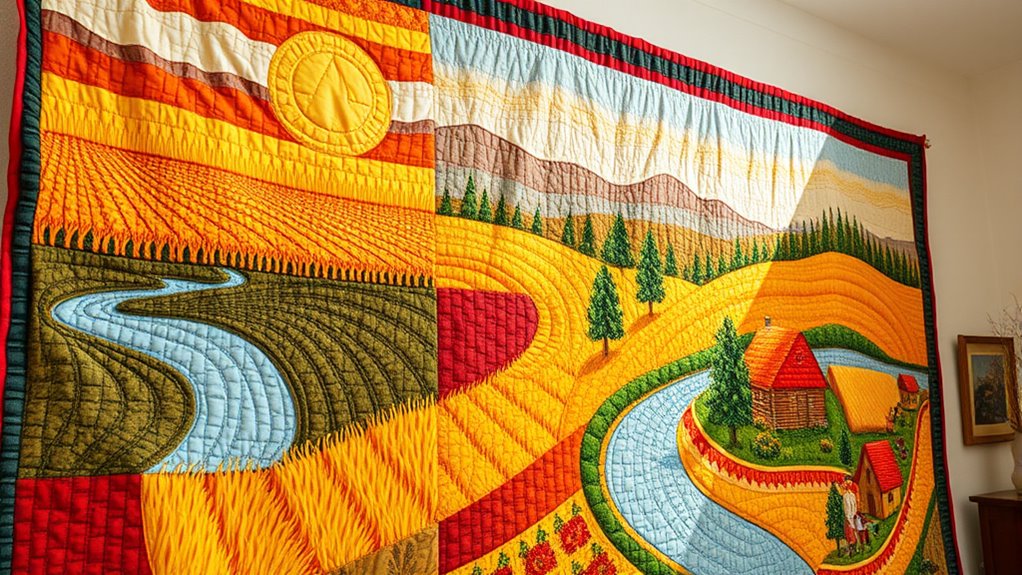
Have you ever considered quilting as more than just a craft? When you approach quilting as an art form, you reveal a world where every stitch can tell a story. Instead of merely creating cozy blankets, you start exploring artistic techniques that transform fabric into powerful visual narratives. The beauty of quilting as art lies in your ability to incorporate cultural symbolism, using motifs and patterns that speak to heritage, identity, and shared history. Each quilt becomes a canvas, blending traditional craftsmanship with personal expression. You can use bold colors, intricate piecing, and innovative textures to evoke emotions and memories, making your work not just functional but meaningful.
Discover quilting as an art form that tells stories through cultural symbolism and creative techniques.
As you delve into creating story quilts, you realize that artistic techniques are your tools for storytelling. Techniques like appliqué, embroidery, and fabric painting allow you to add depth and detail, turning a simple patchwork into a layered narrative. For example, you might use contrasting fabrics and dynamic quilting patterns to emphasize a pivotal moment or theme. The placement of each piece, the choice of stitches, and the variation in fabric textures all contribute to conveying a message or emotion. These artistic techniques elevate your quilt from a decorative item to a piece of visual art, inviting viewers to interpret and connect with your story. Incorporating fabric manipulation can further enhance the dimensionality and visual interest of your quilts.
Cultural symbolism plays a crucial role in crafting story quilts, offering a language that resonates across communities and generations. You can incorporate symbols, colors, and motifs that hold specific cultural significance, making your work a tribute to your heritage or a commentary on social issues. For instance, using certain patterns or colors might represent historical events, spiritual beliefs, or societal values. By weaving these symbols into your quilt, you create a layered artifact that communicates much more than its aesthetic appeal. It becomes a dialogue between tradition and personal experience, a tangible expression of cultural identity.
When you combine artistic techniques with cultural symbolism, your quilts transcend their fabric and thread. They become visual stories that honor the past, explore the present, and inspire future generations. Each stitch becomes a deliberate act of storytelling, and every pattern or symbol adds depth to the narrative. As you craft your story quilts, you’ll find that your work not only showcases your skills but also serves as a vessel for cultural memory and artistic expression. Ultimately, quilting as art invites you to transform fabric into a rich tapestry of meaning, emotion, and history—making each quilt a true work of storytelling art.
Frequently Asked Questions
How Do I Choose a Meaningful Story for My Quilt?
To choose a meaningful story for your quilt, start by reflecting on personal stories or cultural heritage that resonate deeply with you. Think about moments, traditions, or experiences that evoke strong emotions or connections. Consider what message you want to share or preserve. Your story should inspire passion and authenticity, guiding your design choices and ensuring your quilt becomes a powerful expression of your unique journey and cultural roots.
What Techniques Enhance the Artistic Quality of Story Quilts?
Using mixed media and fabric manipulation truly boosts your story quilts’ artistic appeal. You might test the theory that combining different textures and materials adds depth and intrigue to your work. Incorporate techniques like pleating, quilting, and layering fabrics, while adding elements like beads or paper. These methods create visual interest and tactile richness, making your story come alive. Experimenting with these techniques will elevate your quilt’s artistic quality markedly.
Can Digital Tools Be Used in Creating Story Quilts?
Yes, you can definitely use digital tools in creating story quilts. Digital embroidery software allows you to design intricate patterns and details before stitching, saving time and increasing precision. Virtual quilting programs let you plan layouts and experiment with fabrics digitally, helping you visualize your quilt before sewing. These tools enhance your creativity, streamline the process, and add a modern touch to your storytelling quilts.
How Do I Display and Preserve My Story Quilts?
To display and preserve your story quilts, you should choose suitable framing options like UV-protective glass or fabric backing to prevent damage. Hang your quilts in a cool, dry place away from direct sunlight, and use display lighting that highlights your quilt without causing fading. Regularly inspect for signs of wear, and consider professional conservation for long-term preservation, ensuring your quilt’s story remains vibrant for years to come.
Are There Specific Themes That Work Best for Story Quilts?
Think of your story quilt as a vivid garden, where themes bloom like colorful flowers. You’ll find that themes rooted in personal memories, cultural symbols, and universal experiences resonate best. Symbolic motifs and cultural symbols act as the roots that give your story depth. Focus on themes that speak to your heart, and your quilt will weave a compelling narrative that captures viewers’ imaginations and emotions alike.
Conclusion
As you craft your story quilt, remember it’s like planting a garden of memories and dreams. Each stitch is a seed, growing into vibrant blooms that tell your unique tale. Your quilt becomes a tapestry of life’s moments, woven together with passion and purpose. Just as a garden flourishes with care, your art will flourish, inspiring others to see the beauty in their own stories. Keep sewing, keep dreaming—your masterpiece is waiting to bloom.