
Waterproof fabrics block water entry completely, keeping you dry in heavy rain or prolonged exposure, while water-resistant materials handle lighter rain or splashes with some moisture seeping through. Waterproof gear often includes specialized membranes like Gore-Tex, offering full protection but may be less breathable and heavier. Water-resistant fabrics are lighter and more flexible but less durable under intense weather. To choose the best, it’s important to understand these differences—more details are just ahead.

Get your wardrobe favorites delivered free — and shop member deals
- Fast, free delivery on millions of items
- Access to Prime Big Deal Days deals on October 6–7
- Prime Video, Amazon Music and more included
Key Takeaways
- Waterproof fabrics prevent water entry under all conditions, while water-resistant fabrics repel light rain and splashes but may eventually leak.
- Waterproof gear often uses membranes like Gore-Tex for breathability, unlike water-resistant fabrics which rely on coatings or tight weaves.
- Waterproof materials are more durable and suitable for heavy rain or prolonged exposure; water-resistant fabrics are lighter and better for short-term moisture.
- Waterproof fabrics tend to be heavier and less breathable, whereas water-resistant fabrics are lighter, more flexible, and easier to pack.
- Choosing the right fabric depends on activity intensity, weather conditions, and durability needs to ensure optimal protection and longevity.
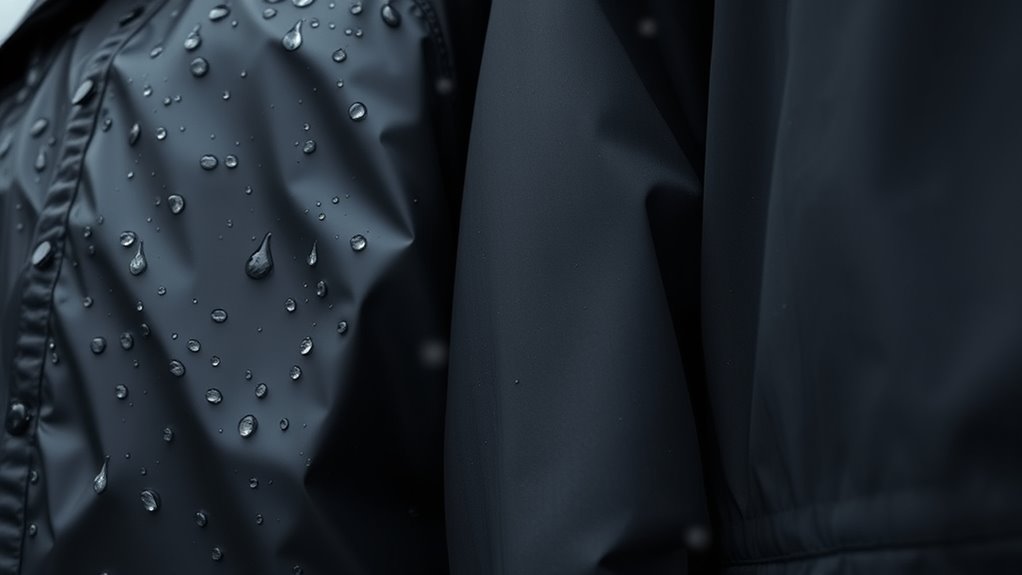
When choosing gear or devices that need protection from water, understanding the difference between waterproof and water-resistant is essential. This knowledge helps you select the right equipment for your activities, whether you’re hiking, cycling, or just caught in a sudden downpour. Waterproof fabrics are designed to prevent water from entering under any conditions, offering full protection even during heavy rain or prolonged exposure. Water-resistant materials, on the other hand, can handle light rain or splashes but aren’t built for continuous moisture. Recognizing these distinctions allows you to prepare better and avoid disappointment or damage to your gear.
One of the key factors to contemplate when evaluating rainproof fabrics is breathability differences. Waterproof fabrics often incorporate membranes like Gore-Tex or similar technologies that keep water out while allowing moisture vapor from sweat to escape. This balance reduces the risk of you feeling clammy or overheated, especially during high-intensity activities. Water-resistant fabrics tend to be less breathable because they rely on tight weaves or coatings that block water but can trap heat and moisture inside. If breathability is a priority—say, for hiking or running—you’ll want to opt for waterproof materials that promote airflow and help regulate your temperature.
Material durability also plays a significant role in your decision. Waterproof fabrics are typically constructed from highly durable materials designed to withstand harsh weather conditions without losing their protective capabilities. They often feature reinforced seams and coatings that resist tears and abrasions, ensuring longevity even with frequent use. Water-resistant fabrics tend to be lighter and less rugged, making them easier to pack but more prone to wear and tear over time. If your activities involve rough environments or frequent exposure to the elements, investing in waterproof gear with superior material durability provides better value and peace of mind.
Additionally, advancements in sound healing science have contributed to the development of fabrics with enhanced properties, such as integrating sound-absorbing layers for better comfort and environmental control. It’s important to acknowledge that waterproof fabrics may come with some trade-offs, like increased weight or reduced breathability in certain designs. Conversely, water-resistant options are usually lighter and more flexible but require more cautious use—such as avoiding heavy rain or prolonged exposure—to maintain their protective qualities. Choosing between the two depends on your specific needs, activity level, and the conditions you anticipate facing. Understanding these differences helps you make smarter decisions, ensuring your gear performs when you need it most and lasts longer over time.
As an affiliate, we earn on qualifying purchases.
Frequently Asked Questions
How Long Can Waterproof Fabrics Withstand Heavy Rain?
You can expect waterproof fabrics to withstand heavy rain for several hours to days, depending on their fabric durability and material composition. High-quality waterproof materials like Gore-Tex or polyurethane coatings are designed to resist prolonged exposure, maintaining their rainproof qualities longer. However, over time, wear and tear, as well as exposure to elements, can compromise their effectiveness. Always check the manufacturer’s specifications for more precise endurance expectations.
Are Waterproof Fabrics Breathable for Prolonged Wear?
Ever wondered if waterproof fabrics are breathable for prolonged wear? They can be, but breathability concerns often arise because waterproof fabrics typically use a membrane that blocks moisture. To stay comfortable, you should consider fabric layering, which allows sweat to escape while keeping rain out. Modern waterproof fabrics are designed to balance protection and breathability, so with proper layering, you can stay dry and comfortable during extended outdoor activities.
Can Water-Resistant Fabrics Become Waterproof Over Time?
Water-resistant fabrics generally can’t become fully waterproof over time because their fabric durability and coating wear down with use. Regular waterproof testing can reveal if they’ve lost their protective qualities, but once the coating deteriorates, the fabric won’t regain waterproof status without re-treatment or replacement. To stay rainproof, consider fabrics designed to maintain their waterproof features longer and perform well through consistent waterproof testing.
What Maintenance Is Required to Preserve Waterproof Properties?
To safeguard your waterproof properties, you need to regularly maintain your fabrics by inspecting for damage and cleaning them with gentle, fabric-specific solutions. Reapply fabric coatings or waterproofing sprays as needed, especially after washing or exposure to harsh elements. Follow your gear’s maintenance routines carefully, including avoiding high heat and harsh chemicals, to guarantee your waterproof fabrics stay effective and continue to repel water effectively over time.
Are There Eco-Friendly Waterproof Fabric Options Available?
Yes, you can find eco-friendly waterproof fabrics that protect you from rain while caring for the planet. Imagine wearing a jacket made from sustainable materials, coated with eco-friendly finishes that keep water out without harmful chemicals. These innovative fabrics use natural or recycled fibers, combined with eco-conscious coatings, offering durability and rainproof performance. You get peace of mind knowing you’re choosing a responsible option that’s kind to the environment.
Conclusion
Now that you understand the dance between waterproof and water-resistant fabrics, you’re armed with the knowledge to pick the perfect shield for any storm. Think of waterproof as a fortress, standing tall against relentless rains, while water-resistant is your loyal umbrella, holding back splashes but not the downpour. With this insight, you can confidently navigate rainy days, turning unpredictable weather into just another part of your adventure—because when it comes to rainproof fabrics, you hold the power to stay dry and unstoppable.
Fall Picks
fall essentials
As an affiliate, we earn on qualifying purchases.