
Fabric pilling occurs when fibers loosen and tangle into tiny balls, making your clothes look worn. Science fights this by developing stronger, more durable fibers like high-tenacity polyester and nylon, which resist breakage. Innovations like smart treatments, microfiber technology, and fabric engineering also help prevent pills from forming. These advancements extend clothing life and keep garments looking newer longer. If you want to discover how these breakthroughs work, continue exploring the latest textile innovations.
Key Takeaways
- Scientific advancements strengthen fibers and develop surface treatments to reduce fiber breakage and fuzziness, preventing pills.
- Innovations like microfibers and nanotechnology coatings create fabrics resistant to abrasion and pilling.
- Textile engineering designs, such as specific weave patterns, distribute friction evenly and minimize pill formation.
- Blending durable synthetic fibers like nylon and polyester enhances fabric longevity and appearance retention.
- Ongoing research focuses on eco-friendly, high-performance fibers and treatments to combat fabric pilling sustainably.
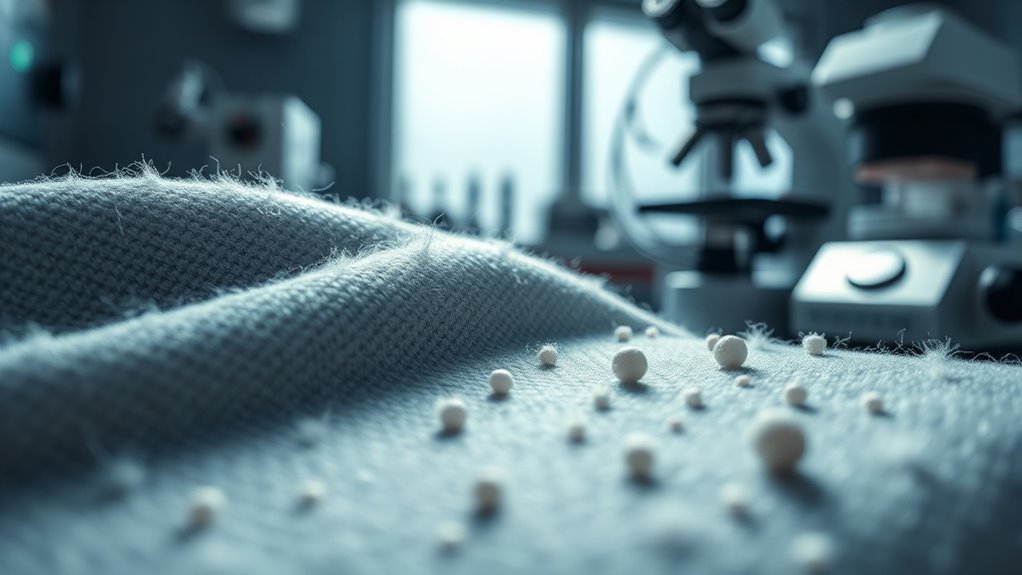
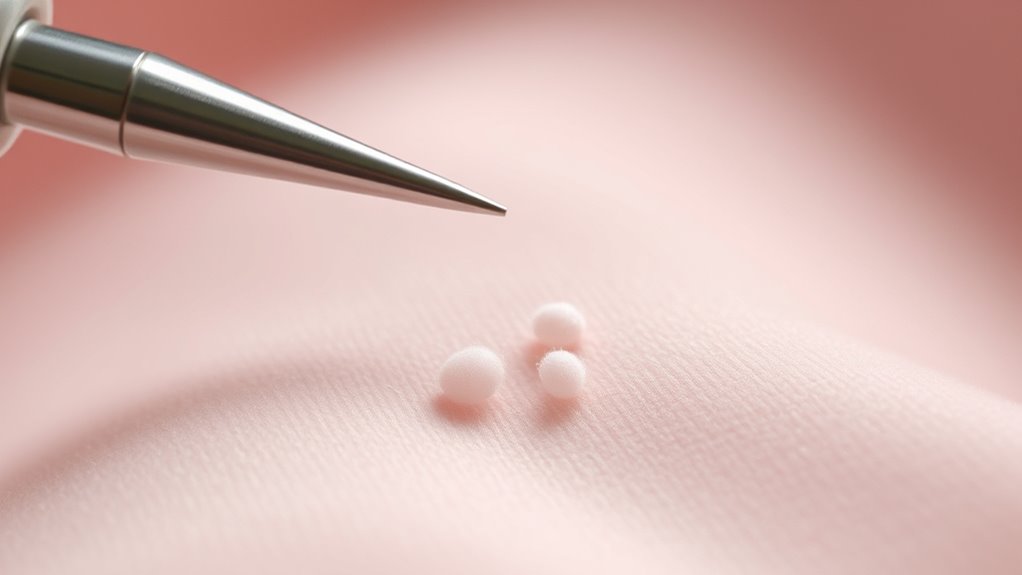
Have you ever noticed tiny pills forming on your favorite sweater or jeans? It’s a common annoyance that can make even the most stylish garments look worn out. Pilling happens when fibers on the fabric’s surface loosen and tangle into small balls. These pills are usually made of loose fiber ends that cling together, creating that fuzzy appearance. While it’s a natural process caused by friction and wear, it can be frustrating, especially when you’ve invested in quality clothing. Luckily, science is actively tackling this issue through advances in textile innovations aimed at improving fiber durability.
Fiber durability plays a significant role in preventing pilling. When fibers are strong and resistant to breaking or loosening, they’re less likely to form pills. Researchers are developing new fibers with enhanced strength and elasticity, which helps fabrics withstand the constant friction from everyday activities. These fibers are engineered to hold onto their structure longer, reducing the amount of loose fiber ends that can tangle into pills. Some innovations include the use of high-tenacity polyester or nylon, which offer increased resilience compared to traditional fibers. These advancements mean your clothes stay looking newer longer, even after multiple washes and wears.
Strong, elastic fibers like high-tenacity polyester and nylon help fabrics resist pilling and last longer.
Textile innovations are also making a difference. Manufacturers are experimenting with surface treatments and fabric finishes that reinforce the fibers’ surfaces, making them less prone to breakage. For instance, certain coatings can reduce fiber fuzziness, which is a precursor to pilling. Additionally, blending fibers—combining natural and synthetic materials—can create fabrics that retain softness while boosting durability. Innovations like microfiber technology produce fabrics with tightly packed fibers that resist abrasion, helping reduce pill formation. Some brands are even developing nanotechnology-based coatings that bond fibers more securely, preventing loose ends from forming pills in the first place.
Another promising development involves the design of knit fabrics that minimize pilling. Engineers are creating textiles with specific weave patterns that distribute friction more evenly or reduce abrasion in high-friction zones. These textile innovations not only improve the fabric’s look and feel but also extend its lifespan. The trend toward sustainable fashion also encourages the development of eco-friendly fibers that don’t compromise on durability. By focusing on fiber enhancements and smart fabric engineering, the industry is making significant strides in keeping your clothes pill-free for longer periods.
In short, through a combination of stronger fibers and innovative fabric treatments, science is helping you enjoy clothes that look newer and last longer. The ongoing research in textile innovations continues to push the boundaries of what’s possible, making your wardrobe more durable and maintaining its aesthetic appeal despite everyday wear and tear.
fabric pilling resistant clothing
As an affiliate, we earn on qualifying purchases.
As an affiliate, we earn on qualifying purchases.
Frequently Asked Questions
Can Fabric Pilling Be Completely Prevented?
No, fabric pilling can’t be completely prevented, but you can reduce it with proper fabric treatment. Choose fabrics designed for durability, as they resist pilling better over time. Regular care, like gentle washing and avoiding friction, also helps prolong fabric quality. While science advances are improving fabric durability, some pilling is inevitable, so understanding how to care for your clothes can keep them looking newer longer.
Which Fabrics Are Most Resistant to Pilling?
You’ll find that fabrics made from polyester, nylon, and acrylic fibers are most resistant to pilling because their fiber types are less prone to fuzz formation. Additionally, fabrics with special finishes like anti-pilling treatments or smooth surface coatings offer extra protection. When shopping, look for these fiber types and finishes to choose garments that stay smooth and pill-free longer, ensuring better durability and appearance over time.
How Long Does Fabric Pilling Typically Take to Develop?
Think of fabric pilling as a slow-burning fire; it can take anywhere from a few months to over a year to develop, depending on fiber friction and fabric wear. Daily friction from rubbing against surfaces or washing accelerates the process, causing pills to form like tiny knots on your clothes. If you wear your garments often and subject them to rough treatment, you’ll notice pills appearing sooner rather than later.
Are There Eco-Friendly Solutions to Reduce Pilling?
Yes, there are eco-friendly solutions to reduce pilling. You can choose garments made from sustainable fibers like organic cotton or hemp, which are less prone to pilling. Additionally, look for eco-friendly treatments such as natural anti-pilling finishes that prevent fibers from fraying without harmful chemicals. These options help you maintain your clothing’s appearance while supporting environmentally responsible practices, making your wardrobe both stylish and sustainable.
Can Washing Machine Settings Affect Pilling Severity?
Like Icarus flying too close to the sun, setting your washing machine improperly can cause pilling. You should opt for gentle cycles, use fabric softeners, and choose lower washing temperatures to minimize fiber stress. High temperatures and aggressive settings loosen fibers, leading to more pilling. By adjusting your machine’s settings, you help preserve fabric integrity, ensuring your clothes stay smoother and look newer longer.
Conclusion
While fabric pilling can be a quiet disappointment, science offers gentle hope. Advances in textile technology are like a comforting embrace, helping your clothes stay beautiful longer. With every innovation, your favorite pieces become more resilient, promising to serve you with grace. So, rest assured—better days are ahead, where your wardrobe’s charm remains untouched by time’s subtle touch. Embrace these quiet improvements, knowing your wardrobe’s story is being thoughtfully written anew.