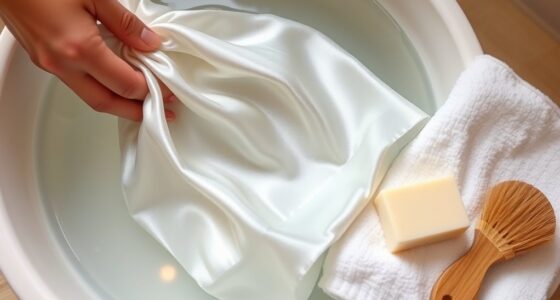
Clothes shrink because heat, moisture, and agitation cause fibers—especially natural ones like cotton, wool, and linen—to contract. High temperatures during washing or drying tighten these fibers, making your clothes smaller and misshapen. To prevent this, wash in cold water, avoid overloading the machine, and opt for gentle cycles. Air-dry whenever possible and use low heat if you must tumble dry. If you want to keep your clothes fitting right, there’s more to learn soon.
Key Takeaways
- Natural fibers like cotton and wool are prone to shrinking when exposed to heat, moisture, and agitation.
- High temperatures during washing or drying cause fibers to contract, leading to smaller garments.
- Proper care, such as washing in cold water and air drying, helps prevent fiber contraction.
- Using gentle cycles and avoiding overloading reduces agitation that tightens fibers.
- Laying delicate items flat to dry or choosing low heat settings minimizes shrinkage risk.
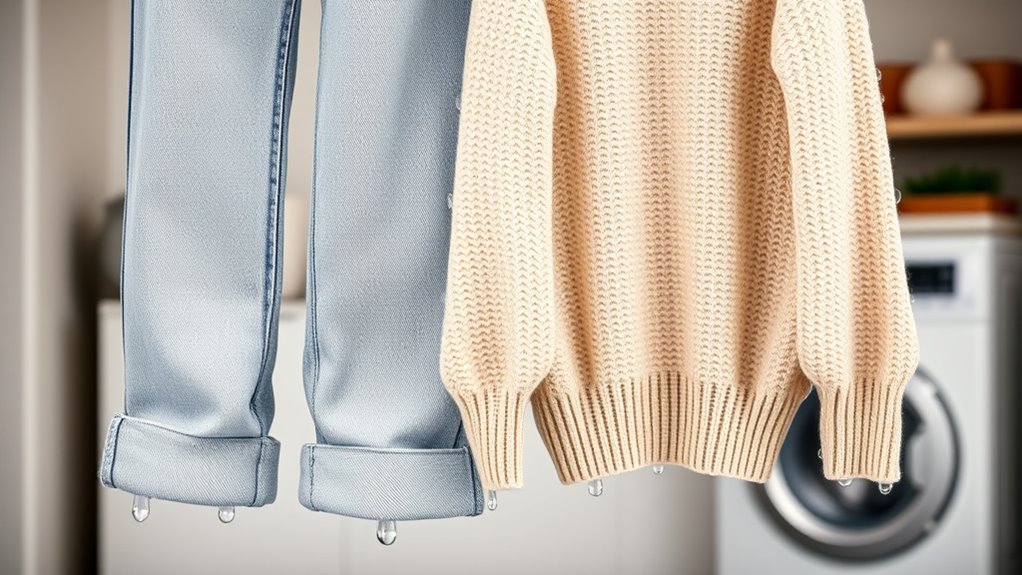
Clothes shrink unexpectedly when exposed to heat, moisture, or agitation during washing and drying. This common issue can catch you off guard, especially if you’re not familiar with fabric care and laundry tips that help prevent it. Understanding why clothes shrink and how to avoid it starts with knowing how different fabrics respond to washing processes. Many natural fibers like cotton, wool, and linen are more prone to shrinking because their fiber structures are sensitive to heat and moisture. When these fabrics are exposed to high temperatures or vigorous agitation, their fibers contract, causing the garment to become smaller. Synthetic fibers like polyester or nylon are generally more resistant, but they can still shrink if exposed to excessive heat during drying.
To prevent laundry shrinkage, you need to be mindful of fabric care instructions and choose your laundry tips wisely. First, always check the care labels on your clothes. They provide valuable guidance on water temperature, drying methods, and whether to avoid tumble drying altogether. For delicate or prone-to-shrink fabrics, it’s best to wash in cold water. Cold water helps maintain the garment’s original size and shape, reducing the chance of fiber contraction. When drying, air-drying is your safest bet, especially for natural fibers. If you prefer using a dryer, opt for a low heat setting or a delicate cycle. High heat is the main culprit behind shrinkage, so controlling the temperature can make a significant difference.
Another important aspect of fabric care is avoiding unnecessary agitation. When you’re washing clothes, try to use gentle cycles or hand wash delicate items. Overly vigorous spinning can cause fibers to tighten and shrink. Also, avoid overloading your washing machine, as this can create excessive friction and agitation, which may lead to shrinking. When drying, remove clothes promptly once they’re dry or nearly dry to prevent over-drying, which can damage fibers and cause shrinkage. For wool and other delicate fabrics, consider laying garments flat to dry instead of hanging, as hanging can stretch or distort the fabric, leading to unwanted shrinkage or misshaping. Additionally, using airless paint sprayers for large painting projects can reduce the need for extensive cleaning and maintenance, saving time and effort.

Tide Liquid Laundry Detergent, Original Scent, 125 fl oz, 100 Loads, Boosted Clean Even in Cold Water with Concentrated Washing Soap
- Boosted Cleaning Power: 4X cleaner and 2X fresher
- Effective Stain Removal: Tackles 100% of common stains
- Grease Fighting Strength: 10X more grease-fighting ingredients
As an affiliate, we earn on qualifying purchases.
As an affiliate, we earn on qualifying purchases.
Frequently Asked Questions
Can Fabric Softeners Prevent Clothes From Shrinking?
Fabric softeners don’t prevent clothes from shrinking, but they do help keep fabrics soft and reduce static. When you use fabric softeners, they coat fibers, making them less prone to damage during washing. To prevent shrinkage, focus on choosing gentle laundry detergents and following care labels. Using cold water and avoiding high heat in drying also helps maintain your clothes’ size and shape, regardless of softeners.
Does Dry Cleaning Reduce the Risk of Shrinking?
Dry cleaning reduces the risk of shrinking because its processes use solvents instead of water, which helps maintain fabric stability. When you choose dry cleaning, you avoid the harsh agitation and high heat of traditional laundry, preserving the shape and size of your clothes. This method is especially beneficial for delicate fabrics or items prone to shrinking, ensuring your garments stay fitting and looking their best over time.
Are Natural Fibers Less Prone to Shrinking Than Synthetic Fibers?
Imagine fabric fibers stretching and relaxing like a gentle breeze. Natural fibers, with their delicate structure, are more prone to shrinking because fiber treatment and material composition make them more sensitive to heat and agitation. Synthetic fibers, being more resilient and chemically treated for durability, resist shrinking better. So, when you wash clothes, natural fibers often need more careful handling to maintain their shape compared to synthetic ones.
How Does Storage Affect the Size of My Clothes?
Your clothing storage habits directly impact their size over time. If you cram clothes into a crowded wardrobe, they can stretch or become misshapen. Proper wardrobe organization ensures your clothes aren’t overly compressed, reducing the risk of shrinking or damage. Use breathable storage options like hangers or bins, and avoid folding heavy garments tightly. Keeping your clothes properly stored helps maintain their original size and shape longer.
Can Ironing Shrink Clothes Further?
Ironing can shrink clothes further if you don’t control the fabric stretching and ironing temperature. When you apply high heat, especially on delicate fabrics, it causes fibers to tighten and contract. To prevent this, keep the iron on a suitable setting, gently stretch the fabric as you iron, and avoid pressing too hard. This way, you preserve your clothes’ shape and avoid unnecessary shrinkage caused by excessive heat and stretching.
Conclusion
Understanding why clothes shrink helps you protect your wardrobe’s soul. Think of your garments as tender spirits, sensitive to careless heat and water. By treating them with care, you preserve their essence, allowing them to flourish rather than fade away. When you prevent shrinkage, you’re nurturing their integrity—like tending a delicate garden. In this way, your clothes become symbols of mindful living, reminding you that respect and attention can preserve beauty and function far beyond a single wash.