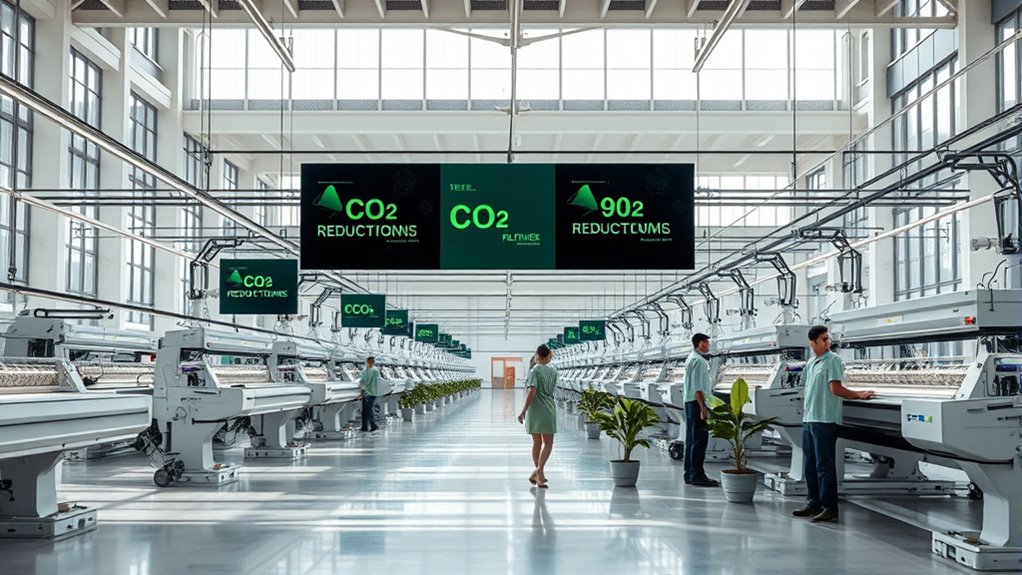

To reduce CO₂ emissions in textile manufacturing, focus on adopting renewable energy sources like solar and wind, which lower reliance on fossil fuels. Improve energy efficiency by upgrading equipment, automating processes, and optimizing water and chemical use. Continuous monitoring with sensors helps identify waste and enhances operations over time. Embracing these strategies boosts sustainability, saves costs, and positions your industry as an innovator—if you keep exploring, you’ll uncover even more effective approaches.
Key Takeaways
- Implement renewable energy sources like solar and wind to power textile manufacturing, reducing reliance on fossil fuels and lowering CO₂ emissions.
- Optimize production processes and upgrade machinery for energy efficiency, minimizing energy waste and carbon footprint.
- Continuously monitor energy consumption with sensors and data analytics to identify inefficiencies and improve operations.
- Conduct regular maintenance and resource management to ensure equipment runs efficiently, conserving energy and reducing emissions.
- Integrate sustainable practices with long-term planning to enhance industry competitiveness and environmental responsibility.
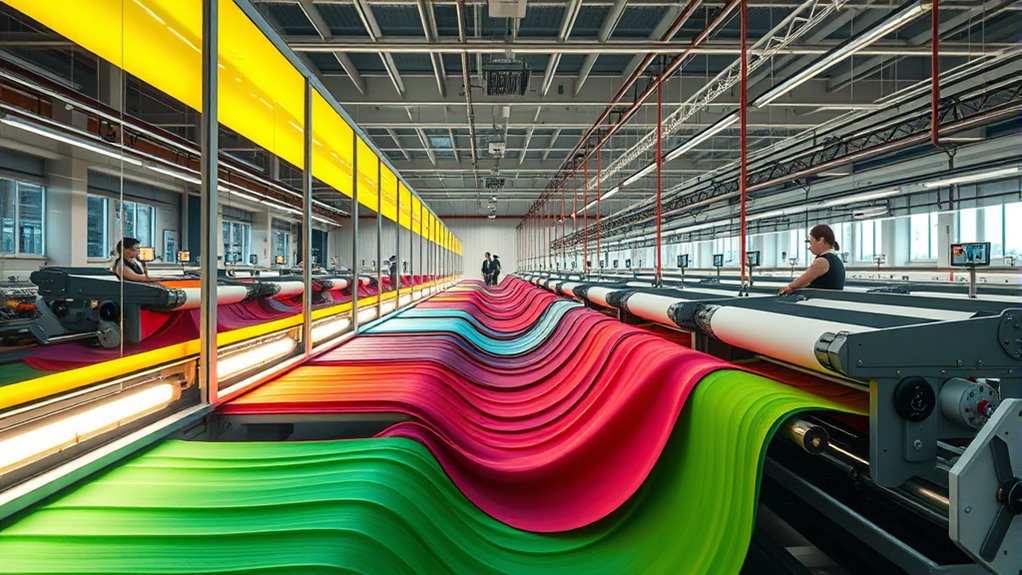
Have you ever considered how textile manufacturing can become more sustainable? The industry is notorious for its high energy consumption and considerable CO₂ emissions, but there are practical ways to change that. One key strategy is harnessing renewable energy sources, such as solar, wind, or hydropower, to power production facilities. Switching to renewable energy reduces reliance on fossil fuels, directly cutting down greenhouse gas emissions. It’s not just an environmental benefit; it also offers economic advantages over time, as renewable energy costs continue to decline. Implementing renewable energy can be as straightforward as installing solar panels on factory rooftops or partnering with local wind farms. These options provide cleaner, more reliable power, helping your operations become more sustainable and resilient.
Harness renewable energy like solar or wind to make textile manufacturing more sustainable and cost-effective.
Beyond energy sources, process optimization plays a vital role in making textile manufacturing more energy-efficient. By analyzing and refining each step in your production line, you can identify areas where energy waste occurs. For example, upgrading old machinery with modern, energy-efficient equipment can markedly reduce power consumption. Automating processes where feasible minimizes idle times and energy use, ensuring that each phase operates at peak efficiency. Regular maintenance also keeps equipment running smoothly, preventing energy losses due to inefficiencies or malfunctions. Additionally, optimizing water and chemical use not only conserves resources but can also reduce the energy needed for heating and processing. These improvements collectively lead to a leaner, more sustainable process, decreasing your overall carbon footprint.
Implementing process optimization isn’t a one-time effort; it requires ongoing monitoring and adaptation. Using data analytics and real-time sensors helps you track energy consumption patterns and spot inefficiencies early. You can then adjust operations dynamically, ensuring your manufacturing process remains as energy-efficient as possible. Combining this with renewable energy sources creates a powerful synergy—renewables supply cleaner power, while optimized processes ensure that you’re using that power most effectively. Together, these measures help you reduce emissions considerably while maintaining high product quality and output.
Switching to renewable energy and optimizing processes might seem challenging initially, but the long-term benefits are undeniable. Not only will you lower your CO₂ emissions and lessen your environmental impact, but you’ll also improve your factory’s overall efficiency and cost-effectiveness. The future of textile manufacturing hinges on smarter, greener practices, and embracing these strategies puts you at the forefront of sustainable industry innovation. By taking these steps today, you contribute to a healthier planet while enhancing your competitive edge. Sustainability isn’t just a trend; it’s a necessity, and it starts with conscious, deliberate action in how you power and run your operations. Incorporating renewable energy solutions can serve as a catalyst for further sustainable advancements in your manufacturing processes.

SOLPERK Solar Panel Kit 20W 12V Solar Battery Charger Maintainer+Controller
- High Conversion Efficiency: 21%-30% efficiency with monocrystalline cells
- Universal Battery Compatibility: Charges various 12V rechargeable batteries
- Durable Waterproof Design: Tempered glass and corrosion-resistant frame
As an affiliate, we earn on qualifying purchases.
As an affiliate, we earn on qualifying purchases.
Frequently Asked Questions
What Are the Latest Innovations in Energy-Efficient Textile Machinery?
You’ll find that the latest innovations in energy-efficient textile machinery focus on smart automation and advanced textiles. These machines use real-time sensors and AI to optimize energy use, reducing waste. Smart automation streamlines processes, saving power and boosting productivity. Additionally, advanced textiles are designed to require less energy during manufacturing. Together, these innovations help you decrease your environmental footprint while maintaining high-quality production.
How Do Energy Policies Influence Textile Manufacturing Sustainability?
Energy policies shape your efforts toward sustainable textile manufacturing by providing policy incentives that encourage eco-friendly practices. They also require you to meet regulatory compliance standards, pushing you to adopt cleaner technologies and reduce emissions. These policies motivate you to innovate, invest in energy-efficient machinery, and operate more sustainably. Ultimately, strong policies help you lower costs, improve environmental impact, and stay competitive in a greener industry.
What Are Cost-Effective Strategies for Small-Scale Textile Producers?
You can save up to 20% on energy costs by adopting simple, cost-effective strategies. Focus on resource optimization by upgrading to energy-efficient equipment and improving insulation. Repairing leaks and maintaining machinery regularly reduces waste, leading to significant cost reduction. Utilizing renewable energy sources like solar panels, even on a small scale, can further lower expenses. These steps make your manufacturing more sustainable without breaking the bank.
How Can Consumer Behavior Impact the Adoption of Eco-Friendly Textiles?
Your consumer behavior greatly impacts the adoption of eco-friendly textiles. When you choose sustainable shopping options and support brands with eco-conscious branding, you encourage companies to prioritize eco-friendly practices. Your demand for environmentally responsible products motivates manufacturers to innovate and reduce their carbon footprint. By making mindful choices, you help drive industry-wide change, making sustainable textiles more accessible and mainstream, ultimately contributing to a healthier planet.
What Role Do Renewable Energy Sources Play in Textile Factories?
You can substantially reduce your factory’s carbon footprint by integrating renewable energy sources like solar and wind power. Solar integration allows you to harness sunlight, lowering reliance on fossil fuels, while wind power provides a consistent energy supply, especially in windy regions. By adopting these renewable options, you not only cut emissions but also decrease energy costs long-term, making your textile manufacturing more sustainable and eco-friendly.
Conclusion
By adopting energy-efficient practices, you can drastically cut CO₂ emissions in textile manufacturing. For example, imagine switching to advanced, low-energy dyeing processes—like a company that reduced its energy use by 30%, cutting emissions and costs. Every step toward efficiency not only helps the environment but also boosts your bottom line. Embrace innovative technologies today, and you’ll lead the way in sustainable, responsible textile production for a greener tomorrow.