When it comes to quilting, choosing the right thread can make all the difference. Cotton’s versatile for various projects and adds a natural look, while polyester’s durable and resists fraying—perfect for everyday quilts. If you want the best of both worlds, blended threads combine durability with aesthetic appeal. Consider your fabric and desired outcome to make the best choice for your quilts. Keep exploring to find tips on troubleshooting common thread issues!

Get your wardrobe favorites delivered free with Prime
- Fast, free delivery on millions of items
- Prime Video, Amazon Music and more included
- Member-only deals all year
Key Takeaways
- Cotton Thread: Best for vintage and hand-quilting projects due to its natural feel and beautiful dye absorption.
- Polyester Thread: Ideal for everyday quilts, offering durability and resistance to fraying and stress.
- Blended Threads: Combine the strengths of cotton and polyester, providing durability and a wide color variety for intricate designs.
- Thread Weight: Choose lighter threads for delicate fabrics and heavier threads for strength, ensuring compatibility with your project.
- Colorfast Options: Select colorfast threads to prevent bleeding during washing, maintaining vibrant colors for your finished quilt.
As an affiliate, we earn on qualifying purchases.
When to Use Cotton Thread

When it comes to quilting, cotton thread is often the go-to choice for many crafters. Its versatility and strength make it ideal for a variety of projects. You’ll find that cotton thread types come in different weights, allowing you to match them perfectly with your fabric compatibility. For quilting cottons, heavier threads can enhance durability, while lighter threads work well with delicate fabrics.
If you’re working with blends or batiks, cotton thread maintains consistency and prevents puckering. It also absorbs dye beautifully, ensuring your stitches blend seamlessly with your fabric choices. So, when you’re deciding which thread to use, consider cotton for its reliability and compatibility with nearly all quilting fabrics. Your projects will thank you!
Choosing Polyester Thread vs. Cotton?
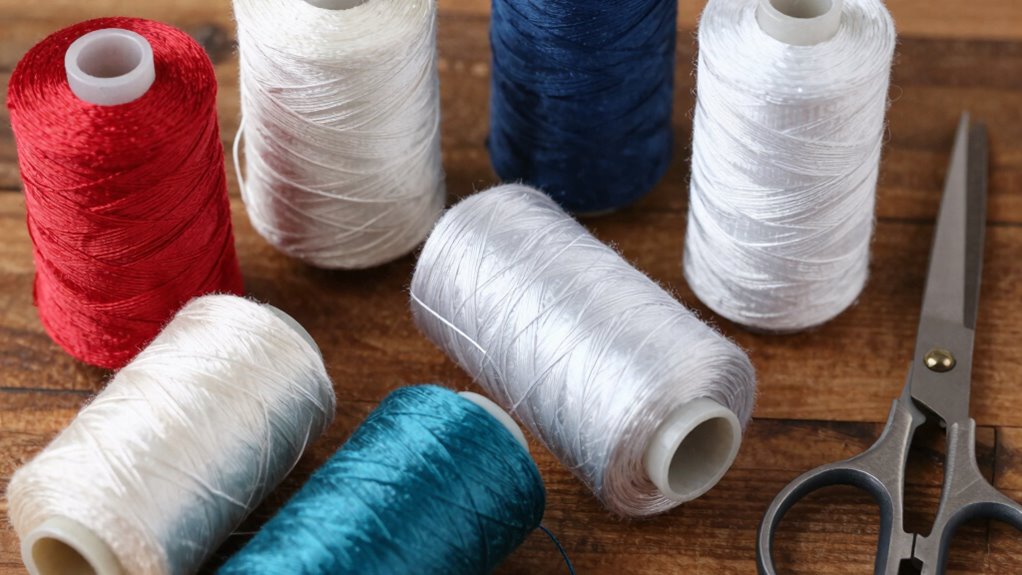
Which thread should you choose for your quilting projects: polyester or cotton? If you’re after polyester durability, polyester is your best bet. It’s strong, resistant to fraying, and holds up well under stress. On the other hand, cotton offers a natural feel and is perfect for delicate projects.
Here’s a quick comparison to help you decide:
| Feature | Polyester | Cotton |
|---|---|---|
| Durability | High | Moderate |
| Thread Sheen | Shiny | Matte |
| Best Use | Everyday quilts | Vintage or hand-quilting |
Think about your project’s needs. If you want a shiny finish and long-lasting wear, polyester might be the thread for you!
Advantages of Blended Threads

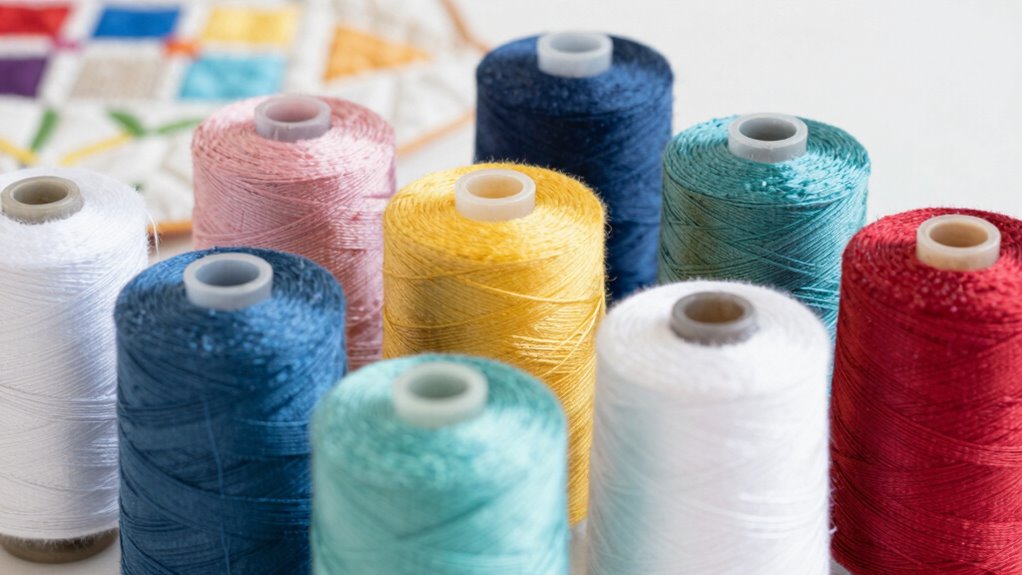
Blended threads offer a fantastic combination of the best qualities found in both cotton and polyester. You’ll appreciate their blended durability, which provides the strength and resilience needed for long-lasting quilts. Unlike pure cotton, these threads resist fraying and breaking, making them ideal for intricate designs and heavy use. Plus, they come in an impressive color variety, giving you countless options to match your fabric choices. Whether you’re working on a vibrant modern quilt or a classic design, blended threads enhance your project with their versatility. They’re also easier to care for, retaining their color and texture through multiple washes. With these advantages, you’ll find blended threads to be a reliable choice for your quilting needs. Additionally, using recycled materials in your quilting projects can further contribute to sustainability. Furthermore, crafting techniques like using blended threads can elevate your quilting experience, ensuring you enjoy your crafting space to the fullest while creating beautiful pieces. Moreover, incorporating air quality considerations can create a healthier environment while you quilt, ensuring you enjoy your crafting space to the fullest. In addition, the use of smart indoor gardens can inspire new ideas for incorporating fresh herbs into your quilting projects. Smart home technology can also improve your crafting environment by enhancing light control, making it easier to focus on your intricate work.
Selecting the Best Thread for Your Quilting Project
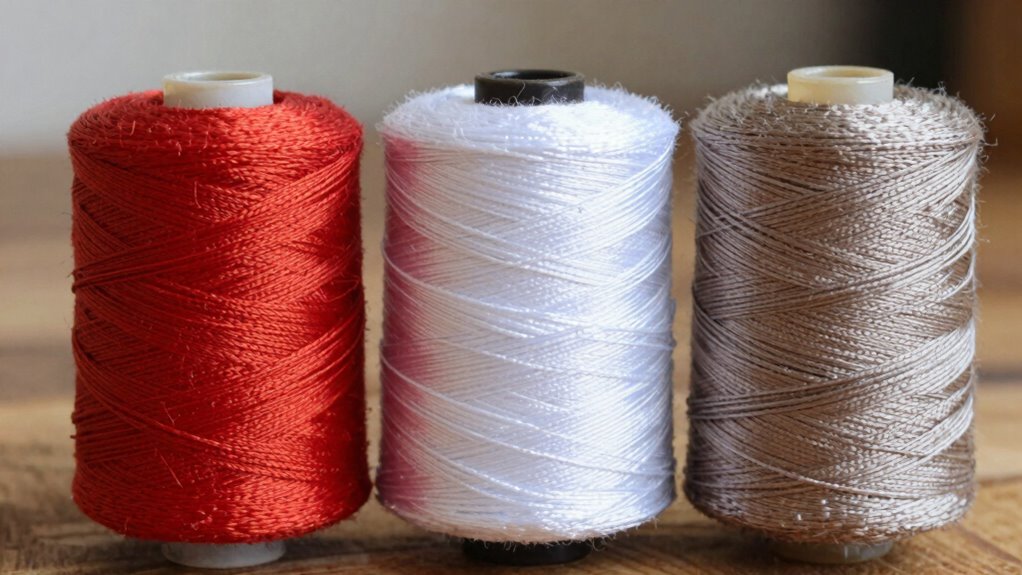
Choosing the right thread for your quilting project can make all the difference in achieving the desired outcome. Start by considering the thread weight; lighter weights work well for delicate fabrics, while heavier weights add strength and durability. Next, think about colorfast options—selecting threads that won’t bleed during washing guarantees your quilt retains its vibrant colors. Cotton threads are often favored for their natural look, while polyester offers durability and resistance to fading. Blended threads can provide the best of both worlds. Ultimately, your choice should align with your fabric type and the overall aesthetic you want to achieve. By focusing on these elements, you can elevate your quilting project and create a stunning finish.
Troubleshooting Common Thread Issues in Quilting
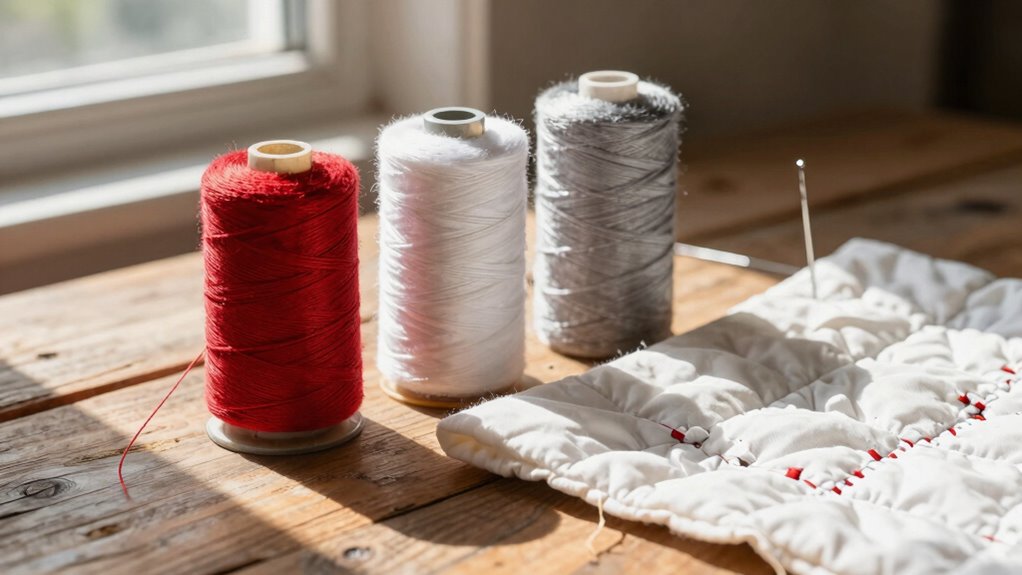
When you’re deep into a quilting project, it can be frustrating to encounter thread issues that disrupt your flow. Tension problems often lead to poor stitch quality, so make certain your machine settings align with your thread type. If you’re experiencing frequent thread breakage, check for needle compatibility and confirm you’re using the right size for your thread. Fabric friction can also create issues, especially at higher quilting speeds, so consider adjusting your technique or choosing smoother fabrics. Don’t forget about color matching, as mismatched threads can affect the overall look of your project. Additionally, maintaining good ergonomic posture while quilting can enhance your comfort and focus, making it easier to troubleshoot these common issues. Addressing these common issues will enhance your project durability and keep your quilting enjoyable. Happy stitching!
Frequently Asked Questions
Can I Mix Different Thread Types in One Quilt?
Yes, you can mix different thread types in one quilt! Just pay attention to thread compatibility to avoid issues. Cotton, polyester, and blends each have unique properties, so consider how they’ll behave together. Use mixing techniques like varying stitch lengths and tension adjustments to achieve a balanced look. Experimenting can add dimension and character to your quilt, so don’t hesitate to try different combinations for a creative touch!
How Do Thread Weights Affect My Quilting Projects?
Thread weights can make or break your quilting masterpiece! Heavier threads give you strong, bold stitches, while lighter threads create delicate, intricate designs. If you want your quilt to stand out, think about thread strength and stitch appearance—using the right weight can transform your project from drab to fab! Mixing weights might seem tempting, but it can lead to uneven tension. Stick to a plan, and your quilt will shine like a star!
Is It Safe to Use Vintage Threads for Quilting?
Yes, it’s generally safe to use vintage threads for quilting, but be cautious. Thread aging affects strength and flexibility, so inspect the thread for brittleness or discoloration. If it feels fragile or breaks easily, it might not hold up well in your project. You can still use it for decorative purposes or in less demanding areas. Just remember to test it before committing to your quilt to guarantee durability and quality.
What Are the Environmental Impacts of Thread Materials?
The environmental impacts of thread materials can be significant. When you choose threads, consider their production methods and sustainability practices. Cotton threads often rely on heavy water usage and pesticides, while polyester threads are made from petroleum, contributing to fossil fuel depletion. Blends can offer a balance, but check if they’re sourced sustainably. By being mindful of your choices, you can support eco-friendly practices and reduce your quilting project’s environmental footprint.
How Should I Store My Quilting Threads?
To store your quilting threads, secure them in a dry, dark, and dust-free space. Proper placement promotes thread longevity and preserves quality. Consider clear containers for clear thread organization, ensuring you can easily see your supplies. Avoid sunlight, which can fade colors and weaken fibers. Regularly check your threads for tangles or damage, keeping everything tidy and ready for your next project. Happy quilting!
Conclusion
In the world of quilting, choosing the right thread can make all the difference in your project’s success. Whether you opt for cotton, polyester, or a blend, each has its strengths for specific situations. So, when you’re ready to plunge into your next quilt, which type of thread will you trust to bring your vision to life? Remember, the right choice can enhance both the process and the final product, ensuring your quilting journey is as enjoyable as the results!
Fall Picks
fall essentials
As an affiliate, we earn on qualifying purchases.