To cure ink properly and prevent cracking after washing, start by choosing the right ink for your project. Make certain you cure at 320°F to 330°F for the recommended time, avoiding both low and excessive heat. Test your ink on scrap fabric first, and maintain a clean workspace to minimize contaminants. Also, perform quality tests like wash and flex tests to guarantee durability. There’s much more to perfecting your ink curing technique that you can discover.

Get your wardrobe favorites delivered free with Prime
- Fast, free delivery on millions of items
- Prime Video, Amazon Music and more included
- Member-only deals all year
Key Takeaways
- Choose the correct ink type for your project to ensure optimal adhesion and durability.
- Cure ink at the ideal temperature of 320°F to 330°F for effective results.
- Allow sufficient curing time to prevent fading and cracking after washing.
- Conduct wash and adhesion tests on samples to ensure ink performance.
- Maintain a clean workspace to avoid contaminants that can affect curing quality.
As an affiliate, we earn on qualifying purchases.
Common Ink Curing Mistakes to Avoid
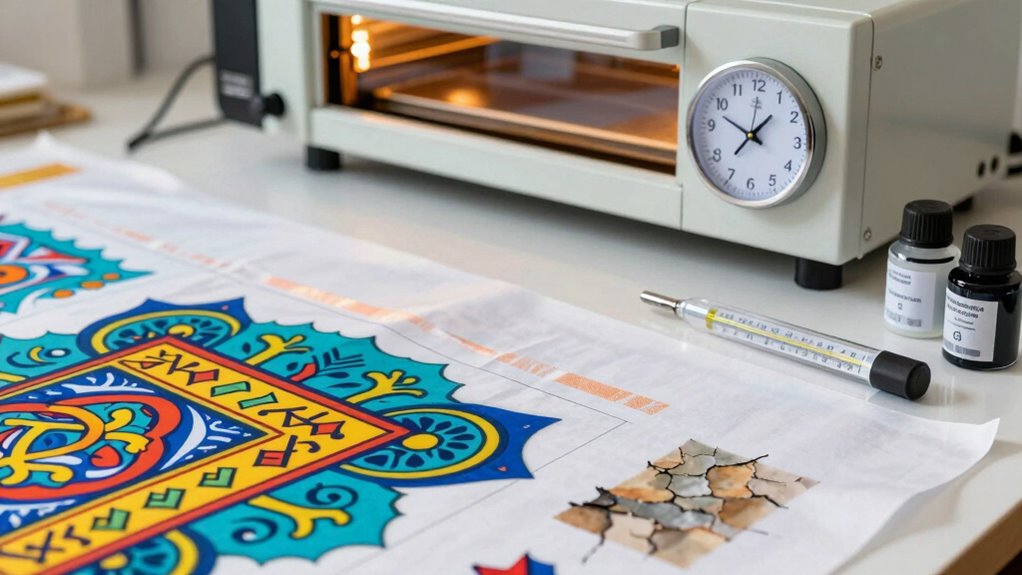
When curing ink, you might not realize how easily mistakes can creep in. One common error is using the wrong ink types for your project. Different inks require specific curing methods, and mixing them up can lead to poor adhesion and cracking. Another mistake is insufficient curing time; don’t rush this step. Each ink type has its own recommended duration, and not following this can result in faded prints after washing. Additionally, temperature plays an essential role. If you cure your ink at the wrong temperature, it may not bond properly. Finally, neglecting to test your cured ink on a sample fabric can lead to surprises later. Avoid these pitfalls, and your prints will last longer and look great.
Top Techniques for Effective Ink Curing on Fabric
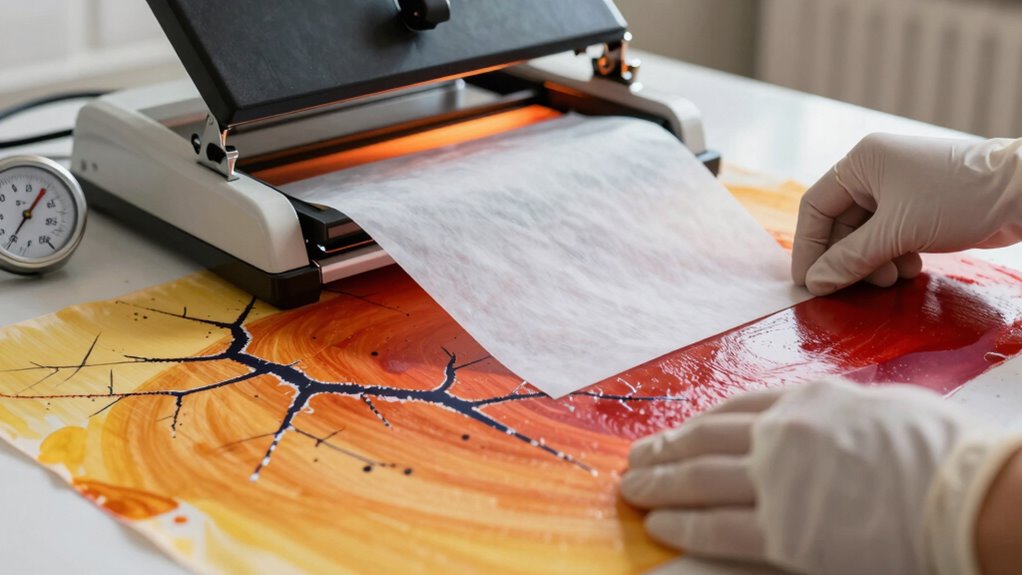
Avoiding common mistakes in ink curing sets the stage for achieving high-quality prints. To guarantee effective ink curing on fabric, start by selecting the right curing methods for your ink type. Heat curing is popular; just make sure you’re using the right temperature and time. Maintain proper ink consistency; too thick can lead to uneven curing, while too thin may not adhere well. Always test your inks on scrap fabric first to gauge how they react during the curing process. Additionally, verify your workspace is clean and free of contaminants that could affect adhesion. By following these techniques, you’ll enhance durability and prevent cracking after washing, leading to impressive, long-lasting results.
The Impact of Temperature and Time on Ink Curing
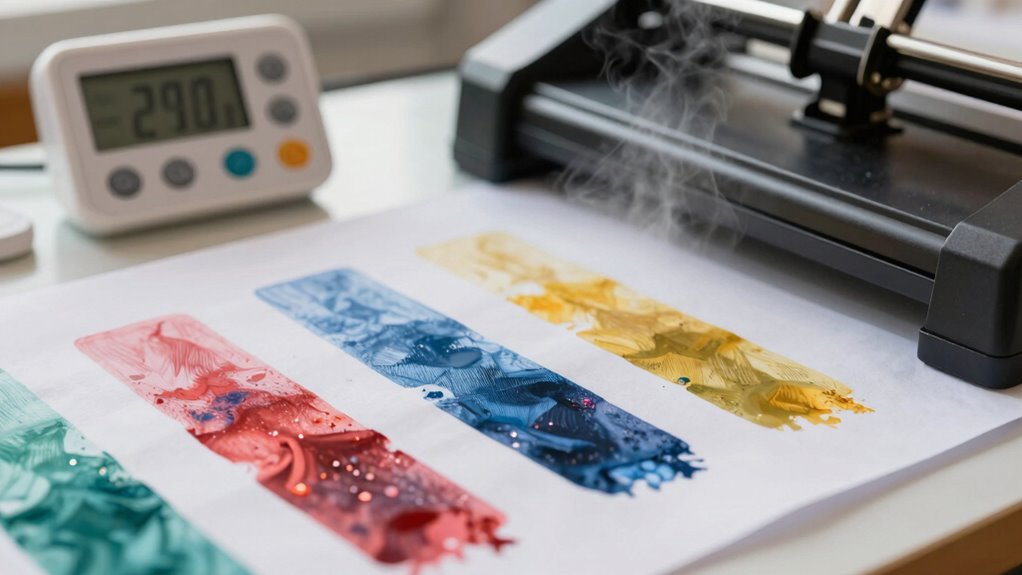
Understanding the right temperature and time for ink curing is vital for achieving ideal results. Temperature effects play a significant role; too low, and the ink won’t cure properly, leading to cracking. Conversely, excessive heat can cause the ink to burn or distort. Aim for a consistent temperature tailored to your ink type, typically between 320°F to 330°F (160°C to 165°C).
Time variations also matter. Curing for too short a duration can leave the ink vulnerable, while over-curing may alter its texture and vibrancy. Follow manufacturer guidelines closely, as they provide specific recommendations for temperature and time. By fine-tuning these factors, you’ll enhance ink durability and guarantee your designs withstand washing and wear.
Testing Your Ink Curing: Quality Assurance Methods
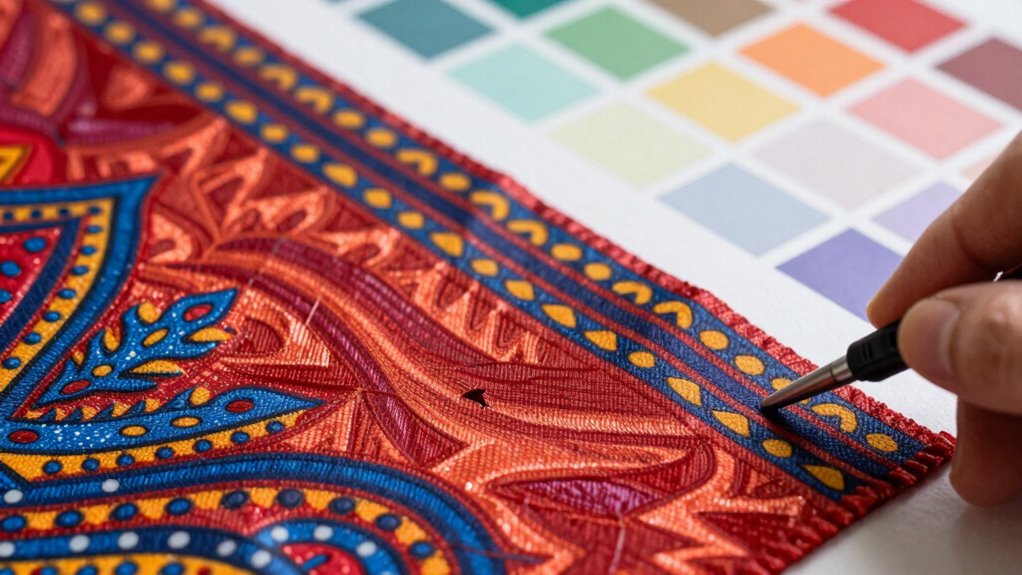
How can you guarantee your ink curing is up to par? Start by testing various ink types and their heat sensitivity. Use appropriate curing equipment to guarantee excellent results, and remember to assess fabric compatibility. Here’s a simple table to help you track your quality assurance methods:
| Test Method | Description |
|---|---|
| Wash Test | Check for cracking after washing |
| Heat Test | Measure resistance to heat |
| Flex Test | Assess durability with bending |
| Adhesion Test | Evaluate ink’s bond to fabric |
| Fade Test | Monitor color retention over time |
Why Curing Ink Right Matters for Your Prints
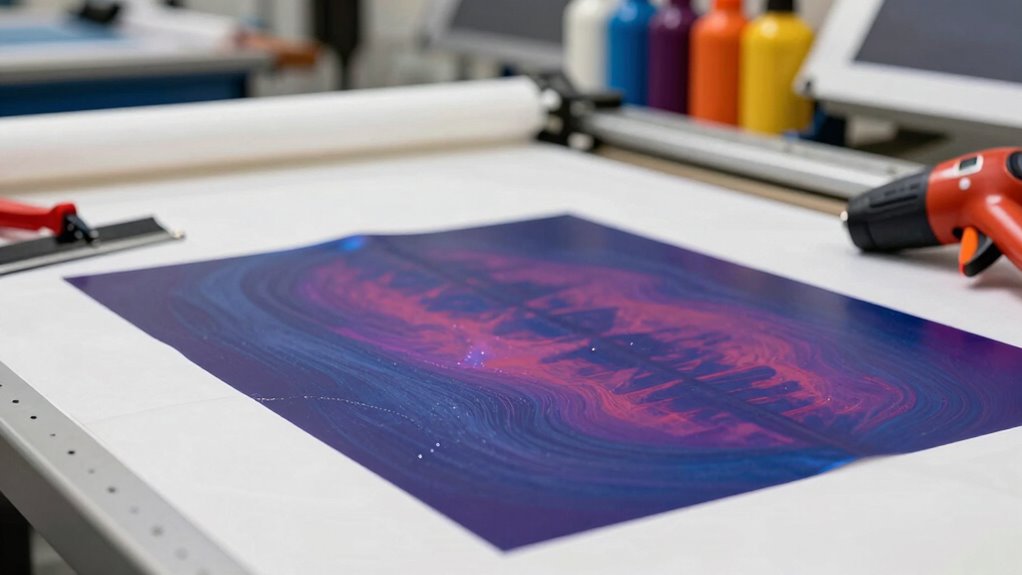
Curing ink properly is vital for guaranteeing your prints not only look great but also stand the test of time. When you cure your ink right, you enhance ink adhesion, which prevents cracking and fading after washes. Without proper curing, even the most vibrant designs can quickly deteriorate, leaving you with unsightly prints that disappoint your customers.
Moreover, understanding fabric compatibility plays an important role in this process. Different fabrics react differently to inks, so knowing how to cure for each material secures long-lasting results. By prioritizing proper curing techniques, you’re not just protecting your investment; you’re also delivering quality that keeps your customers coming back. So, take the time to cure your ink correctly—it’s worth it!
Frequently Asked Questions
Can I Cure Ink Without a Heat Source?
Yes, you can cure ink without a heat source using cold curing methods. These alternative methods rely on time and specific conditions to guarantee proper ink adhesion. You can leave your printed items in a cool, dry area for a few days, allowing the ink to set naturally. Just make certain to monitor humidity levels and avoid direct sunlight, as these factors can affect the curing process and the final outcome.
What Types of Fabrics Require Special Curing Techniques?
Some fabrics need special curing techniques, like cotton blends and synthetic fabrics, which are as different as night and day. For cotton blends, you’ll want to use lower curing temperatures to avoid damage, while synthetic fabrics often require higher heat for proper adhesion. If you’re using specialty inks, pay close attention to their specific curing needs, as they can vary greatly. Proper curing guarantees your prints stay vibrant and intact after washing.
How Long Should I Wait Before Washing Cured Prints?
You should wait at least 24 to 48 hours before washing cured prints. This curing time guarantees the ink bonds properly with the fabric. When it comes time to wash, use gentle washing methods, like cold water and mild detergent, to preserve your prints. Avoid harsh chemicals and high heat, as these can damage the ink. Following these steps will help keep your designs looking fresh and vibrant longer.
Is It Safe to Cure Ink Indoors?
Yes, it’s safe to cure ink indoors, but you need to guarantee proper ventilation. Make sure the area is well-ventilated to avoid inhaling any harmful fumes. Open windows and use fans to keep the air circulating. If you’re using heat to cure the ink, keep an eye on the temperature to guarantee safety. Just take these precautions, and you’ll create a safe environment for curing your prints indoors.
Can Humidity Affect the Ink Curing Process?
Humidity can drastically affect the ink curing process, can’t it? When humidity levels rise, the moisture in the air interferes with curing methods, potentially leading to issues like cracking or smudging. If you’re working in a humid environment, consider using a dehumidifier or curing in a climate-controlled space to guarantee proper curing. By managing humidity effects, you’ll achieve a smoother, more durable finish that stands the test of time.
Conclusion
Getting ink curing right isn’t just a minor detail—it’s the difference between a masterpiece and a cracked catastrophe! Imagine pouring your heart into a design, only to see it ruin after one wash. By avoiding common mistakes and mastering the right techniques, you can guarantee your prints not only shine but last through countless adventures. Remember, it’s not just ink; it’s your passion on fabric! So, cure it right, and let your creativity flourish without limits!
Halloween Picks
halloween
As an affiliate, we earn on qualifying purchases.