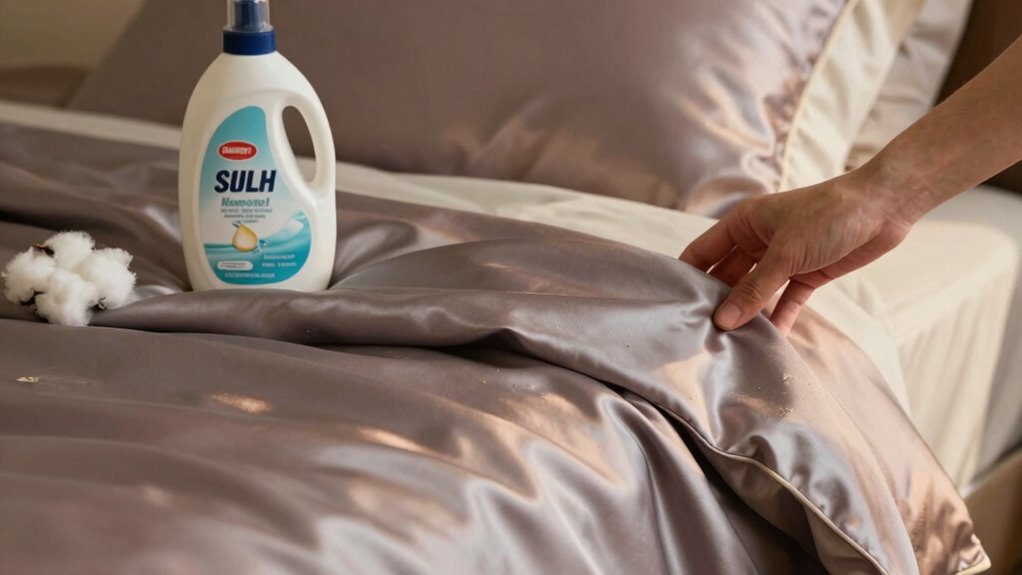

Caring for your silk bedding is essential to keep it soft and luxurious. Avoid washing in hot water; stick to cold or lukewarm and check care labels for specific instructions. When drying, air dry your silk, steering clear of direct heat. Mixing silk with coarse fabrics can lead to damage, so keep that in mind. Regular maintenance and timely repairs are key to longevity, and there’s so much more to learn about keeping your silk in tip-top shape!
Open a free Amazon Business account
Business pricing, bulk buying and tax-exempt orders.
As an affiliate, we earn on qualifying purchases.
Key Takeaways
- Use cold or lukewarm water for washing silk to prevent fiber damage and maintain softness.
- Always hand wash or use a gentle machine cycle; avoid wringing silk items.
- Air dry silk away from direct heat and sunlight to preserve fabric integrity.
- Store silk in breathable bags and maintain humidity below 50% to prevent mold.
- Regularly inspect for damage and repair minor issues immediately to extend lifespan.
As an affiliate, we earn on qualifying purchases.
Why Proper Care of Silk Bedding Matters
When you invest in silk bedding, you’re not just choosing luxury; you’re also committing to its care. Understanding the proper maintenance guarantees you enjoy silk benefits like temperature regulation and hypoallergenic properties for years to come. By caring for your silk, you enhance its fabric longevity, preventing premature wear and tear. Silk requires gentle handling, as it can be delicate. Neglecting proper care can lead to rough textures and diminished sheen, which detracts from its luxurious appeal. Regular maintenance, including careful washing and storage, preserves that soft, smooth feel you love. Ultimately, investing time in caring for your silk bedding pays off, allowing you to bask in its beauty and comfort for years ahead.
Common Washing Mistakes in Silk Bedding Care
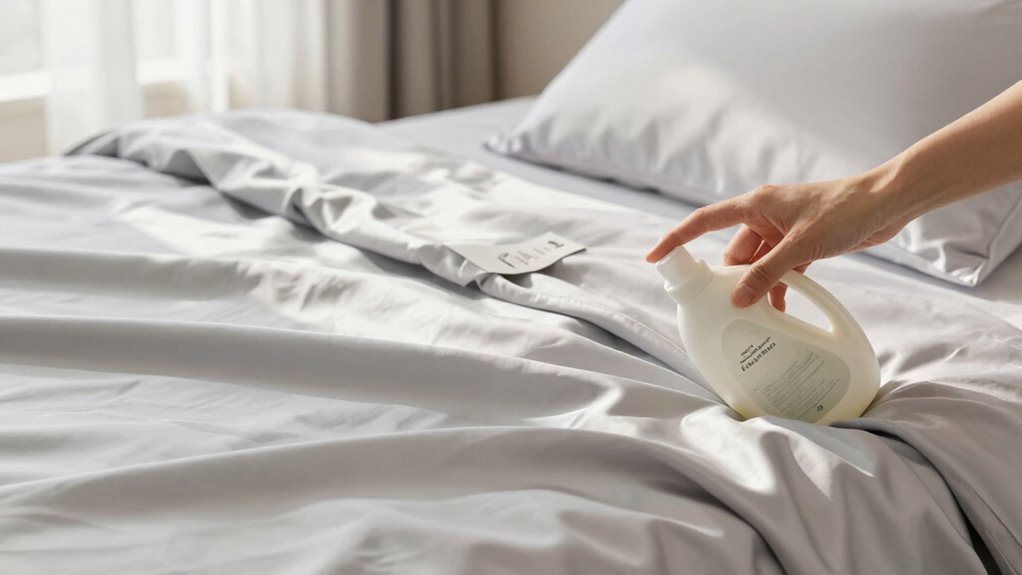
When caring for your silk bedding, you might make some common washing mistakes that can damage it. Using hot water and overloading the washing machine are two issues you should avoid. Let’s explore how these mistakes can affect the longevity of your silk sheets.
Using Hot Water
Many people mistakenly believe that using hot water is a quick fix for cleaning silk bedding. The truth is, silk has temperature sensitivity and washing techniques matter more than you think. Hot water can strip the natural fibers, leaving your bedding rough and damaged. Instead, opt for cold or lukewarm water to maintain that luxurious feel.
Here are a few tips to keep in mind:
- Always check the care label for specific instructions.
- Use a gentle detergent designed for silk.
- Wash silk items alone to prevent friction with other fabrics.
- Consider handwashing as an alternative to machine washing.
Overloading the Machine
Overloading the washing machine can seriously damage your silk bedding, as the delicate fibers need space to move freely. When you exceed the machine capacity, the bedding gets compressed, leading to uneven load distribution. This can cause excessive friction, resulting in rough textures and potential tears in the fabric. It’s essential to respect the recommended load limits for silk items, ensuring they have room to glide gently during the wash cycle. If you’re unsure, wash smaller batches to maintain the integrity of your bedding. Remember, taking a little extra time to properly care for your silk can prolong its life and keep it feeling luxurious. Additionally, using proper filtration systems can help prevent residue buildup that might affect the fabric’s softness. Treat your silk with the care it deserves!
The Dangers of High Heat: Ironing and Drying Silk
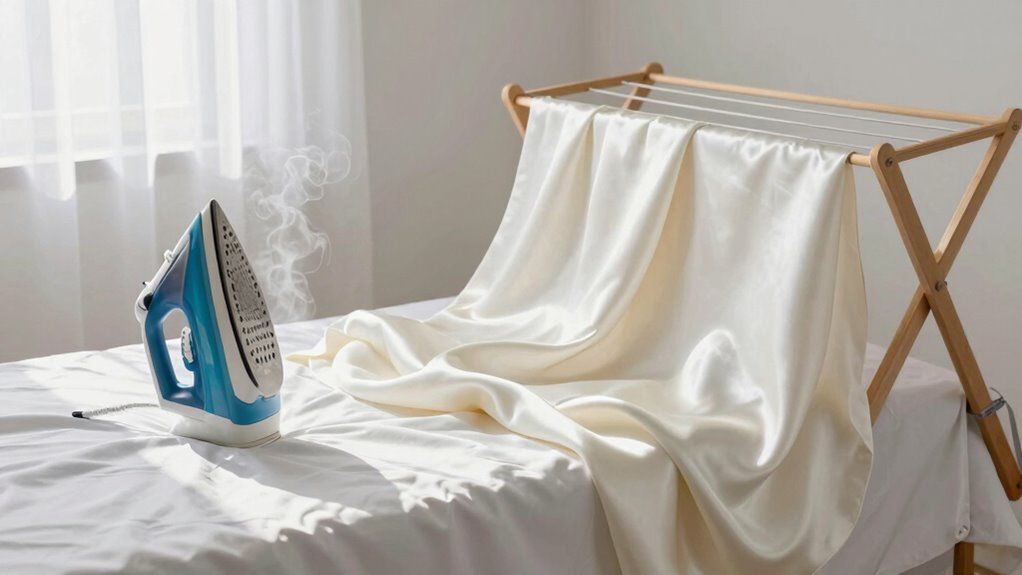
When it comes to caring for your silk bedding, high heat can be a real enemy. You need to know the ideal ironing temperature, use effective air drying techniques, and avoid direct sunlight exposure to keep your silk looking its best. Let’s explore these essential tips to protect your delicate fabric.
Optimal Ironing Temperature Guidelines
Although silk is renowned for its luxurious feel and appearance, ironing it at the wrong temperature can lead to irreversible damage. To maintain its beauty, it’s essential to follow ideal ironing temperature guidelines for different silk fabric types. Here are some silk ironing techniques to keep in mind:
- Always use the lowest heat setting on your iron.
- Place a thin cloth between the iron and the silk to protect it.
- Iron on the reverse side to avoid shine marks.
- Test a small, inconspicuous area first.
Air Drying Techniques Explained
How can you best preserve the delicate nature of silk while drying? The key lies in air drying. High heat can damage silk fibers, making them rough and brittle. Instead, lay your silk items flat on a clean, dry towel or hang them on a padded hanger. Avoid wringing or twisting, as this can disrupt moisture retention and shape. If you do hang them, make sure they’re away from direct heat sources. Keep the room well-ventilated to encourage even drying without harsh conditions. Remember, the goal is to let silk air dry naturally, maintaining its luxurious feel and luster. With these techniques, you’ll extend the life of your silk bedding and keep it looking beautiful.
Avoiding Direct Sunlight Exposure
To preserve the beauty of your silk bedding, it’s important to avoid direct sunlight exposure. UV rays can cause significant sunlight damage, leading to fading and roughness. Here are some tips to keep your silk looking pristine:
- Use curtains or blinds to block sunlight when you’re not using your bedding.
- Store silk in a dark place to protect it from UV exposure when not in use.
- Choose UV protection sprays designed for fabrics to add an extra layer of defense.
- Rotate and change your bedding regularly to minimize prolonged exposure to sunlight. Additionally, keeping your indoor air quality in check can help reduce allergens that may cling to your silk.
Choosing the Right Cleaning Method: Hand Wash vs. Machine Wash

When you’re caring for silk bedding, choosing the right cleaning method can make all the difference in maintaining its luxurious feel and appearance. Hand washing is often the best choice, as it gently cleans without putting stress on the delicate fibers. This method helps preserve silk’s natural sheen and prevents damage. On the other hand, machine washing has its drawbacks—those spinning cycles can cause fraying and loss of softness, leading to rough patches over time. If you must use a machine, opt for a gentle cycle with cold water and a silk-friendly detergent. Additionally, filter indicators can help you monitor the effectiveness of your cleaning routine. Regular cleaning helps to prevent dust and allergens from accumulating, which can further enhance the longevity of your silk textiles. In high-traffic areas, maintaining humidity management is crucial to keeping silk fibers intact. Ultimately, sticking to hand washing will keep your silk bedding looking and feeling its best for years to come. Additionally, understanding appliance care techniques can further enhance the longevity of your silk textiles. Using gentle cleaning solutions can also minimize the risk of damaging the fibers during the washing process.
The Importance of Reading Silk Care Labels
Sure! Here’s your revised article subheading content with the requested changes:
—
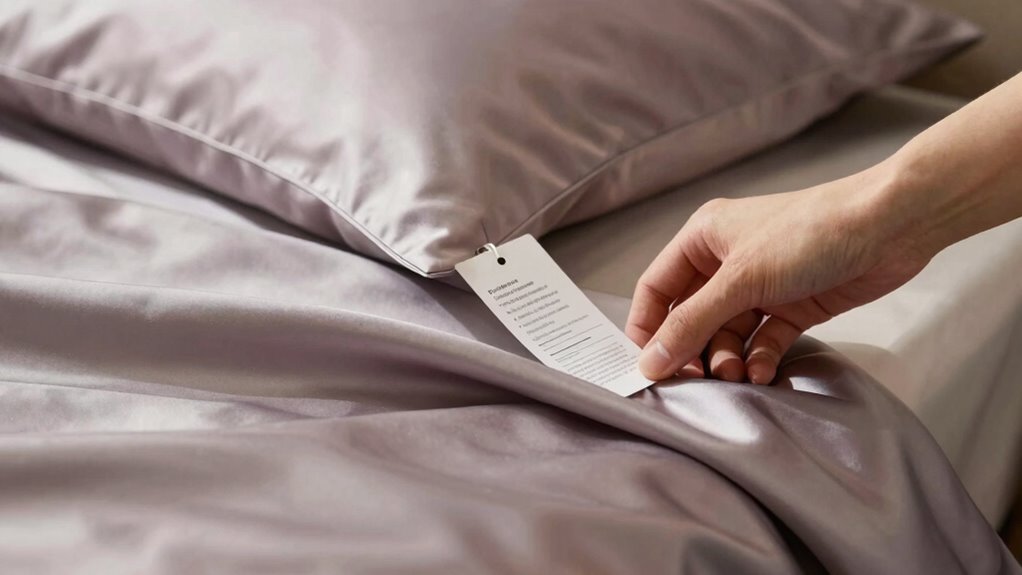
Why overlook the care labels on your silk bedding? They’re your best guide for keeping your luxurious items in top shape. Different silk fabric types require specific care, and not following those instructions can lead to damage. Here are a few reasons to pay attention:
- Preserve Quality: Understanding silk thread count helps you maintain softness and durability. Proper care, including smart programming, can enhance your silk’s longevity. Regularly checking for water damage can also help ensure your silk remains in pristine condition. Additionally, maintaining a balanced ventilation level can prevent moisture buildup that may harm your silk. Moreover, using anti-fatigue mats when standing while caring for your bedding can help reduce strain on your body, promoting a more effective cleaning routine.
- Avoid Damage: Some silk types can’t handle heat or certain detergents.
- Extend Lifespan: Proper care leads to longer-lasting bedding.
- Prevent Roughness: Incorrect washing can make your silk feel scratchy.
Additionally, ensuring your silk bedding is free from microplastics in dust can significantly contribute to a healthier sleeping environment.
—
Let me know if you need any further adjustments!
Proper Storage Techniques for Silk Bedding

Although silk bedding is a luxurious investment, how you store it can greatly impact its longevity. For proper silk storage, start by folding your bedding neatly to avoid creases. Use breathable fabric bags instead of plastic, as silk needs air circulation. Make sure that the storage area has good humidity control; ideally, keep the humidity below 50% to prevent mold and damage. Avoid placing your silk bedding in damp basements or hot attics. Additionally, consider adding cedar blocks or lavender sachets to deter pests and maintain freshness. By following these simple techniques, you’ll protect your silk bedding from deterioration and guarantee it remains soft and luxurious for years to come. Remember, a little care goes a long way!
Protecting Your Silk From Sunlight Exposure
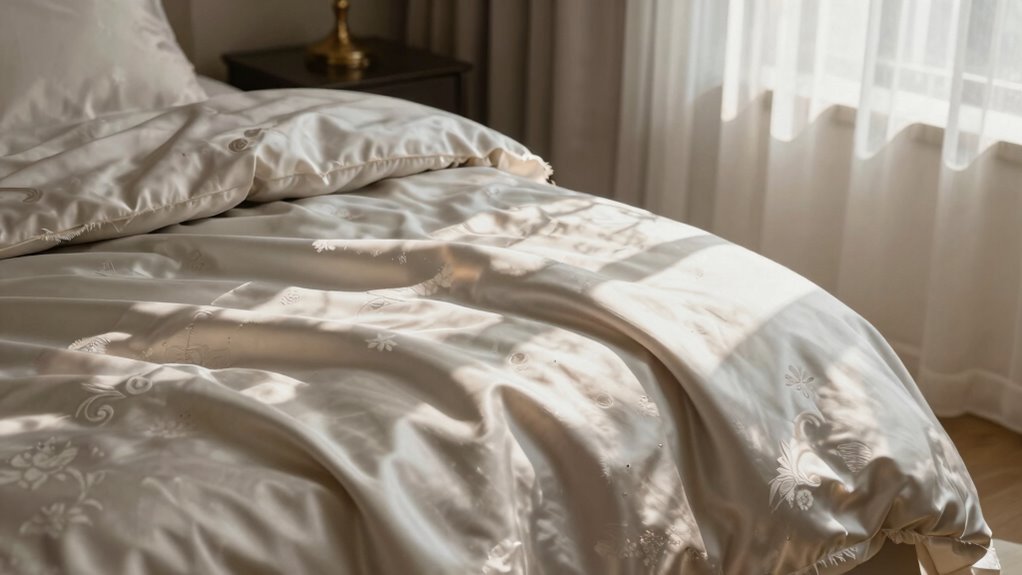
To keep your silk bedding looking pristine, it’s crucial to shield it from direct sunlight. Sunlight damage can lead to silk fading, ruining the beautiful color and sheen you love. To maintain your fabric’s longevity, consider these tips:
- Use UV-blocking curtains: They can effectively reduce harmful rays while still letting in natural light.
- Position your bedding wisely: Avoid placing silk near windows where sunlight hits directly.
- Rotate your bedding: Change the sides exposed to light, balancing wear and fading.
- Store responsibly: When not in use, keep silk in a dark, cool place to prevent any UV exposure. Additionally, consider incorporating smart home automation to monitor sunlight exposure and protect your silk bedding effectively.
Risks of Mixing Silk With Other Fabrics
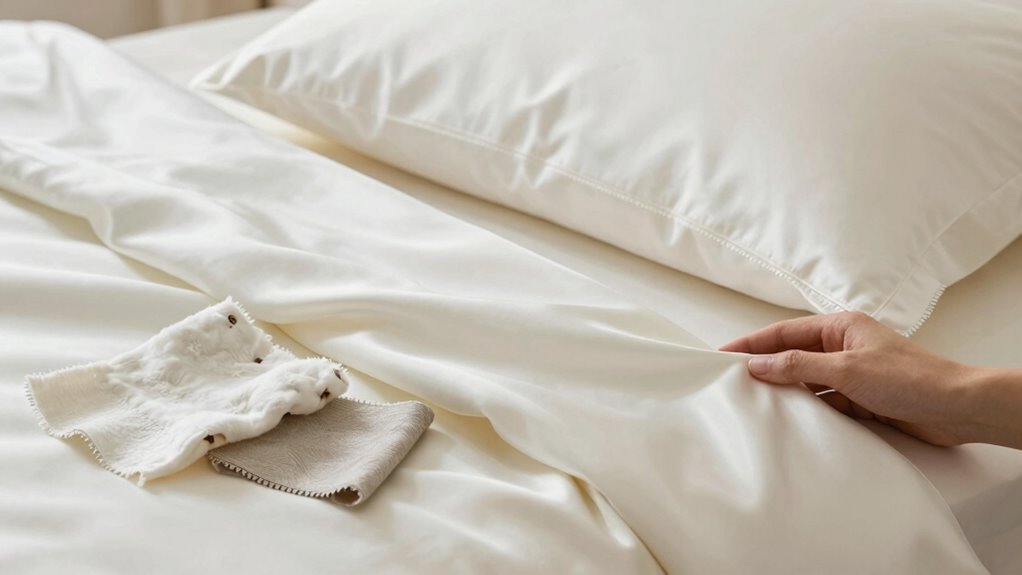
Mixing silk with other fabrics can lead to fabric friction that deteriorates its delicate fibers. You also face the risk of color bleeding, which can ruin the beautiful appearance of your silk. Plus, combining materials may compromise breathability, affecting your comfort while you sleep.
Fabric Friction Deteriorates Silk
When you combine silk with other fabrics, the delicate nature of silk can suffer due to increased friction. This friction can lead to pilling and roughness, compromising silk longevity. To guarantee proper fabric care, keep these tips in mind:
- Avoid mixing with coarse fabrics like cotton or wool.
- Opt for silk-specific laundry bags when washing.
- Separate silk items from heavier fabrics in the wash.
- Limit wear with rough accessories, such as belts or jewelry.
Additionally, using smart controls can help regulate the environment in which your silk is stored, protecting it from humidity and temperature fluctuations that can also affect its texture. Maintaining the right acoustic environment is essential for preserving silk’s softness and sheen over time. Regularly assessing your pet-friendly gear can also ensure that your silk items remain unharmed by any accidental exposure to pet-related messes. The use of AI technology can enhance the monitoring of storage conditions, ensuring optimal preservation of your silk’s quality.
Color Bleeding Risks Increase
Even though silk is a luxurious fabric, its vibrant colors are at risk of bleeding when combined with other materials. When you wash silk with cotton or synthetic fabrics, the dyes can easily transfer, ruining your silk’s beautiful hues. To maintain color integrity, you should apply effective color preservation techniques, such as washing silk separately in cold water with a gentle detergent. Avoid using harsh chemicals, as they can exacerbate color bleeding. Familiarize yourself with proper silk dyeing methods to understand how different dyes interact with fabrics. This knowledge helps you choose compatible pieces and avoid mishaps. By being mindful of what you mix with your silk, you can keep its colors fresh and stunning for longer. Additionally, understanding the color preservation techniques can significantly enhance the longevity and appearance of your silk items.
Compromised Breathability Issues
Although silk is known for its breathability, combining it with other fabrics can compromise this essential quality. When you mix silk with materials like polyester or cotton, you may face several issues that affect comfort and performance.
- Reduced airflow: Other fabrics can trap heat, diminishing silk’s natural breathability factors.
- Temperature fluctuations: Mixed fabrics may not regulate temperature well, causing discomfort during sleep.
- Moisture retention: Some blends can absorb moisture, leading to a damp feel that silk typically avoids.
- Wear and tear: The durability of synthetic fabrics can lead to roughness, counteracting silk’s smooth texture.
To maintain that luxurious feel, it’s best to keep your silk bedding pure and avoid blends that compromise its natural benefits.
Why Regular Maintenance Is Essential for Silk Bedding
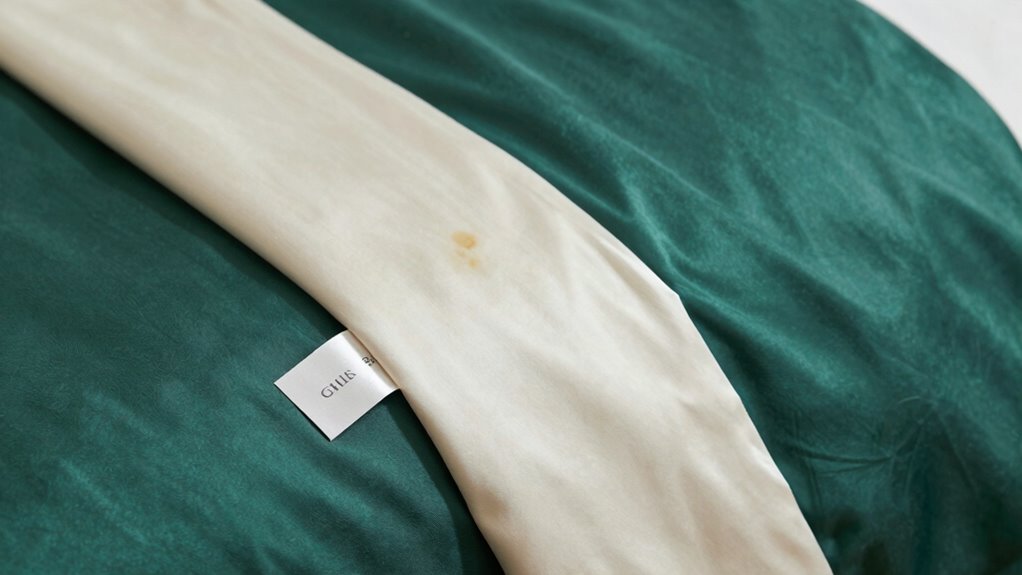
Regular maintenance is essential for silk bedding because it helps preserve its luxurious feel and vibrant appearance. By regularly caring for your silk, you enhance its silk longevity, ensuring it remains a cherished part of your bedding investment. Simple practices like gentle washing and proper storage can prevent dirt buildup and fabric damage, keeping your silk soft and smooth. Neglecting maintenance can lead to rough textures and faded colors, diminishing the quality of your bedding. Additionally, addressing minor issues promptly can save you from costly replacements down the line. Remember, taking the time to care for your silk not only protects its beauty but also maximizes the benefits of your investment, allowing you to enjoy its comfort for years to come. Incorporating dryer balls during the washing process can further help maintain the softness of your silk bedding.
Timely Repairs: When to Mend Silk Bedding
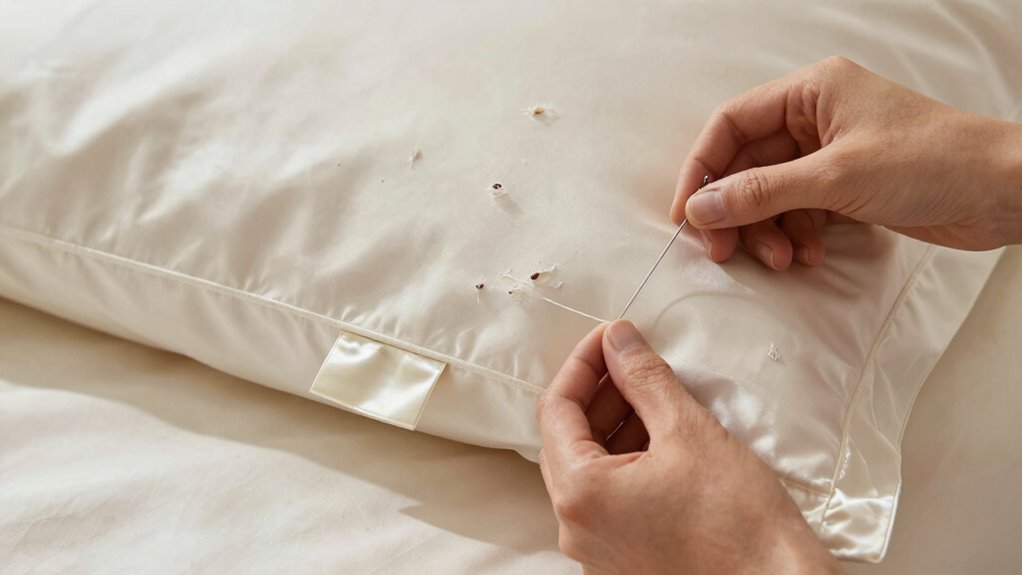
When you notice a small tear or loose thread in your silk bedding, it’s crucial to address it immediately. Ignoring these issues can lead to bigger problems and compromise your fabric’s longevity. You don’t need to be a sewing expert; simple silk patching can save your bedding.
Address small tears in silk bedding promptly to prevent further damage and ensure its longevity with simple patching techniques.
- Check for damages regularly, especially after washing. Regular high-quality repairs can prevent further damage. Utilizing essential oils like lavender can also help maintain the fabric’s softness and aroma.
- Use high-quality thread that matches your silk’s color. Maintaining fabric integrity is essential for preserving your silk’s softness. To enhance your silk care routine, consider investing in specialized cleaning products designed specifically for delicate fabrics.
- Consider professional repairs for extensive damage.
- Store silk bedding properly to prevent future wear.
- Regular maintenance and proper storage techniques can significantly extend the lifespan of your silk items.
Frequently Asked Questions
Can I Use Fabric Softener on Silk Bedding?
No, you shouldn’t use fabric softener on silk bedding. It can damage the delicate fibers and lead to roughness. Instead, focus on silk washing techniques like using a gentle detergent and cold water. For added softness, consider natural fabric softener alternatives like white vinegar during the rinse cycle. This way, you keep your silk soft and luxurious while preserving its quality. Always handle your silk with care to maintain its beauty.
What Are the Signs That Silk Is Damaged?
You’ll notice silk is damaged if it feels rough instead of smooth, indicating a compromised silk texture. Look for frayed edges, discoloration, or a loss of luster. These signs often stem from improper washing methods, like using harsh detergents or hot water. If your silk bedding feels scratchy or looks dull, it’s time to reassess your care routine to preserve its luxurious quality and keep it looking fresh.
How Often Should I Wash My Silk Bedding?
You should wash your silk bedding every two to three weeks, keeping its luxurious feel intact. Picture gentle waves caressing the shore; that’s how you should treat your silk. Use silk washing techniques to preserve its softness, and after washing, opt for air drying—lay it flat away from sunlight. This way, you’ll keep it shimmering like morning dew, ensuring it remains a delight to touch and behold every night.
Is It Safe to Use Bleach on Silk?
No, it’s not safe to use bleach on silk. Bleach can damage the delicate fibers, leading to roughness and discoloration. For proper silk cleaning tips, stick to mild detergents specifically formulated for silk. Always hand wash or use a gentle cycle, and avoid harsh chemicals. For silk maintenance advice, consider dry cleaning when necessary, and store your silk items away from direct sunlight to keep them looking luxurious and smooth.
Can Silk Bedding Be Dry Cleaned?
Absolutely, you can dry clean silk bedding, but it’s not always necessary. While dry cleaning offers convenience, silk washing at home can be gentler. If you choose dry cleaning, make certain your cleaner understands silk’s delicate nature. For best silk storage, keep it in a cool, dark place, avoiding dampness. This way, your silk stays soft and luxurious longer. Remember, a little care goes a long way in maintaining its beauty!
Conclusion
Taking care of your silk bedding is like nurturing a delicate flower; it thrives with the right attention. By avoiding common mistakes and following proper care tips, you can keep your silk soft and luxurious for years. Remember, reading care labels and choosing the right cleaning methods are key. So, treat your silk like royalty, and it’ll reward you with comfort and elegance every night. With a little effort, your silk will stay smooth and stunning!
NFL season / tailgating Picks
team gear
As an affiliate, we earn on qualifying purchases.