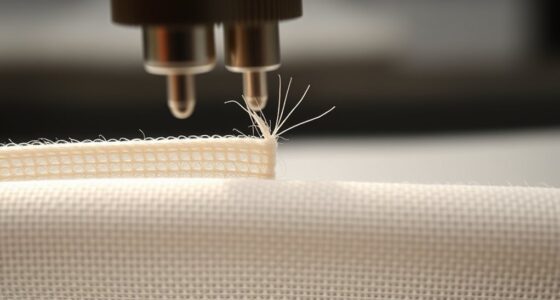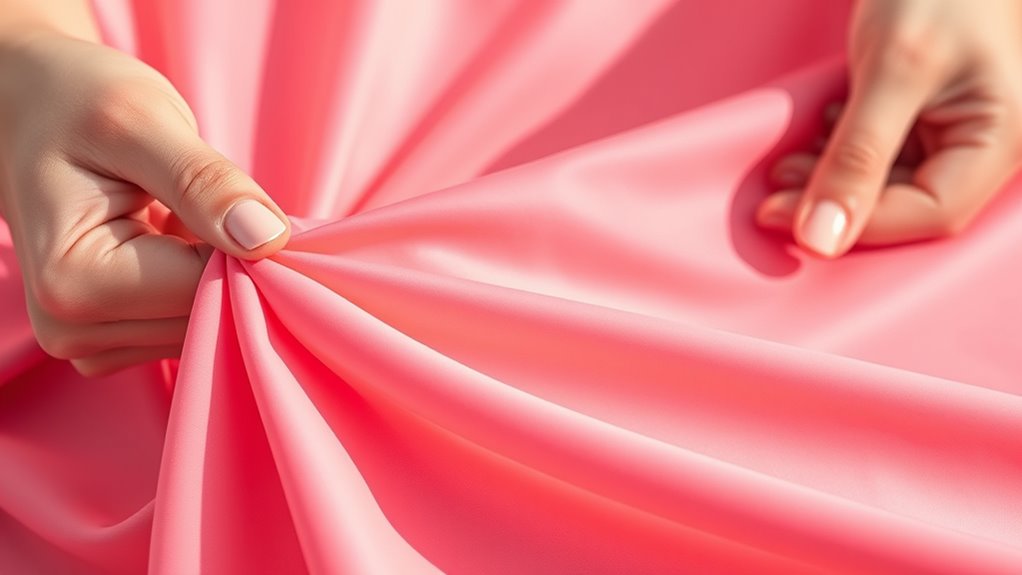

Stretch fabrics with spandex work by blending elastic fibers into materials like cotton or nylon, creating a soft, highly flexible fabric. When you wear these garments, the fibers stretch with your movements and then bounce back to keep their shape. This elasticity comes from the molecular structure of spandex and special manufacturing processes. If you want to understand how these fabrics maintain their durability and fit over time, keep exploring the details behind their design.

Get your wardrobe favorites delivered free — and shop member deals
- Fast, free delivery on millions of items
- Access to Prime Big Deal Days deals on October 6–7
- Prime Video, Amazon Music and more included
Key Takeaways
- Stretch fabrics are made by blending elastic fibers like spandex with other fibers such as cotton or polyester.
- Knitting or weaving allows the fabric to stretch and recover, maintaining flexibility during wear.
- The elastic fibers are designed to withstand repeated stretching without breaking, ensuring durability.
- Manufacturing processes include treatments for color retention and resistance to pilling, enhancing longevity.
- The fabric’s elasticity provides comfort, shape retention, and resistance to sagging or bagging over time.

Have you ever wondered what makes certain fabrics so comfortable and versatile? It all comes down to how they’re made and how they perform in everyday wear. When it comes to stretch fabrics like spandex, the secret lies in their unique fabric manufacturing process and the way they enhance garment durability. These fabrics are designed to stretch and recover without losing their shape, making them ideal for activewear, fitted clothing, and anything that requires a snug fit. The magic begins during fabric manufacturing, where tiny elastic fibers—primarily spandex or elastane—are blended with other fibers such as cotton, nylon, or polyester. This blend creates a fabric that’s both soft and highly elastic. The fabric manufacturing process involves spinning these fibers into yarns, which are then woven or knitted into fabric. Knitting is particularly common for stretch fabrics because it allows the material to naturally stretch and recover. When you wear a garment made from these fabrics, you notice how it moves with your body, providing comfort and flexibility. The elasticity isn’t just about stretch; it also contributes to garment durability. Because the fibers can stretch and return to shape repeatedly, your clothing resists sagging, bagging, or losing form over time. This resilience is a key factor in why stretch fabrics are popular in sportswear and performance clothing, where durability and flexibility are essential. Additionally, fiber elasticity plays a crucial role in maintaining the fabric’s shape after multiple wash cycles. The way these fabrics are manufactured ensures they maintain their stretchiness through wash cycles and daily wear. The elasticity comes from the molecular structure of the fibers, which are engineered to withstand repeated elongation without breaking down. This means that your stretchy garments are less likely to tear or fray, extending their lifespan. Proper fabric manufacturing also involves treatments that improve color retention and prevent pilling, further enhancing garment durability. When you choose stretch fabrics, you’re investing in clothing that offers a combination of comfort, flexibility, and long-lasting wear.
As an affiliate, we earn on qualifying purchases.
Frequently Asked Questions
How Long Does Spandex Typically Last With Regular Wear?
With regular wear, spandex typically lasts about 3 to 5 years, depending on fabric durability and how often you use it. Over time, the material’s elasticity may weaken, causing it to lose its stretchiness. To extend the material lifespan, wash it gently and avoid harsh chemicals. Proper care helps maintain the fabric’s elasticity and keeps your spandex garments fitting well longer.
Can Stretch Fabrics Cause Allergic Reactions?
You might want to watch out—stretch fabrics can cause allergic reactions if you have latex allergies or sensitive skin. Some materials contain latex or chemicals that irritate skin, leading to redness, itching, or rash. If you have skin sensitivity, always check the fabric composition before wearing. It’s better to play it safe than sorry, so opt for hypoallergenic options to keep your skin happy and healthy.
How Should I Care for and Wash Stretch Fabrics?
To care for your stretch fabrics, always wash them in cold water with a gentle laundry detergent designed for delicate fabrics. Avoid fabric softening, as it can break down elasticity over time. Instead, air dry your stretch clothing to maintain its shape and stretchiness. If needed, use a mild fabric softener sparingly, but prioritize gentle detergents and cold washes to keep your stretch fabrics in top condition.
Are There Environmental Concerns With Spandex Production?
They say “you are what you wear,” and spandex production does raise environmental concerns due to its synthetic nature and chemical processes. Its environmental impact includes pollution and resource use. Luckily, sustainable alternatives like recycled spandex or plant-based fibers are emerging. To reduce your footprint, choose eco-friendly options and support brands committed to responsible manufacturing. Being mindful helps protect the planet while enjoying your stretchy wardrobe.
What Are the Best Uses for High-Stretch Versus Low-Stretch Fabrics?
You should use high-stretch fabrics for fitness apparel and dance costumes because they move with your body and provide maximum flexibility. Low-stretch fabrics work best for tailored garments or casual wear where less movement is needed. By choosing the right stretch level, you guarantee comfort, durability, and the proper fit, whether you’re performing energetic dance moves or enjoying everyday activities.
Conclusion
Think of stretch fabrics like a dancer’s flexible moves—they bend and twist with ease, adapting perfectly to your body’s every move. When you wear spandex, you’re wrapping yourself in a material that’s as lively and responsive as a performer on stage. So, next time you slip into your stretchy clothes, remember you’re wearing a fabric that’s alive, ready to move with you. Embrace the stretch, and enjoy the freedom it brings to your everyday adventures.
Fall Picks
fall essentials
As an affiliate, we earn on qualifying purchases.