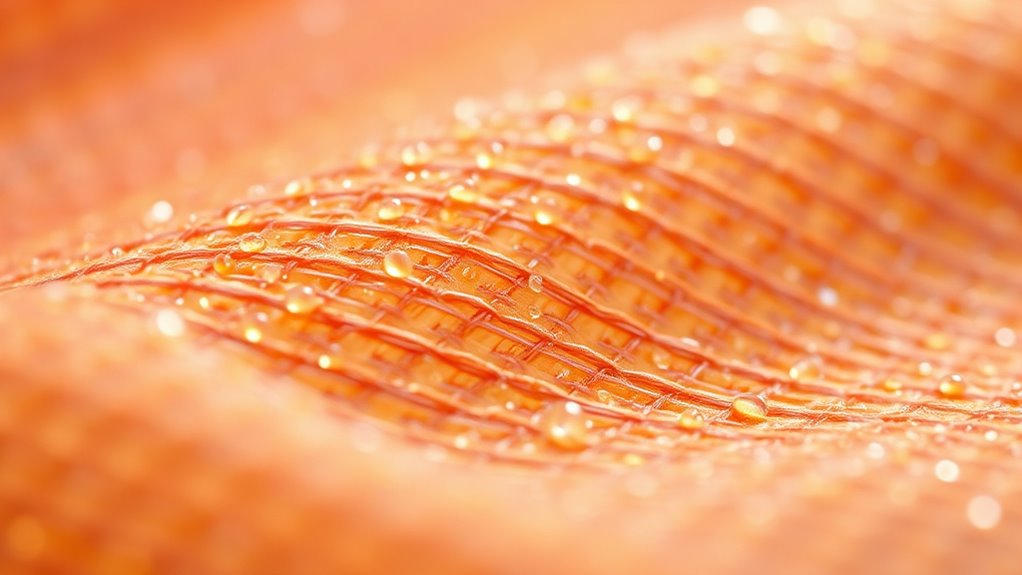

Microencapsulation in textiles allows you to have fabrics with embedded tiny capsules that release fragrances, medications, or functional compounds over time. This technology transforms regular fabrics into scented or smart materials that can respond to stimuli or provide continuous benefits like antimicrobial action or soothing agents. These fabrics are more durable and long-lasting, even after washing. If you explore further, you’ll discover how innovations are expanding the possibilities of scented and smart textiles for everyday use.
Key Takeaways
- Microencapsulation embeds active agents like scents or medications into fibers, creating scented and smart fabrics.
- It enables controlled, sustained release of active compounds, enhancing fabric functionality over time.
- Innovations include biodegradable, temperature-sensitive, and environmentally responsive capsules for improved performance.
- Challenges involve ensuring capsule durability during washing and wear, and managing production costs.
- Future trends focus on eco-friendly materials and responsive capsules for personalized, multifunctional textiles.

Have you ever wondered how textiles can offer more than just basic fabric? Microencapsulation has emerged as a groundbreaking technique that transforms ordinary textiles into multifunctional materials. By coating fibers with tiny capsules containing active ingredients, manufacturers can embed scents, medications, or other functional agents directly into the fabric. This innovation opens up exciting possibilities for scented and smart fabrics, but it also presents a mix of benefits and challenges you should consider. Recent innovations in microencapsulation have made these textiles more practical and durable, enabling their application in everyday life, healthcare, sportswear, and fashion.
Microencapsulation transforms textiles into multifunctional, durable fabrics with embedded scents and active agents for everyday and medical use.
The primary benefit of microencapsulation is its ability to deliver sustained release of active agents. For example, scented fabrics can release fragrances gradually over time, providing a continuous fresh aroma without the need for sprays or perfumes. Similarly, smart textiles can release antimicrobial agents or skin-soothing compounds in response to environmental stimuli or body temperature. This technology enhances user comfort and functionality, making garments more than just clothing—they become personalized, adaptive tools. Additionally, microencapsulation can improve the longevity and stability of active ingredients, protecting them from degradation during washing or prolonged use. This durability is especially valuable in medical textiles, where controlled release of medication or disinfectants can improve hygiene and health outcomes. Furthermore, advancements in microencapsulation techniques have increased the range of active agents that can be incorporated, including temperature-sensitive or environmentally responsive compounds.
However, integrating microencapsulation into textiles isn’t without its challenges. One significant hurdle is ensuring the capsules remain intact during manufacturing, washing, and daily wear. If they rupture prematurely, the intended benefits diminish, and the fabric’s performance may suffer. Another challenge lies in balancing the benefits with environmental concerns. Some microcapsules use synthetic materials or solvents that could pose sustainability issues. Researchers are actively working on recent innovations to develop biodegradable capsules that maintain performance while reducing ecological impact. Cost is also a factor; producing microencapsulated textiles can be more expensive than traditional fabrics, which may limit widespread adoption in fast fashion or budget-friendly products.
Despite these challenges, recent innovations are making microencapsulation more viable and versatile. Advances in nano- and micro-scale capsule production have improved capsule stability, allowing them to withstand the rigors of washing and wear. Researchers are experimenting with eco-friendly materials to create sustainable encapsulation systems, aligning with growing consumer demand for environmentally conscious products. Furthermore, smart textiles now incorporate responsive capsules that activate only under specific conditions, such as temperature shifts or moisture presence, making the technology more efficient and targeted. As the field continues to evolve, the integration of innovative materials in microencapsulation promises even greater durability and functionality in future textile applications.
Top picks for "microencapsulation textil scent"
Open Amazon search results for this keyword.
As an affiliate, we earn on qualifying purchases.
Frequently Asked Questions
How Long Do Microencapsulated Scents Last on Fabrics?
Microencapsulated scents typically last between 20 to 50 washes, depending on usage and fabric type. You’ll notice the scents’ longevity gradually diminishes over time, but fragrance stability can be enhanced with proper care. To maximize scent retention, avoid harsh detergents and high temperatures. With good maintenance, your scented fabrics can retain their freshness and aroma for a significant period, providing a pleasant experience even after multiple washes.
Are Microencapsulated Textiles Safe for Sensitive Skin?
Microencapsulated textiles are generally safe for sensitive skin, but they’re not a one-size-fits-all solution. Think of these fabrics as a delicate dance—they can cause skin irritation or allergy risks if you have very sensitive skin. Always check the fabric’s ingredients and test a small patch first. If you notice redness or discomfort, it’s best to avoid them. Stay cautious, and your skin will thank you.
Can Microcapsules Be Recharged or Replenished?
Yes, microcapsules in textiles can often be recharged or replenished, depending on the capsule design and application. Recharge methods include applying additional scent or functional agents through sprays or washes, which can extend capsule longevity. To guarantee effective recharging, follow manufacturer guidelines, as some capsules are designed for multiple uses while others may degrade over time. Proper care helps maintain the fabric’s enhanced features and prolongs their lifespan.
How Do Microencapsulated Fabrics Affect Environmental Sustainability?
Think of microencapsulated fabrics as eco-friendly gardens in your wardrobe. They can reduce waste and pollution when produced with biodegradable materials, supporting sustainability. However, biodegradability concerns arise if capsules aren’t eco-friendly, potentially harming the environment. Opting for eco-friendly manufacturing processes guarantees these fabrics are sustainable, helping you stay stylish while minimizing your ecological footprint. This balance makes microencapsulation a promising, greener future for textile innovation.
What Are the Limitations of Microencapsulation in Clothing Durability?
You might find microencapsulation limits fabric wash durability because the microcapsules can break down with repeated washing. If microcapsule stability isn’t maintained, the scented or functional properties fade quickly. To guarantee clothing stays effective longer, manufacturers need to enhance capsule resilience against washing conditions. This means improving microcapsule stability, so the fabric retains its benefits without compromising durability during regular use and laundering.
Conclusion
As you weave microencapsulation into textiles, you’re crafting a tapestry of innovation and comfort. These tiny capsules are like secret whispers, releasing scents and smart features that awaken your senses and enhance your daily life. With each fiber, you’re building a future where fabrics breathe, respond, and embrace you like a loyal companion. Embrace this technology, and let your textiles become a symphony of scent and intelligence, transforming ordinary into extraordinary.