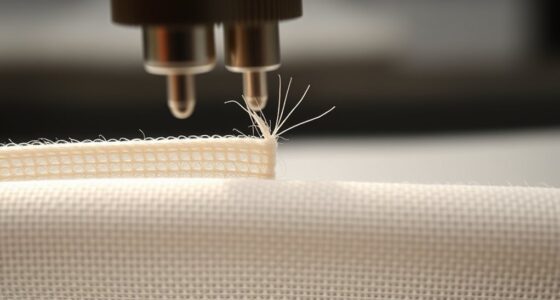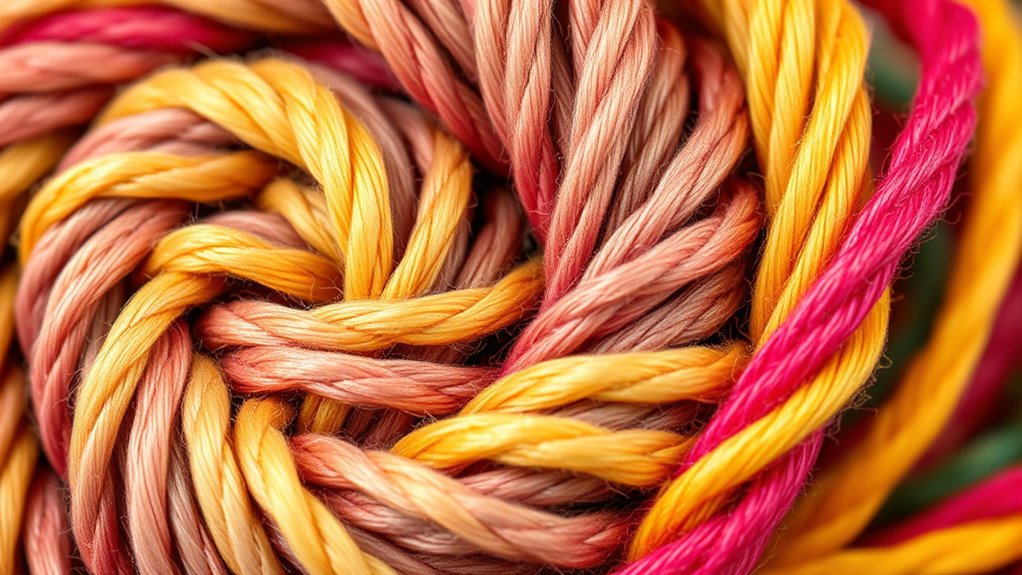

Understanding yarn twist is essential because it impacts your fabric’s strength, elasticity, and dyeability. When twist is too low, yarns can be weak and prone to unraveling, while too much twist makes fibers brittle and prone to breakage. Proper twist guarantees your fabric remains durable, vibrant, and long-lasting through repeated wear and washing. If you want to learn how twist affects other fabric qualities and manufacturing, continue exploring this important aspect.
Key Takeaways
- Proper twist enhances yarn strength, reducing breakage and increasing fabric durability during wear and washing.
- Higher twist tightens fibers, improving elasticity and resistance to deformation over time.
- Correct twist ensures uniform dye absorption, maintaining colorfastness and overall fabric longevity.
- Over-twisted yarns can become brittle, leading to early fabric failure and decreased lifespan.
- Balancing twist levels optimizes fabric resilience, preventing unraveling and extending durability.

The twist applied to yarn plays a crucial role in determining the overall durability of the fabric it produces. When you understand how twist influences fiber properties, you can make better choices to guarantee your fabrics last longer and look better over time. One key aspect affected by twist is fiber elasticity. High twist levels tend to tighten the fibers, making the yarn more resistant to stretching and deformation. This increased elasticity means the fabric can endure repeated wear and washing without losing its shape or developing holes. Conversely, low twist yarns often have more fiber flexibility, which can lead to softer fabrics but might compromise their strength and longevity. Striking the right balance in twist ensures that your fabric remains resilient while maintaining an appealing feel and appearance.
Another critical factor twist influences is dye absorption. When yarns are spun with the appropriate twist, the fibers are held together tightly, creating a more uniform surface that absorbs dye evenly. This results in vibrant, consistent colors that don’t fade quickly, enhancing the aesthetic appeal of your fabric. Over-twisted yarns can sometimes hinder dye penetration because the fibers are packed too tightly, preventing the dye molecules from penetrating deeply. On the other hand, under-twisted yarns may have gaps or uneven surfaces, leading to inconsistent coloring and a less polished look. Proper twist ensures the fiber surface is optimized for dye absorption, which is especially important if you’re aiming for bright, long-lasting colors in your finished fabric.
Moreover, the twist impacts how the yarn responds during manufacturing. Too little twist can make the yarn weak and prone to unraveling, while too much twist can cause the fibers to become brittle and break more easily during processing. This directly affects the durability of the final fabric, as weak or brittle yarns are more susceptible to damage over time. When you choose the correct twist level, you ensure the yarn maintains its integrity through various processes, from spinning to finishing, ultimately producing a more durable fabric.
Additionally, understanding the role of twist in fiber adhesion can help in selecting the appropriate yarn for specific applications, enhancing the overall quality and performance of the textile. It’s not just about the look or feel, but about producing a fabric that stands up to daily use, washing, and aging. When you pay attention to the twist, you’re making a conscious choice to improve your fabric’s longevity, colorfastness, and overall quality.
Frequently Asked Questions
How Does Twist Affect Fabric Breathability?
Twist affects fabric breathability by influencing fiber porosity and air flow. When you use a high twist, fibers become tightly packed, reducing porosity and limiting air flow, which makes the fabric less breathable. Conversely, a lower twist increases fiber gaps, allowing more air to pass through. So, adjusting the twist level helps you control how well your fabric breathes, impacting comfort and moisture management.
Can High Twist Yarns Cause Fabric Stiffness?
Think of high twist yarns like tightly wound springs—they can make fabric stiff, much like stiff cardboard. High twist reduces fiber elasticity, limiting how much the fabric can bend or stretch, leading to stiffness. It also affects yarn uniformity, making the fabric less soft and more rigid. If you want a flexible, comfortable fabric, avoid excessive twist; instead, aim for a balance that preserves elasticity and softness.
What Is the Optimal Twist Level for Eco-Friendly Fabrics?
For eco-friendly fabrics, aim for a moderate twist level that guarantees twist consistency without over-twisting, which can harm natural fibers. You should select a twist that balances durability and softness, typically around 10-12 TPI (twists per inch). This helps maintain the integrity of eco-friendly fibers like organic cotton or hemp, ensuring your fabric remains sustainable, strong, and comfortable while avoiding stiffness or fragility caused by excessive or insufficient twist.
How Does Twist Influence Dye Absorption and Colorfastness?
Think of yarn twist like a sponge soaking up water; it greatly influences dye penetration and color retention. When you increase twist, the yarn becomes more compact, limiting dye absorption and possibly leading to uneven color. Conversely, a lower twist allows better dye penetration, resulting in vibrant, consistent hues. Proper twist guarantees your fabric achieves excellent colorfastness, maintaining its bright appearance even after washing, so your fabric stays beautiful longer.
Does Yarn Twist Impact Pilling Resistance Over Time?
Yes, yarn twist impacts pilling resistance over time. When you have a higher, uniform twist, it strengthens the fiber structure and reduces loose fibers that cause pilling. Consistent twist improves fiber strength and guarantees even distribution, which helps the fabric resist pilling longer. If the twist is uneven or too loose, fibers can easily loosen and form pills, decreasing the durability and appearance of your fabric over time.
Conclusion
Remember, the twist in your yarn isn’t just a detail—it’s the heartbeat of your fabric’s strength. Think of it as the thread that weaves resilience into every fiber, holding your creation together through wear and tear. Without proper twist, your fabric risks unraveling like a fragile dream. So, choose your twist wisely; it’s the silent guardian of durability, turning mere threads into a lasting masterpiece that stands the test of time.