TL;DR

Get your wardrobe favorites delivered free with Prime
- Fast, free delivery on millions of items
- Prime Video, Amazon Music and more included
- Member-only deals all year
A Who What Wear writer says she packed carry-on-only for a week in Switzerland’s Jungfrau Region, relying on fleece-lined jackets, base layers, hiking boots and packable weather protection. Her account offers a personal packing list, not a general travel advisory; conditions can vary with altitude and itinerary.
A Who What Wear writer has shared the carry-on packing list she used for a week in Switzerland’s Jungfrau Region, describing layers and weather-resistant clothing for changing conditions between valley walks, mountain outings and evening meals. The account is a personal report from a fall visit to Grindelwald, not an official forecast or universal guide to Alpine conditions.
The writer says she visited Grindelwald the previous month and used the Jungfrau Railway to travel between Interlaken, Männlichen and other parts of the region. Her activities included hiking, visiting ice palaces, railway rides and a zip-line experience. She says she wore every item she packed during the week and left space in her carry-on for Swiss chocolate.
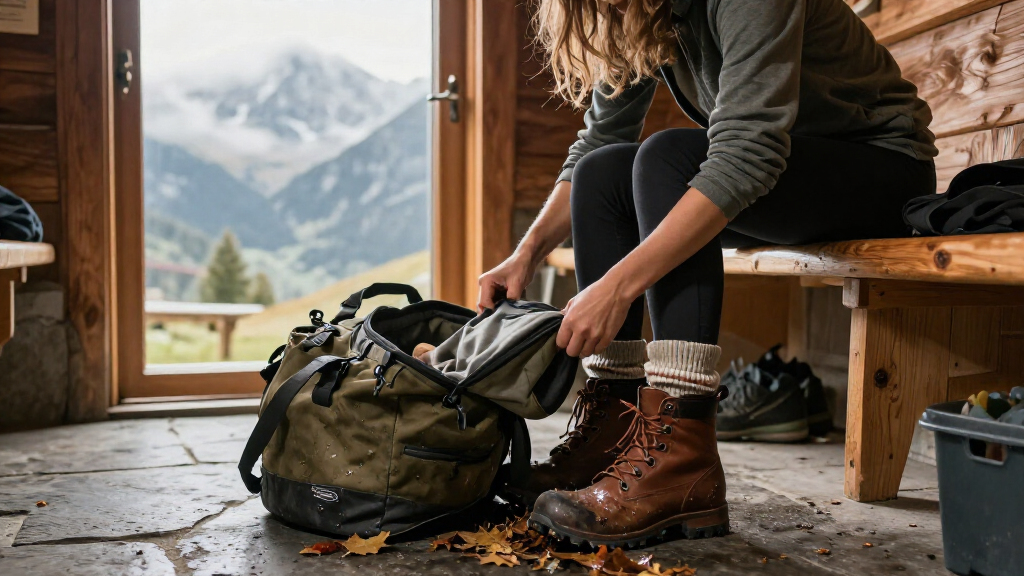
Her list centers on fleece-lined jackets and long-sleeve base layers, including lightweight cashmere and sweat-wicking options. She also packed hiking boots, cable-knit sweaters and supportive leggings, which she used in place of technical hiking pants. For changing weather, she recommends having a packable windbreaker available to layer over warmer clothing, along with a scarf, beanie or headband, and gloves in a day bag.
The article names specific products from brands including Zara, Miu Miu, H&M, Aritzia, Danner, J.Crew and COS. These are examples from the writer’s own packing list, rather than a tested ranking or requirement. Her account says the clothes served her for outdoor activities and dining, but it does not provide prices, performance testing or a comparison of the listed products.
Packing for Changing Alpine Conditions
The list highlights a practical challenge for fall visitors: a trip can involve different temperatures and activities at different elevations. The writer says she encountered sunny valley strolls as well as cold conditions at mountain locations, and layered a windbreaker over a fleece-lined jacket at the railway’s highest point.
For readers planning a similar trip, the useful takeaway is the approach rather than any single brand: pack adaptable layers and keep lightweight cold-weather accessories accessible. The account also shows how the writer balanced outdoor clothing with pieces she could wear at dinner. Individual needs will vary with the forecast, planned activities and personal comfort, so the list should not be treated as a substitute for checking conditions before travel.
Popular right now

Dyson V8 Cyclone Cordless Vacuum

Shark AI Ultra Robot Vacuum, Black/Silver, AV2511AE

KitchenAid Artisan 5-Qt Tilt-Head Stand Mixer – Dried Rose (KSM150PS)
As an affiliate, we earn on qualifying purchases.
A Week in the Jungfrau Region
The report is based on the writer’s visit to Grindelwald, a mountain town in Switzerland, and travel around the Jungfrau Region using the Jungfrau Railway. She describes moving from Interlaken to Männlichen and taking part in both outdoor and indoor activities. The article also mentions dining, including fondue, and says she packed only a carry-on.
The writer identifies the visit as a fall trip and says her clothing choices were intended to work across the week’s itinerary. Her references to the railway’s elevation and to cold wind are part of her own travel account. The source does not specify the exact dates of the visit or provide a day-by-day weather record.
“I wore every piece I brought.”
— Who What Wear writer
What the Packing List Cannot Establish
The report does not give the exact travel dates, daily temperatures or forecast, so readers cannot use it to infer typical conditions for a particular week. It also does not establish that the same clothing would suit every traveler, route or activity. The writer’s experience with leggings and specific boots is personal, and the article does not compare those items with technical hiking trousers or other footwear.
Product availability, prices and specifications may change, and the source does not indicate that the writer independently tested every item on the list. The article offers no details about the writer’s full itinerary, the duration or difficulty of hikes, or any safety assessment of the activities described.
Check Conditions Before You Go
The article does not announce a follow-up trip or provide a future update. For travelers using the list, the next step is to check current forecasts and activity-specific guidance for their dates and destinations, especially when plans include higher elevations. Packing adaptable layers, a weather-resistant outer shell and accessible cold-weather accessories follows the writer’s reported approach, but the final kit should match the trip’s conditions and activities.
Key Questions
What did the writer pack for her fall trip to Switzerland?
She lists fleece-lined jackets, long-sleeve layers, hiking boots, cable-knit sweaters, supportive leggings, a windbreaker and cold-weather accessories such as a scarf, headwear and gloves.
Where did the writer travel?
She visited Grindelwald and traveled around Switzerland’s Jungfrau Region, including between Interlaken and Männlichen on the Jungfrau Railway.
Is this a general guide to what everyone should wear in the Alps?
No. It is a first-person account of what worked for one writer’s fall itinerary. Conditions, comfort and clothing needs vary by location, elevation, activity and traveler.
Did the writer pack technical hiking pants?
No. She says she did not own technical hiking pants and instead packed several pairs of supportive leggings. The source does not compare their performance with dedicated hiking trousers.
What should travelers check before relying on the list?
Check the forecast and activity guidance for the specific dates, elevations and routes planned. The report does not include exact travel dates or daily weather measurements.
Source: whowhatwear.com