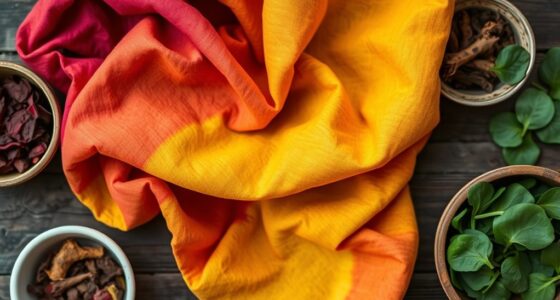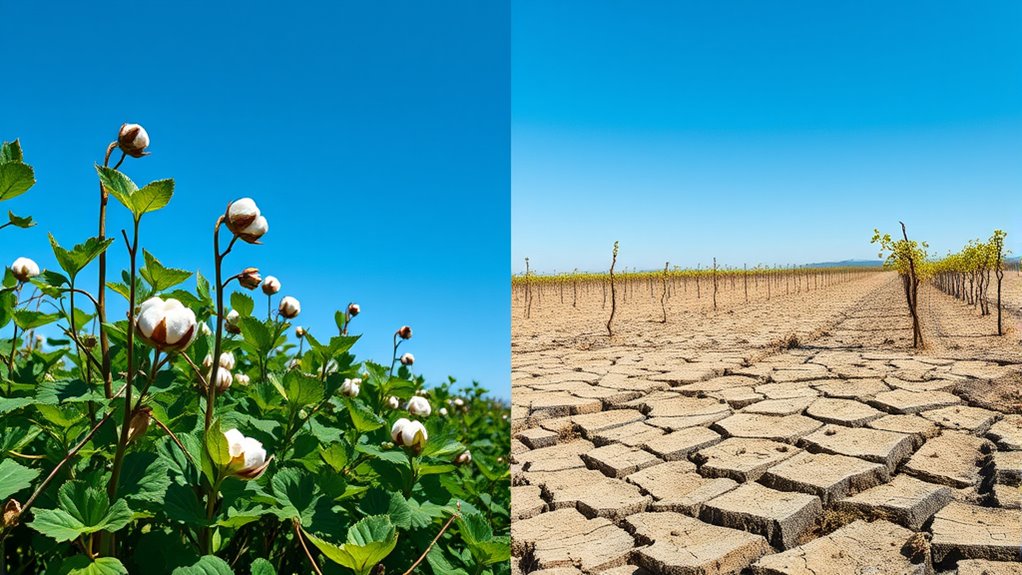

Choosing organic cotton helps you reduce environmental harm by avoiding synthetic pesticides, fertilizers, and GM seeds that damage soil, water, and ecosystems. Organic farming uses natural methods to keep soil healthy, conserve water, and support biodiversity, making it a more sustainable choice. It also reduces chemical runoff and lowers water consumption compared to conventional cotton, which is often water- and chemical-intensive. To learn more about the true impact of your choices, keep exploring the differences between these types of cotton.

Get your wardrobe favorites delivered free — and shop member deals
- Fast, free delivery on millions of items
- Access to Prime Big Deal Days deals on October 6–7
- Prime Video, Amazon Music and more included
Key Takeaways
- Organic cotton reduces chemical runoff and pollution compared to conventional cotton.
- It promotes healthier soil and ecosystems through sustainable farming practices.
- Organic cotton generally uses less water due to improved soil moisture retention.
- Conventional cotton cultivation often depletes soil health and requires high water and chemical inputs.
- Overall, organic cotton offers a more eco-friendly and sustainable option for environmental conservation.

When choosing between organic cotton and regular cotton, understanding their differences can help you make a more informed, eco-friendly decision. One of the key factors to consider is how each type impacts the environment, especially in terms of sustainable farming practices and water consumption. Organic cotton is grown without synthetic pesticides, fertilizers, or genetically modified seeds, which means it relies on natural methods to maintain soil health and control pests. This approach promotes sustainable farming because it keeps the soil healthy over time, reduces pollution, and supports biodiversity. Conversely, regular cotton cultivation often involves heavy use of chemical inputs that can degrade soil quality and harm surrounding ecosystems.
Water consumption is another essential aspect to compare. Organic cotton generally requires less water than conventional cotton because healthy, organic soils retain moisture better and support more resilient plants. When you choose organic, you’re supporting a method that minimizes water waste, which is especially important in regions prone to droughts. Traditional cotton farming, on the other hand, tends to be highly water-intensive, often relying on irrigation systems that drain local water sources and contribute to environmental stress. This high water usage not only impacts local communities but also leads to increased energy consumption for pumping and distribution.
By opting for organic cotton, you’re encouraging farming practices that are more aligned with environmental sustainability. It promotes soil vitality, reduces chemical runoff into waterways, and conserves water resources. These benefits contribute to a healthier planet, and when you purchase organic cotton products, you support farmers who prioritize eco-friendly methods, which often result in better working conditions and healthier communities.
However, it’s also worth noting that organic cotton may have a lower yield compared to conventional cotton, partly because it relies on natural methods that can be less aggressive in pest control and fertilization. But this trade-off is worth it considering the long-term environmental benefits. Choosing organic cotton aligns with a commitment to reducing your ecological footprint by supporting farming systems that prioritize sustainability and water conservation.
Ultimately, understanding these differences empowers you to make choices that reflect your values. Whether it’s supporting sustainable farming practices or conserving water, opting for organic cotton helps reduce your impact on the environment and promotes a more ethical, eco-conscious lifestyle. Every purchase you make contributes to a shift toward more sustainable agriculture and a healthier planet for future generations.
As an affiliate, we earn on qualifying purchases.
Frequently Asked Questions
How Does Water Usage Differ Between Organic and Regular Cotton?
You’ll find that organic cotton generally uses less water than regular cotton because of better water conservation practices. Organic farms often rely on natural rainfall and employ more efficient irrigation techniques, reducing water waste. This means you’re helping the environment by supporting water-saving methods when choosing organic cotton. By prioritizing irrigation efficiency, organic cotton minimizes water consumption, making it a more sustainable choice compared to conventional cotton farming.
Are Organic Cotton Products More Affordable Than Regular Cotton?
Is the grass greener on the organic side? When it comes to cost comparison, organic cotton products are generally more expensive than regular cotton, mainly due to higher price factors like sustainable farming practices and certification costs. While you might pay a premium upfront, you’ll support eco-friendly methods. However, prices vary based on brand, product type, and market demand, so it’s worth shopping around for the best deal.
What Certifications Validate Organic Cotton Claims?
You can trust organic cotton claims when products have certification standards from reputable organizations like GOTS (Global Organic Textile Standard) or USDA Organic. These certifications validate organic labeling by ensuring farmers avoid synthetic chemicals and follow sustainable practices. Always check the label for these certifications to confirm the product truly meets organic criteria, giving you confidence in its eco-friendly and chemical-free qualities.
How Long Does Organic Cotton Take to Grow Compared to Regular Cotton?
Organic cotton typically takes about 180 to 200 days to reach harvest, slightly longer than regular cotton’s 150 to 180 days. The growth duration depends on climate, soil, and farming practices, but organic methods often require patience due to natural pest control and soil enrichment. This extended harvest cycle can impact planting schedules, yet it promotes healthier ecosystems and sustainable farming practices.
Can Organic Cotton Be Grown in All Climates?
Growing organic cotton is like trying to fit a puzzle piece—it’s not suitable everywhere. While organic cotton offers great benefits, its climate adaptability limits its growing regions mainly to areas with specific temperature, rainfall, and soil conditions. You’ll find it thrives in regions with moderate climates, but extreme heat, cold, or humidity can hinder growth. So, it’s not feasible to grow organic cotton in all climates, only in suitable ones.
Conclusion
Choosing organic cotton is like planting a seed for a brighter future—you nurture the earth and it rewards you with sustainability and health. Regular cotton, on the other hand, often drains the soil and pollutes the water, leaving scars behind. Every fiber you pick up is a symbol of your impact. By choosing organic, you’re not just buying fabric; you’re sowing hope, protecting our planet’s delicate balance for generations to come.
Fall Picks
fall essentials
As an affiliate, we earn on qualifying purchases.