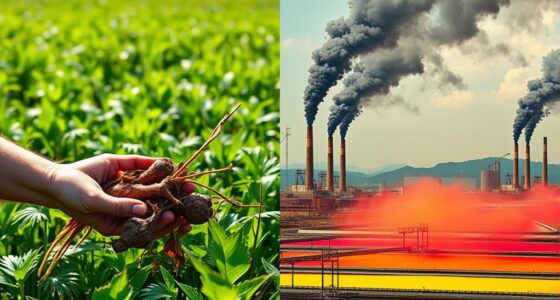

Regenerative farming for textiles focuses on restoring soil health, which leads to stronger, more resilient fiber crops like cotton, hemp, and flax. By avoiding synthetic chemicals and using crop rotation, cover crops, and compost, you help rebuild the soil’s natural ecosystem. This approach reduces environmental impact, promotes sustainability, and produces better quality fibers. If you want to discover how these practices support a greener, more responsible fiber industry, keep exploring these innovative methods.
Key Takeaways
- Regenerative farming enhances soil health through organic practices, creating resilient land for sustainable fiber crop production.
- Crop rotation and diversification improve soil fertility, reduce pests, and boost fiber quality.
- Healthy soils foster stronger, more resilient fiber plants, decreasing reliance on synthetic chemicals.
- Integrating preservation techniques ensures fiber quality during harvest and processing, supporting eco-friendly textiles.
- These practices promote land vitality, climate resilience, and a sustainable, responsible textile industry.
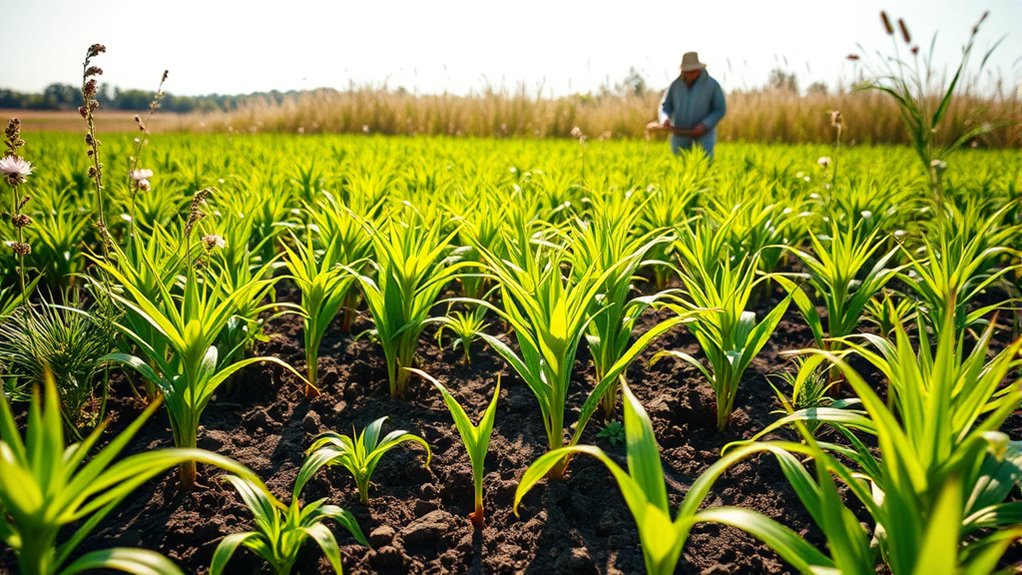
Have you ever wondered how sustainable practices can transform the way we grow fibers for textiles? When you embrace regenerative farming, you’re not just cultivating crops—you’re nurturing the land itself. One of the core principles is improving soil health, which is crucial for sustainable fiber production. Healthy soil isn’t just about the absence of pests or weeds; it’s a vibrant ecosystem teeming with microorganisms that support plant growth. By avoiding synthetic chemicals and instead focusing on organic matter, cover crops, and compost, you can enhance soil structure, increase nutrient retention, and promote better water absorption. This creates a strong foundation for fiber crops like cotton, hemp, or flax, making them more resilient and less dependent on external inputs.
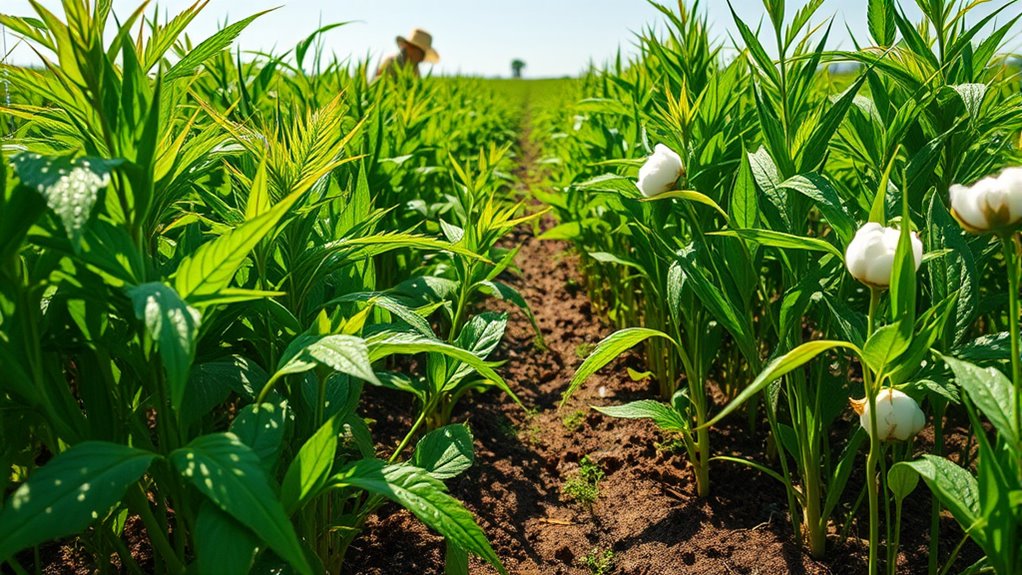
Another key aspect of regenerative farming is crop diversity. Instead of planting the same crop season after season, you rotate different types of plants. This practice reduces pest and disease buildup, limits soil degradation, and breaks the cycle of monoculture’s exhaustion. When you diversify your crops, you also enrich the soil with a broader range of nutrients, which supports healthier plant growth and can even improve fiber quality. Intercropping—growing two or more crops together—further enhances soil health by creating a more balanced ecosystem. It attracts beneficial insects, reduces the need for chemical interventions, and helps maintain consistent yields over time.
By integrating crop diversity into your farming practices, you’re actively restoring the land’s vitality. This approach discourages erosion, prevents nutrient depletion, and fosters a self-sustaining system where the soil continuously regenerates itself. As a fiber grower, you’ll find that healthy, diverse soils produce stronger, more resilient plants with better fiber properties. Plus, these practices often require fewer synthetic inputs, lowering your environmental impact and reducing costs. Over time, the land becomes more productive and resilient to climate stresses, ensuring a sustainable supply of fibers for textiles.
Additionally, understanding and applying principles of the Refrigeration Cycle can help in preserving harvested fibers and other perishable farm products, ensuring they maintain quality throughout processing and transport. Ultimately, adopting regenerative farming methods centered around soil health and crop diversity allows you to heal and sustain the land, rather than deplete it. It’s a way to produce textiles that are truly eco-friendly while also supporting the health of local ecosystems. When you prioritize these practices, you’re helping to create a more sustainable textile industry—one that values land stewardship as much as fiber quality. This shift not only benefits the environment but also sets a new standard for ethical and responsible fiber production in the future.
Frequently Asked Questions
What Are the Main Sustainable Fiber Crops Used in Regenerative Farming?
You should know that organic cotton and hemp cultivation are the main sustainable fiber crops used in regenerative farming. Organic cotton is grown without synthetic chemicals, restoring soil health, while hemp requires minimal water and enriches the soil with nutrients. Both crops promote biodiversity, reduce pollution, and support healthy land, making them excellent choices for regenerative farming practices that prioritize sustainability and land healing.
How Does Regenerative Farming Impact Local Biodiversity?
You’ll find that regenerative farming boosts local biodiversity markedly; studies show it can increase soil carbon levels by up to 20%. By avoiding chemicals and diversifying crops, it creates habitats for pollinators and native species. This approach supports pollinator populations, essential for healthy ecosystems, and helps restore land resilience. As a result, your farm not only produces sustainable fibers but also nurtures thriving, diverse ecosystems that benefit everyone.
Can Regenerative Practices Be Applied to Small-Scale Textile Farms?
Yes, regenerative practices can be applied to small-scale textile farms. You can focus on soil restoration by adding organic matter and avoiding chemicals, which improves soil health. Incorporate crop diversification to enhance biodiversity and reduce pests naturally. These methods help maintain healthy land, increase resilience, and produce high-quality fibers. Small farms benefit from these sustainable practices, creating a positive environmental impact while supporting local economies.
What Are the Economic Benefits for Farmers Adopting Regenerative Methods?
You’ll find adopting regenerative methods offers significant economic benefits, including access to new markets that value sustainable fibers. Financial incentives like grants or certifications can offset initial costs, making the shift easier. Over time, you’ll notice improved soil health reduces input expenses, boosting your profit margins. Plus, eco-conscious consumers are willing to pay premium prices, helping you grow your business sustainably while contributing to land healing.
How Long Does It Take to See Land Healing Results Through Regenerative Farming?
You’ll see land healing results in about 2 to 3 years, but don’t expect miracles overnight—your soil recovery and plant revitalization take time. It’s like a slow-motion magic trick, where patience is your best friend. With consistent regenerative farming practices, you’ll notice healthier soil, more vibrant plants, and a thriving ecosystem gradually emerging. So, hang in there—your land’s transformation is worth the wait!
Conclusion
By embracing regenerative farming for textiles, you’re helping to heal the land and create sustainable fibers for the future. Think of it as your own personal quest—like a modern-day knight—restoring balance and vigor to earth’s precious resources. Every choice you make, from selecting eco-friendly fabrics to supporting regenerative practices, contributes to this noble cause. So, take up your lance and champion this green revolution—because the future of our planet depends on it.