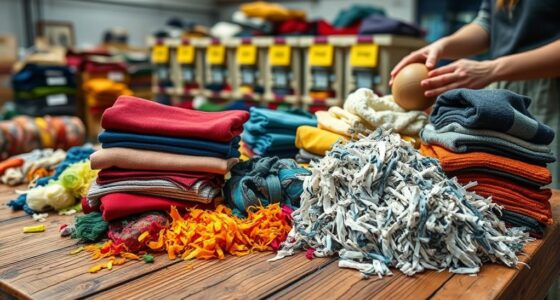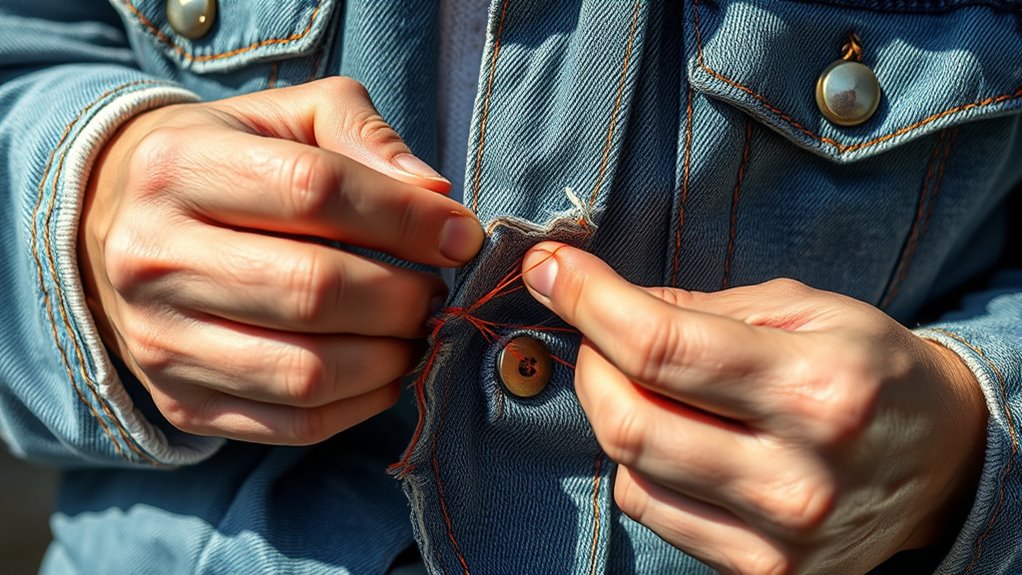

Embracing repair and mend culture helps you extend your clothes’ lifespan, making your wardrobe more sustainable and eco-friendly. By learning simple DIY techniques like sewing on buttons, patching tears, or dyeing fabrics, you can reduce waste and avoid fast fashion. Repairing garments also fosters creativity and mindfulness, encouraging long-term investment in your clothes. If you keep exploring, you’ll discover even more ways to incorporate these practices into your everyday style.
Key Takeaways
- Repair and mend culture promotes prolonging clothing lifespan by fixing tears, replacing zippers, and customizing garments at home.
- It encourages sustainable fashion by reducing textile waste, pollution, and resource depletion associated with fast fashion.
- DIY repair techniques foster creativity, resourcefulness, and mindful consumption, turning old clothes into unique, long-lasting pieces.
- Community workshops and sharing repair tips build social connections and embed sustainable practices into everyday clothing habits.
- Embracing repair as a lifestyle shift supports environmentally responsible choices and reduces reliance on disposable fashion.
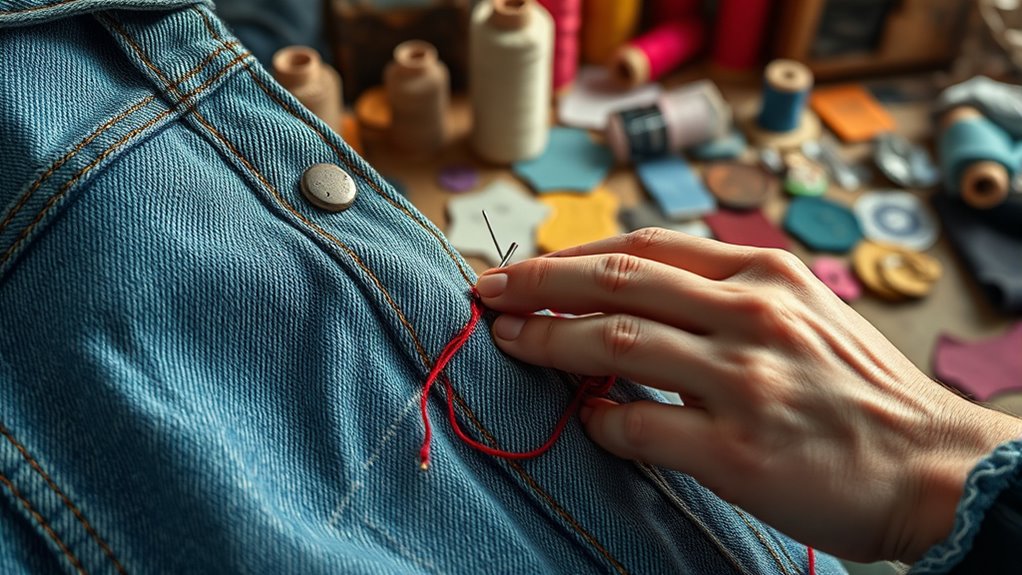
In recent years, Repair and Mend Culture has gained momentum as people seek sustainable ways to extend the life of their belongings. This movement encourages you to rethink how you handle clothing, shifting away from fast fashion and toward more mindful, resourceful practices. Instead of tossing out worn or damaged garments, you’re inspired to repair, alter, or repurpose them, aligning with the principles of sustainable fashion. DIY clothing repair becomes a powerful tool in your arsenal, allowing you to fix tears, replace zippers, or even dye fabrics at home. Not only does this reduce waste, but it also fosters a sense of accomplishment and connection to your wardrobe.
When you embrace repair and mend techniques, you’re actively participating in reducing the environmental impact of fashion. Fast fashion contributes considerably to pollution, landfill overflow, and resource depletion. By choosing to mend your clothes, you avoid contributing to these issues. You learn to see garments as long-term investments rather than disposable items. Repairing your clothes doesn’t mean you need to be a professional seamstress; many fixes are straightforward and can be learned through online tutorials or community workshops. Everything from sewing on a missing button to patching a hole can be done with minimal tools and effort. This approach empowers you to take control over your wardrobe, making conscious decisions that benefit both your style and the planet.
Additionally, understanding the importance of filtration systems in maintaining clean and allergen-free clothing can help you select proper repair techniques for delicate fabrics and sensitive skin. Sustainable fashion isn’t just about buying eco-friendly brands; it’s about extending the life of what you already own. When you adopt DIY clothing repair, you’re practicing a form of mindfulness with your consumption habits. It encourages you to think about the durability of your clothes and to invest time in maintaining them rather than constantly seeking new items. Repairing your clothes can also be a creative process—you might decide to redesign an old shirt or turn worn-out jeans into something new. This mindset promotes resourcefulness and helps you develop skills that can save money while reducing your ecological footprint.
Furthermore, repair and mend culture builds community and shared knowledge. You can connect with others who are passionate about sustainable fashion, exchange tips, or even organize clothing repair gatherings. Over time, repairing becomes not just a necessity but a sustainable lifestyle choice rooted in care, creativity, and responsibility. By choosing to repair, you’re not only extending your clothes’ lifespan but also contributing to a more sustainable future. It’s a practical, empowering way to make a difference—one stitch at a time.
Top picks for "repair mend culture"
Open Amazon search results for this keyword.
As an affiliate, we earn on qualifying purchases.
Frequently Asked Questions
How Can I Identify When a Clothing Item Is Worth Repairing?
You can identify if a clothing item is worth repairing by considering its clothing valuation and repair cost analysis. If the item holds sentimental value or is high-quality, repair might be worthwhile. Assess the damage and estimate repair costs; if these costs are markedly lower than replacing it, then repairing makes sense. Avoid fixing items with extensive damage or low value, as repairs may not be cost-effective.
What Tools Are Essential for Basic Clothing Mending at Home?
Imagine a well-stocked sewing kit, your trusted toolkit for fixing torn seams or loose buttons. Essential tools include fabric scissors, sharp enough to cut through threads smoothly, and sewing needles for delicate stitches. A few colorful threads, pins, and a thimble complete your kit, turning your home into a tiny repair shop. With these, you can mend clothes confidently, extending their life and reducing waste effortlessly.
Are There Sustainable Fabrics That Are Easier to Repair?
Yes, you’ll find that sustainable fabrics like linen and hemp, made from biodegradable fibers, are often easier to repair. Repair-friendly textiles, such as organic cotton or Tencel, also tend to hold stitches well and mend more smoothly. These fabrics not only support eco-conscious choices but also make fixing tears or holes simpler, helping you extend your clothes’ lifespan while reducing waste and environmental impact.
How Do Repair Practices Vary Across Different Cultures?
Did you know that some cultures, like Japan, have a long history of kintsugi, mending broken pottery with gold? Similarly, cultural repair traditions vary worldwide, with regions developing unique mending techniques. In Africa, elaborate embroidery covers tears, while in Europe, patchwork is popular. These regional mending techniques reflect cultural values, emphasizing resilience and creativity. You can embrace these diverse practices to extend your clothes’ lifespan and honor global repair traditions.
What Are Some Common Mistakes to Avoid When Mending Clothes?
When mending clothes, avoid common sewing mistakes like pulling stitches too tight or using mismatched thread colors. Be careful with patch repair tips—make sure patches are securely glued or sewn, and cut them neatly to prevent fraying. Don’t rush the process; take your time to align seams properly. This way, your repairs last longer and look neat, ensuring your clothes stay wearable and stylish.
Conclusion
By embracing repair and mend culture, you hold the power to transform your wardrobe and save the planet. Every stitch you make, every hole you mend, contributes to a movement bigger than yourself—one that can outlast empires and change minds. Don’t let fast fashion trap you in a cycle of waste; instead, become a hero of sustainability. Remember, your actions could be the spark that ignites a global revolution in how we treat our clothes.