
Felting art allows you to turn wool into vibrant sculptures and textured paintings using various fiber techniques. By manipulating wool through needle felting or wet felting, you can create detailed, expressive forms with rich colors and textures. Your choices in fiber methods and color blending help bring your artistic vision to life, whether aiming for realism or abstract design. Keep exploring how these techniques can release your full creative potential in wool felting.
Key Takeaways
- Fiber techniques like needle and wet felting enable sculpting and texturing wool into detailed artistic forms.
- Wool colors are selected and layered to create realistic, vibrant, and nuanced visual effects.
- Combining fiber methods allows artists to craft both structural sculptures and painted-like surface details.
- Mastery of felting techniques transforms wool into a versatile medium for three-dimensional art and storytelling.
- Thoughtful color blending and fiber manipulation enhance the depth, realism, and expressive potential of wool artworks.
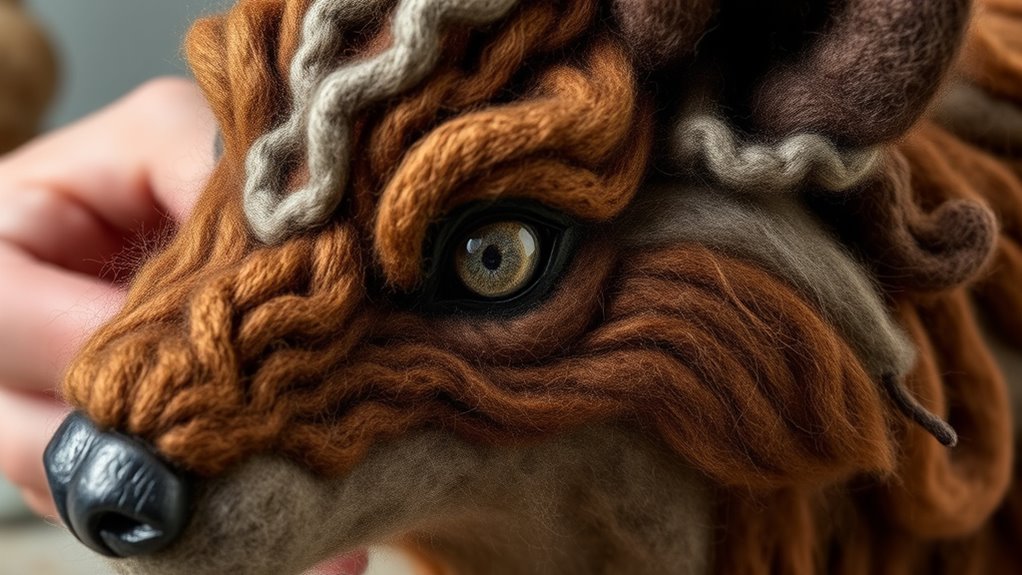
Have you ever wondered how soft, colorful wool can be transformed into intricate, three-dimensional artworks? The secret lies in mastering fiber techniques that allow you to manipulate wool into stunning sculptures and detailed designs. The process begins with understanding how different fiber techniques—such as needle felting and wet felting—give you control over the wool’s shape and texture. These methods enable you to create everything from delicate figurines to bold, textured pieces. Your choice of wool colors plays a vital role in bringing your vision to life. Bright, vibrant hues can make your artwork pop, while subtle shades add depth and realism. Combining wool colors thoughtfully allows you to craft nuanced shading and intricate patterns, much like painting with a palette of fibers.
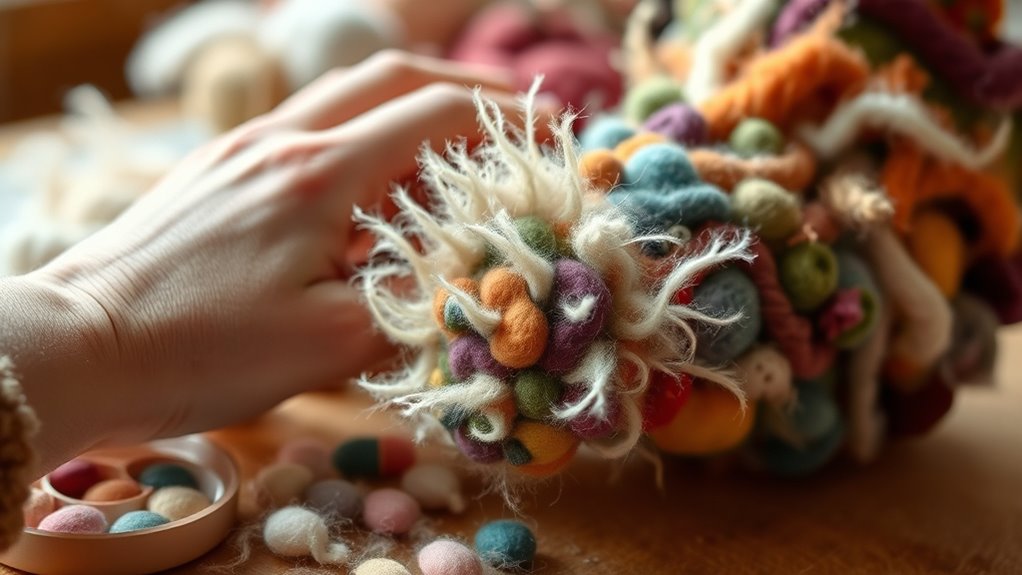
As you start exploring felting art, you’ll quickly see that fiber techniques are the foundation of your craft. Needle felting involves using a barbed needle to repeatedly poke the wool, matting the fibers together and shaping them into detailed forms. This technique offers precision and control, perfect for creating fine features or complex textures. Wet felting, on the other hand, uses water, soap, and agitation to interlock wool fibers into a solid fabric or sculpture. It’s excellent for making larger, more textured pieces or experimenting with surface effects. By combining these fiber techniques, you can develop a unique style that blends structural integrity with artistic flair. Additionally, understanding the different fiber techniques helps you select the most suitable method for each project.
Wool colors are more than just visual choices—they’re tools for storytelling and expression. You might select a spectrum of shades to mimic natural scenes or opt for bold contrasts to highlight specific parts of your sculpture. Mixing wool colors directly while felting allows you to create seamless gradients and subtle transitions, adding realism and depth. You can also layer different colors to build complex textures or highlight details. As you work, consider how the interplay of fiber techniques and wool colors can enhance the dimensionality of your piece, transforming simple wool into a vibrant, tactile work of art.
In essence, felting art combines technical skill with creative vision. By mastering fiber techniques and thoughtfully selecting wool colors, you harness the full potential of wool as a versatile medium. Every poke of the needle or splash of water is an opportunity to craft something unique and expressive. With patience and experimentation, you’ll discover that felting is not just a craft but a form of artistic storytelling—sculpting and painting with the fibers of wool itself.

Mayboos Needle Felting Starter Kit,Wool Roving 40 Colors Set, Wool Felt Tools with Instruction Included for Felted Animal Needle Felting Supplies
40 Assorted Colorful Color Needle Felting Wool: Our felt wool kit includes 40 color wool roving, packaged in…
As an affiliate, we earn on qualifying purchases.
As an affiliate, we earn on qualifying purchases.
Frequently Asked Questions
What Types of Wool Are Best for Felting Art?
You should choose wool fiber types like merino, Corriedale, or Romney for felting art because they work best for shaping and detailing. These felting wool varieties have fine, dense fibers that felt easily and hold their shape well. Avoid coarse or greasy wool, as it’s harder to manipulate. Using high-quality felting wool varieties guarantees your sculptures and paintings turn out smooth, durable, and vibrant.
How Long Does It Take to Complete a Felting Sculpture?
It really depends on the complexity of your project, but you can expect a felting sculpture to take anywhere from a few hours to several days. With steady felting techniques, you’ll see progress as you work, ensuring sculpture durability over time. Don’t rush it, or you’ll end up chasing your tail. Patience and attention to detail are key to creating a stunning, long-lasting piece.
Can Felting Art Be Displayed Outdoors?
Yes, you can display felting art outdoors, but you need to think about outdoor display considerations. To protect your piece, use weatherproofing techniques like sealing with a clear waterproof coating or resin. Make sure to place it in a sheltered spot away from direct rain and sunlight to prevent deterioration. Regularly check and reapply protective layers to keep your felting art looking vibrant and intact in outdoor conditions.
What Safety Precautions Are Needed During Felting?
When felting, you should wear safety gear like masks and gloves to protect your skin and lungs from tiny fibers and potential irritants. Be aware of allergy awareness, especially if you have wool sensitivities, and choose hypoallergenic materials if needed. Keep your workspace well-ventilated, and wash your hands thoroughly afterward. These precautions help guarantee a safe and enjoyable felting experience.
Are There Eco-Friendly Wool Options Available?
Think of choosing eco-friendly wool like planting a tree for future generations. You can find sustainable wool and organic felting fibers that minimize environmental impact. These options are harvested responsibly, avoiding harmful chemicals and practices. By selecting these eco-conscious fibers, you support a healthier planet while creating beautiful art. Look for labels that specify organic or sustainably sourced wool, and you’ll be making a positive difference with every felting project.

100% Wool – Assorted Wool Roving for Needle Felting, Wet Felting, Felt Painting, Spinning and Blending – Colorful Corriedale
XL PACKAGE: 200 grams (7 ounces) – This big bag is filled with a variety of colorful wool…
As an affiliate, we earn on qualifying purchases.
As an affiliate, we earn on qualifying purchases.
Conclusion
As you explore felting art, you gently open yourself to a world where wool transforms into stunning sculptures and paintings. With patience and a touch of creativity, you’ll discover a subtle magic that invites admiration without overwhelming. Embrace the delicate beauty of felting, and let your imagination softly guide your hands. In this quiet art form, you’ll find a charming way to express yourself—where every fiber whispers its own gentle story.

99 Pcs Needles Felting Tools Needles Wool Felting Soft Needle Felting Pad with 3 Sizes Felting Needles for Needle Felting Craft DIY
Complete Wool Felting Tools: includes 3 different sizes of needles, 36 gauge, 38 gauge, 40 gauge felting needles…
As an affiliate, we earn on qualifying purchases.
As an affiliate, we earn on qualifying purchases.

Sukh 40pcs Felting Wool Roving – Core Wool Roving Bulk Spinning DIY Craft Mix Color
40 Colors Felting Wool Roving:The package contains 40 colors of wool roving normally. These colorful and bright colors…
As an affiliate, we earn on qualifying purchases.
As an affiliate, we earn on qualifying purchases.