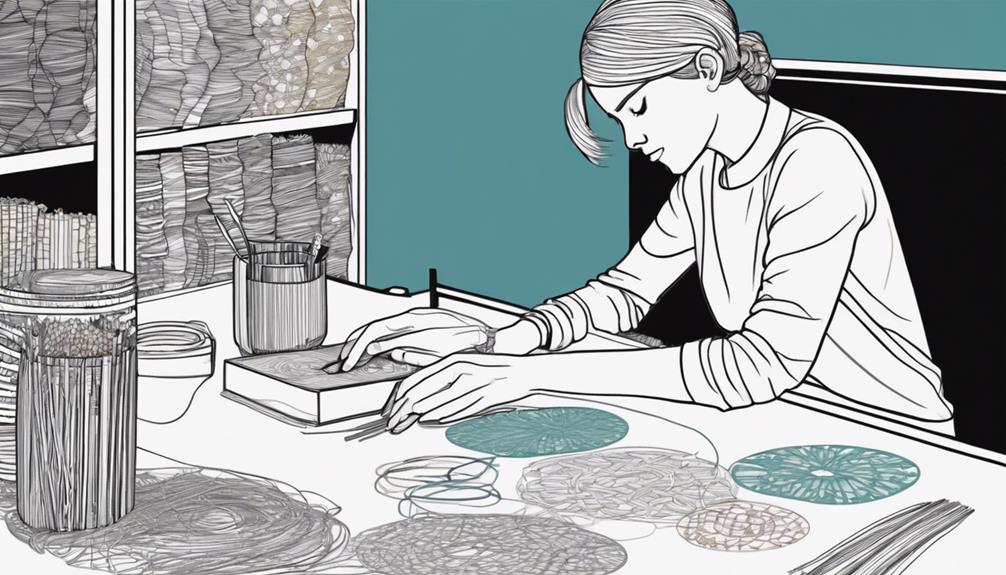
Fiber art and textile art may seem similar, but they serve different purposes. Fiber art focuses on creative expression through manipulating fibers directly, pushing boundaries with techniques like stretching, knotting, and mixed media to evoke emotion or provoke thought. Textile art, on the other hand, emphasizes traditional craft methods like weaving or quilting, often celebrating cultural heritage and functional objects. Exploring these differences can expand your understanding of fiber-based art forms—if you keep exploring, you’ll discover more about their unique qualities.
Key Takeaways
- Fiber art emphasizes innovative, tactile manipulation of fibers for artistic expression, often pushing traditional boundaries.
- Textile art focuses on fabric as a medium for functional, decorative objects rooted in craftsmanship and cultural traditions.
- Fiber art uses techniques like stretching, folding, and mixed media, creating textured, sculptural, three-dimensional works.
- Textile art employs traditional methods such as weaving, embroidery, and quilting, often highlighting heritage and cultural practices.
- Fiber art tends to explore conceptual themes and experimentation, while textile art emphasizes craftsmanship and functional design.
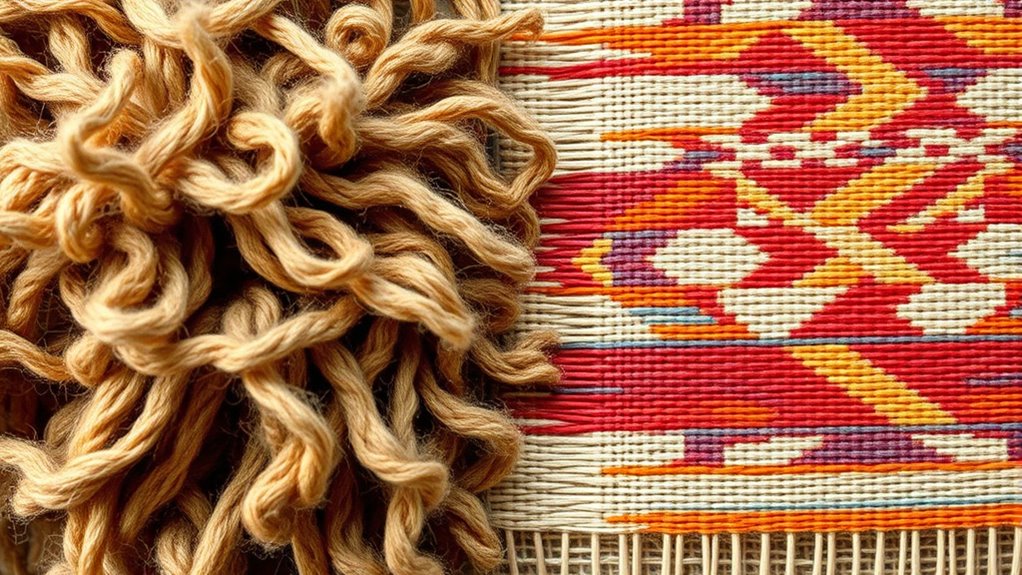
Have you ever wondered what sets fiber art apart from textile art? While both involve working with fibers, they serve different artistic purposes and employ distinct techniques. Fiber art emphasizes the creative expression through manipulating fibers directly, often pushing boundaries beyond traditional fabric uses. Textile art, on the other hand, tends to focus on fabric as a medium for functional or decorative objects, like quilts, garments, or woven tapestries.
In fiber art, fabric manipulation is a core technique. You might stretch, fold, twist, or knot fibers to create textured, sculptural pieces that challenge conventional notions of fabric as merely a material for clothing. These manipulations often result in three-dimensional forms that highlight the material’s tactile qualities. Fiber artists frequently incorporate mixed media techniques, blending fibers with other materials such as metal, paper, or found objects. This combination allows for greater experimentation, giving your work depth and complexity. For example, you could sew or attach beads, paint on fibers, or embed small sculptures into your fiber pieces. The goal isn’t just to create a decorative object but to evoke emotion or provoke thought through innovative techniques.
While textile art tends to prioritize craftsmanship and traditional methods like weaving, embroidery, or quilting, fiber art is more about conceptual exploration and pushing artistic limits. You’re encouraged to explore unconventional tools and processes, often blending different disciplines. This approach opens up a world of possibilities: using fabric manipulation to create dynamic surfaces or employing mixed media techniques to add layers of meaning. Your work might incorporate stitched elements alongside painted or sculpted fibers, resulting in pieces that are as much about process as they are about the final object.
Another key difference is the intent behind each form. Textile art often celebrates heritage, tradition, and functional design, making it accessible and rooted in cultural practices. Fiber art tends to be more experimental, aiming to challenge perceptions and explore personal or societal themes. Both, however, require a deep understanding of fiber properties and techniques. When working with fiber art, you might spend hours mastering fabric manipulation or experimenting with mixed media, always seeking new ways to transform ordinary fibers into extraordinary art.
Understanding fiber properties and how fibers respond to manipulation is essential for developing innovative techniques and pushing creative boundaries in your work. Ultimately, understanding the difference helps you choose your approach based on your goals. Whether you want to craft beautiful, functional textiles or push creative boundaries through innovative techniques, knowing these distinctions enriches your artistic journey and broadens your creative horizons.
Frequently Asked Questions
How Do Fiber Art and Textile Art Influence Contemporary Design?
Fiber art and textile art influence contemporary design by inspiring modern design integration and promoting sustainable art practices. You can incorporate innovative fiber techniques and eco-friendly materials into your projects, creating unique, environmentally conscious pieces. These art forms encourage experimentation with textures, patterns, and functions, pushing design boundaries. By embracing fiber and textile arts, you foster creativity and sustainability in your work, shaping a more vibrant, responsible future for contemporary design.
Are There Specific Tools Unique to Fiber or Textile Arts?
You’ll find that specialized tools are essential for fiber and textile arts, making your work truly extraordinary. From giant weaving frames to tiny embroidery needles, these tools are designed for unique techniques that ordinary tools can’t handle. They unleash creative possibilities, allowing you to create intricate textures and patterns. Without these specialized tools, your artistry would be limited, but with them, you can push boundaries and craft stunning, one-of-a-kind pieces.
Can Fiber Art Be Considered Fine Art?
Yes, fiber art can be considered fine art. As a fiber art definition, it involves creating art with fibers, textiles, and related materials. Many fiber artists gain recognition in the fine art classification through exhibitions and galleries, showcasing their skill and conceptual depth. Your work in fiber art can definitely reach the level of fine art, especially when it emphasizes creative expression, craftsmanship, and innovative techniques.
What Are Common Materials Used in Both Arts?
You’ll find that both fiber art and textile art commonly use materials like natural fibers—cotton, wool, silk—and synthetic fibers such as nylon and polyester. You might incorporate fiber dyes to add color, and create intricate textile patterns through weaving, quilting, or embroidery. These materials help you craft diverse pieces, blending artistic expression with functional or decorative qualities, whether you’re making a sculpture or a fabric-based artwork.
How Do Cultural Traditions Shape Fiber and Textile Art Practices?
Cultural traditions deeply influence your fiber and textile art practices, shaping your choices of materials, motifs, and techniques. You often incorporate cultural symbolism and traditional techniques that carry historical meaning, creating a dialogue between past and present. As you weave stories and symbols into your work, you preserve cultural identity and invoke a sense of community, making each piece not just art but a powerful vessel of cultural memory.
Conclusion
Now that you see the subtle difference, remember that fiber art is like a wildflower—free, expressive, and experimental—while textile art is more like a woven tapestry—structured and functional. Both weave stories, but it’s your choice to follow the thread that speaks to your soul. Embrace the distinction, for in understanding these arts, you open a universe where creativity and craft intertwine—forever reminding you that art is as limitless as your imagination.