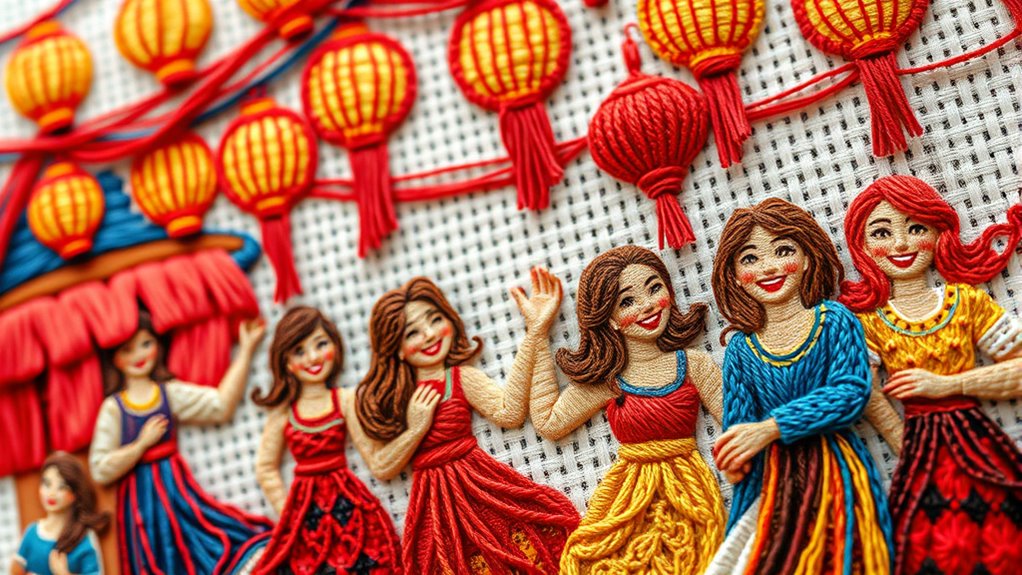

Embroidered stories turn fabric into a vivid narrative space, allowing you to convey personal, cultural, or historical tales through intricate stitches and symbolic patterns. Techniques like crewelwork and satin stitch add depth and detail, creating layered, meaningful imagery. Modern artists blend traditional methods with new approaches, making embroidery more expressive and relevant today. If you explore further, you’ll discover how this ancient craft continues to evolve as a powerful form of storytelling.
Key Takeaways
- Embroidery serves as a visual storytelling medium, conveying cultural, personal, and historical narratives through intricate stitches.
- Traditional techniques like crewelwork and satin stitch carry symbolic and cultural significance in narrative embroidery.
- Modern artists innovate by blending classical stitches with contemporary themes, mixed media, and digital embroidery.
- Detailed craftsmanship and tactile textures enhance emotional connection and depth in embroidered storytelling.
- Embroidery reflects cultural identity and collective memory, bridging historical techniques with modern expressive practices.

Have you ever considered how embroidery can tell a story? This art form isn’t just about pretty stitches; it’s a visual language that conveys tales, histories, and personal journeys. Throughout history, embroidery has served as a means of storytelling, often reflecting cultural values, myths, and historical events. You might be surprised to learn that many traditional techniques—like crewelwork, satin stitch, and couching—have been passed down through generations, each carrying its own narrative significance. These historical techniques form the foundation of embroidery as a storytelling medium, allowing artisans to craft detailed scenes and symbols that resonate with cultural identity and collective memory. Today, modern interpretations of embroidery build upon these classical methods, blending old and new to create innovative ways of storytelling. Contemporary artists experiment with mixed media, abstract motifs, and bold color palettes, pushing the boundaries of traditional embroidery to tell more personal or socially relevant stories. This evolution highlights how embroidery remains a dynamic art, capable of adapting to changing times while respecting its roots. When you look at a piece rooted in historical techniques, you can see the careful craftsmanship that reflects centuries of tradition. These techniques often involve layered stitches and intricate patterns that require patience and skill, transforming simple fabric into a tapestry of meaning. Modern interpretations, however, tend to emphasize individual expression and contemporary themes. Artists today might incorporate digital embroidery machines or unconventional materials, making the process more accessible and versatile. Yet, whether using traditional hand-stitching or high-tech methods, the goal remains the same: to tell a story. You’ll find narratives embedded in every detail—whether it’s a historical scene depicted with delicate crewelwork or a bold statement about identity stitched with vibrant threads. Embroidery’s tactile nature invites viewers to connect emotionally, encouraging a closer look at the details and symbols that make each piece unique. As you explore this art form, you’ll notice how artists reinterpret age-old techniques to suit modern themes, breathing new life into classic stitches. The stories told through embroidery can be personal, political, or cultural, making it a powerful medium for expression. Additionally, historical techniques like crewelwork and satin stitch have been recognized for their cultural significance and technical complexity, adding depth to the storytelling. Whether crafted by hand or machine, embroidery’s storytelling capacity continues to evolve, bridging the past with the present. In the end, these techniques—both historical and modern—allow you to see beyond the fabric and threads, revealing stories that are as rich and layered as the stitches themselves.
Top picks for "embroider story narrative"
Open Amazon search results for this keyword.
As an affiliate, we earn on qualifying purchases.
Frequently Asked Questions
What Historical Cultures Influenced Embroidery Storytelling Techniques?
You can see how ancient cultures like Chinese, Byzantine, and African influenced embroidery storytelling techniques through their use of cultural symbolism and mythological narratives. These societies used intricate stitches and motifs to depict legends, religious stories, and societal values. By studying these historical influences, you gain a deeper appreciation for how embroidery becomes a visual language, conveying complex stories and cultural identities across generations.
How Long Does It Typically Take to Complete a Narrative Embroidery Piece?
It typically takes you anywhere from several weeks to several months to complete a narrative embroidery piece, depending on its complexity. Your embroidery timelines involve detailed stitching durations, as intricate designs demand more time and patience. The size, number of stitches, and level of detail all influence how long it will take. By dedicating consistent effort, you can see your storytelling embroidery come to life within a manageable timeframe.
What Are the Most Common Motifs Used in Storytelling Embroidery?
Did you know that 65% of storytelling embroidery features symbolic patterns? You’ll often see motifs like mythical creatures and mythological symbols, which convey deeper meanings and cultural stories. These motifs help narrate tales through visual storytelling, making your embroidery more engaging. Incorporate these common motifs to add richness and symbolism, transforming your work into a compelling narrative that resonates with viewers and preserves cultural heritage.
Can Narrative Embroidery Be Adapted for Modern Digital Media?
Yes, you can adapt narrative embroidery for modern digital media by incorporating digital storytelling and multimedia integration. You might create interactive embroidery projects that combine traditional stitches with digital elements like videos, animations, or augmented reality. This approach allows you to tell stories in innovative ways, engaging audiences across platforms. By blending textile art with digital tools, you bring new life to classic embroidery, making it relevant and immersive for today’s tech-savvy viewers.
How Do Artists Preserve Traditional Embroidery Storytelling Methods?
You preserve traditional embroidery storytelling methods by actively engaging in cultural preservation efforts and passing down techniques to younger generations. Incorporate innovative materials and modern designs to keep the art form relevant, blending artistic innovation with tradition. Document your work through photographs or digital archives, ensuring the stories continue to inspire. By balancing respect for heritage with creative evolution, you maintain the cultural significance of embroidery storytelling for future generations.
Conclusion
As you bring these embroidered stories to life, remember that a picture is worth a thousand words. Your stitches weave memories and meanings into fabric, creating timeless narratives. Every piece you craft adds to a larger tapestry of human experience. Keep in mind, “A stitch in time saves nine,” so nurture your skills now. With patience and passion, your embroidery can truly tell stories that last for generations.