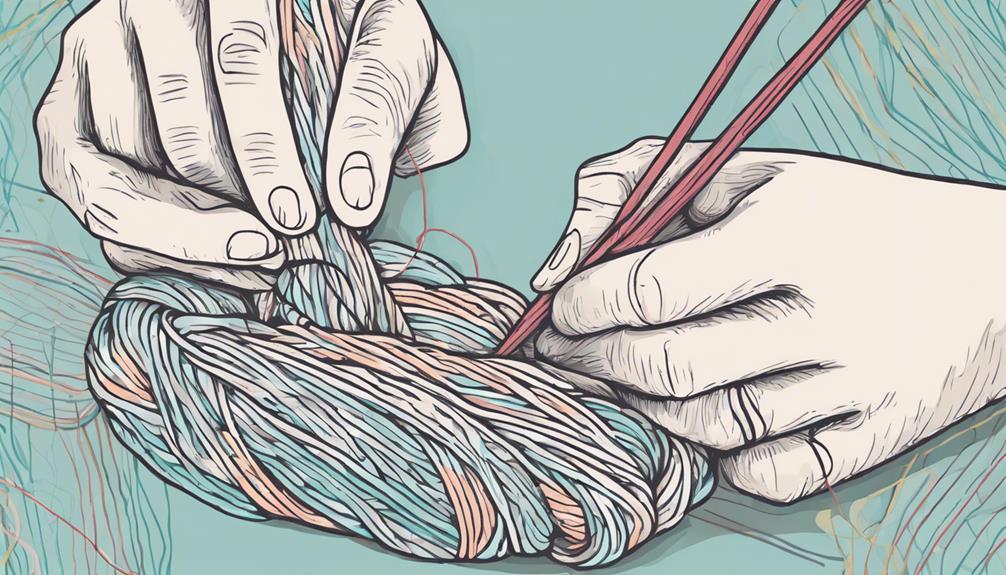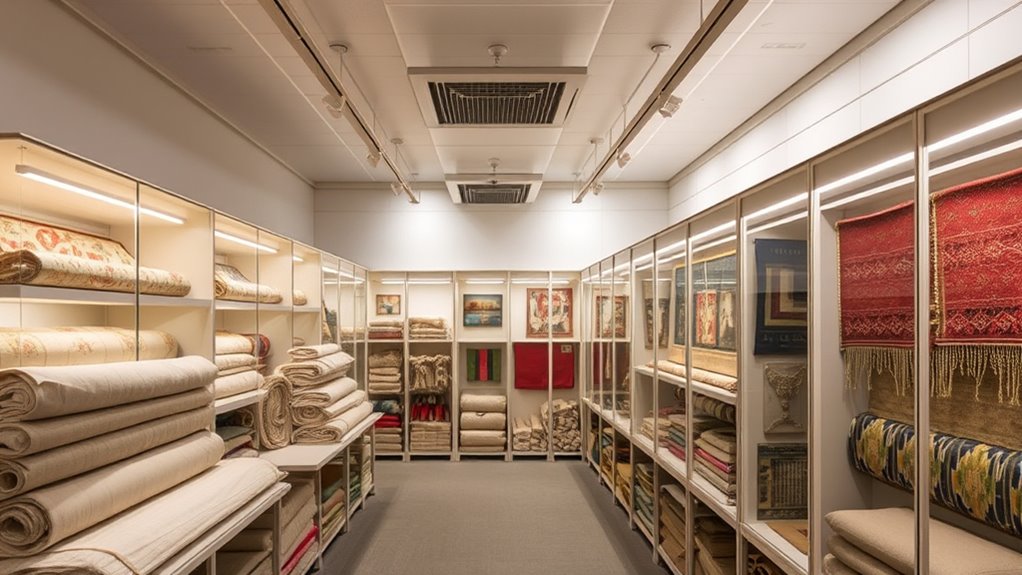

To preserve textile art effectively, handle fabrics with gloves and keep them in stable environments with consistent temperature and humidity. Store textiles flat or rolled on acid-free supports, and avoid hanging them long-term to prevent stretching. Protect artworks from light exposure with UV-filtered cases and ensure pest control measures are in place. Proper cleaning, repair, and storage techniques can considerably extend their life, and exploring these methods further can help you safeguard your fabric treasures for the future.
Key Takeaways
- Store textiles in stable, climate-controlled environments with consistent temperature (65-70°F) and humidity (50% RH).
- Use acid-free storage materials like tissue, boxes, or tubes to prevent deterioration and stress.
- Handle fragile fabrics with gloves and support them flat or rolled to avoid stretching or tears.
- Protect textiles from light exposure by using UV-filtering cases and limiting direct sunlight.
- Conduct regular inspections and pest management to prevent insect damage and ensure long-term preservation.
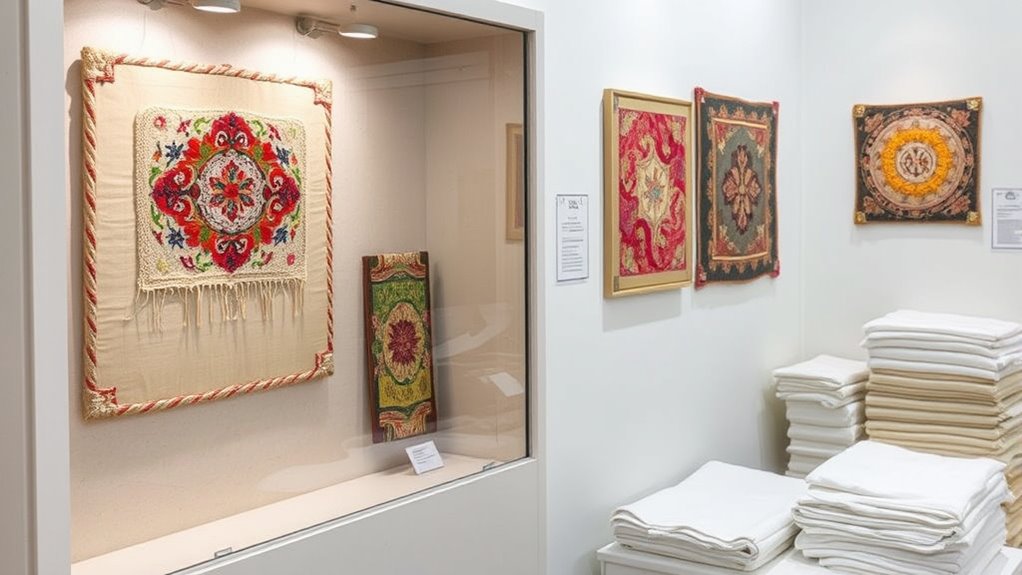
Have you ever wondered how delicate textile artworks are preserved for future generations? The key lies in effective conservation techniques and thoughtful storage solutions. Textile art, from historic garments to intricate embroidery, is highly sensitive to environmental factors like light, humidity, and pests. Without proper care, these fabrics can deteriorate quickly. That’s why understanding how to preserve them is essential if you want your collection or cherished pieces to survive the test of time.
Conservation techniques focus on stabilizing and repairing damaged textiles while preventing further deterioration. When handling fragile fabrics, always wear gloves to avoid oils from your skin transferring to the material. Gentle cleaning methods, such as surface dusting or vacuuming with a low-suction tool, help remove dirt without harming fibers. If a textile has tears or weakened areas, professional conservationists may use specific techniques like sewing with fine, conservation-grade threads or applying reversible adhesive repairs. These methods ensure that the artwork remains as close to its original state as possible, while allowing future conservators to intervene if needed.
Handle fragile textiles with gloves and use gentle cleaning methods to prevent damage and preserve their integrity.
Storage solutions play an equally important role in preservation. You should store textile artworks in environments with stable temperature and humidity levels—ideally around 65-70°F (18-21°C) and 50% relative humidity. Fluctuations can cause fibers to expand and contract, leading to cracking or fraying. Avoid storing textiles in direct sunlight or under strong artificial lights, as UV rays accelerate fading and weaken fibers. Instead, keep them in dark, climate-controlled spaces. When storing flat, roll large textiles onto acid-free tubes wrapped in acid-free tissue to prevent creasing and stress. For smaller items, use acid-free boxes or folders, ensuring they’re cushioned with archival tissue to avoid pressure points. Proper support prevents deformation and reduces the risk of tears or creases developing over time.
Additionally, control pests by keeping storage areas clean and inspecting textiles regularly. Implementing pest management strategies, like using insect traps or natural repellents, helps protect your textiles from insects like moths and beetles that can cause extensive damage. Avoid hanging textiles for long periods, as gravity can stretch or distort fibers. Instead, store them flat or carefully rolled. When displaying textiles, use UV-filtering glass or acrylic cases to shield them from harmful light exposure. Moreover, utilizing modern storage solutions such as acid-free tissue and climate-controlled environments can significantly extend the lifespan of textile artworks.
In short, preserving textile art demands a combination of careful conservation techniques and well-planned storage solutions. By handling fabrics gently, stabilizing damaged areas, and maintaining ideal environmental conditions, you ensure that these beautiful, historic pieces remain vibrant and intact for generations to come.
Frequently Asked Questions
How Can I Identify Different Types of Textile Fibers?
To identify different textile fibers, you should start with fiber identification tests, like burn tests, microscopy, or chemical solubility. These methods help distinguish natural fibers like cotton or wool from synthetic ones like polyester or nylon. By understanding textile classification, you can recognize the unique characteristics of each fiber type, such as texture, luster, and strength, which makes it easier to accurately identify and care for your fabric artworks.
What Are Common Causes of Textile Deterioration?
Did you know that textile deterioration affects over 60% of historical fabric collections? Common causes include light exposure, which weakens fibers; fluctuating humidity, leading to mold and fiber shrinkage; pests like moths; and poor storage conditions. To combat this, use textile conservation techniques such as controlled environments and proper storage. These methods are essential for historical textile preservation, ensuring fabrics stay intact for future generations.
How Do Environmental Factors Affect Fabric Longevity?
Environmental factors are vital in impacting fabric longevity. UV exposure causes fading and weakens fibers over time, so you should limit direct sunlight on your textiles. Humidity control is also essential; too much moisture promotes mold growth, while too little causes fibers to become brittle. By managing these factors, you help preserve your fabric artworks, ensuring they stay vibrant and intact for years to come.
Are There Specific Cleaning Methods for Delicate Textiles?
When cleaning delicate textiles, you should always use gentle cleaning methods to prevent damage. Avoid harsh chemicals and scrubbers; instead, opt for mild detergents or specialized fabric cleansers. For stain removal, gently dab the stain with a soft cloth or sponge, using minimal pressure. Test any cleaning solution on a small, hidden area first to make certain it won’t harm the fabric. This approach helps preserve your textile artwork’s integrity.
How Can I Safely Display Large Textile Artworks?
A picture is worth a thousand words, so choose your display carefully. To safely showcase large textile artworks, use sturdy framing techniques that support the fabric without stress. Opt for UV-protective lighting to prevent fading, and avoid direct sunlight. Confirm proper ventilation and avoid adhesives. By combining thoughtful framing and lighting considerations, you can display your textile art beautifully and preserve its integrity for years to come.
Conclusion
To keep your textile art alive, think of your fabrics as delicate whispers of history that need gentle care. By properly cleaning, storing, and protecting them, you’re safeguarding a vibrant tapestry of culture and creativity. Remember, each piece is like a fragile butterfly—beautiful but easily hurt. Handle your fabric artworks with love and patience, and they’ll continue to tell their stories for generations to come, like a timeless melody echoing through time.