Craftivism uses textile art to make powerful social and political statements through handmade, meaningful craft practices. By repurposing fabrics, using eco-friendly dyes, and traditional techniques, you can turn craft into activism that sparks change. Symbolism, cultural motifs, and tactile acts of stitching or dyeing help communicate messages of resistance, hope, and resilience. If you keep exploring, you’ll discover how these artistic efforts inspire action and foster societal transformation through craft.
Key Takeaways
- Craftivism uses textile art to communicate social and political messages beyond traditional activism methods.
- It emphasizes sustainable practices like repurposing fabrics and eco-friendly dyes to promote environmental responsibility.
- Cultural symbols and traditional motifs are incorporated to connect textile activism with identity and resilience.
- The tactile process of stitching and dyeing embodies patience, collective effort, and acts of resistance or hope.
- Traditional textile techniques are adapted to address contemporary social issues, highlighting craft’s ongoing relevance in activism.
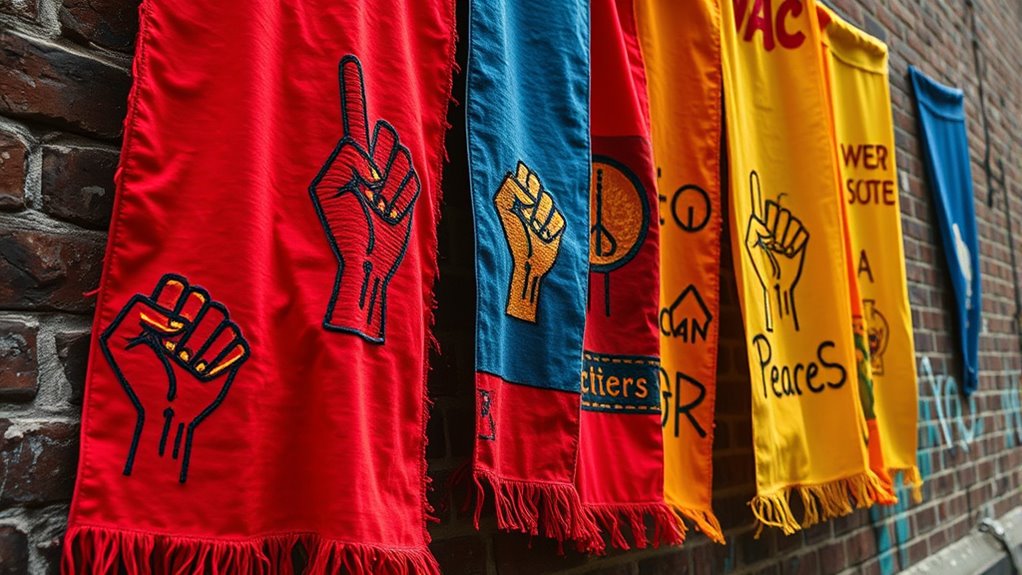
Have you ever considered how textile art can serve as a powerful form of activism? When you create or display textile pieces, you’re not just making art—you’re making a statement. Craftivism, the practice of using textiles to communicate social and political messages, harnesses the tactile and visual power of fabric to spark change. One of the most compelling aspects of this movement is its emphasis on sustainable practices. By repurposing old fabrics, using eco-friendly dyes, or employing hand-stitched techniques, you reduce waste and minimize environmental impact. This approach aligns with broader efforts to promote sustainability within the art community and beyond. When your textile work reflects eco-conscious choices, it becomes a living example of environmental responsibility. These sustainable practices resonate with viewers, inspiring them to think critically about their own consumption habits and environmental footprint.
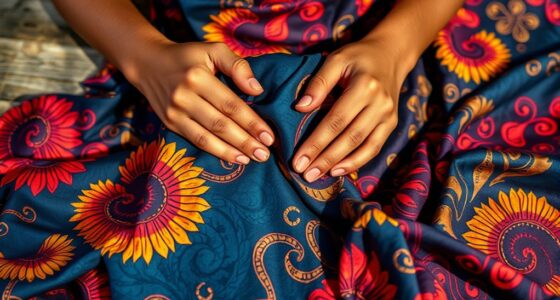
Cultural symbolism plays a crucial role in craftivism, offering layers of meaning that deepen the impact of your work. Textile art often draws from traditional patterns, techniques, and motifs that carry historical and cultural significance. When you incorporate such symbols into your activism, you’re not only honoring heritage but also conveying powerful messages rooted in collective identity. For example, using specific colors or designs associated with marginalized communities can highlight issues of identity, resistance, and resilience. These symbols act as visual shorthand, allowing you to communicate complex ideas succinctly and emotionally. They also create a sense of solidarity, connecting viewers to broader cultural narratives and histories. By blending cultural symbolism with contemporary activism, your textile art becomes a bridge that links the past with the present, fostering understanding and empathy.
In craftivism, your choice of materials, techniques, and symbols becomes a form of storytelling that invites dialogue. As you stitch, dye, and assemble your textiles, you’re engaging in a tactile act of resistance and hope. The physical process of making not only embodies patience and dedication but also symbolizes the collective effort needed for social change. Through this approach, textile art transforms from decorative craft into a compelling medium for activism—one that challenges viewers to reconsider societal norms and injustices. Moreover, the significance of textile techniques in craftivism demonstrates how traditional methods can be adapted to contemporary issues, emphasizing the enduring relevance of craft. Ultimately, craftivism empowers you to wield textile art as a tool for advocacy, demonstrating that small, deliberate acts—like a well-placed stitch or a thoughtfully chosen motif—can ripple outward and inspire larger movements toward justice and sustainability.

Rit Dye – Liquid Fabric Dye for Crafting, Clothing, and Décor – 8 oz. Bottle – Black (Gloves Included)
Easy to Use – The process is super easy to follow. Simply add dye to hot water with…
As an affiliate, we earn on qualifying purchases.
As an affiliate, we earn on qualifying purchases.
Frequently Asked Questions
How Does Craftivism Influence Mainstream Political Movements?
You see craftivism influence mainstream political movements through powerful visual symbolism that captures attention and conveys messages effectively. It engages communities by encouraging participation and shared creativity, making activism more personal and accessible. By transforming textile art into a form of protest, you foster a sense of collective purpose, inspiring broader support and sparking conversations that can shift public opinion and even influence policy changes.
Can Textile Activism Be Effective Without Mass Media Coverage?
You can make textile activism effective without mass media coverage, like a quiet river shaping the landscape over time. Your efforts foster community impact and personal expression, creating ripples that reach beyond headlines. Small, localized projects often inspire change through word-of-mouth and personal connections, proving that grassroots movements thrive on genuine engagement. Your craft can spark conversations and build momentum, proving that visibility isn’t always necessary for meaningful influence.
What Materials Are Most Commonly Used in Craftivist Projects?
You typically use fabric dyes and various sewing techniques in craftivist projects. Fabric dyes help you add vibrant colors or subtle shades to your textiles, making your message stand out. Sewing techniques like embroidery, quilting, or appliqué allow you to create detailed, textured designs that communicate your activism. Combining these materials, you craft impactful pieces that express your message visually and tactilely, engaging viewers directly and personally.
How Do Craftivists Balance Aesthetic Appeal With Political Messaging?
You cleverly blend visual harmony with message clarity, making politics pretty and poignant. By choosing colors, patterns, and stitches that catch the eye, you draw people in. Then, you embed your message subtly but unmistakably, ensuring it’s understood without shouting. It’s artful activism—where aesthetics serve your cause, not overshadow it. You create a tapestry of change, where beauty and meaning coexist, making your message both memorable and impactful.
Are There Any Notable Historical Examples of Textile Activism?
You’ll find notable historical examples of textile activism in activist embroidery and historical protests. For instance, during the Irish War of Independence, women created embroidered banners symbolizing resistance. In the 1960s and 70s, protest quilts and embroidered banners voiced civil rights and anti-war messages. These textile works served as powerful visual statements, blending craft with activism, and demonstrating how textile art can inspire social change throughout history.
Doodle Stitching Embroidery Art: Move Beyond the Pattern with Aimee Ray
As an affiliate, we earn on qualifying purchases.
As an affiliate, we earn on qualifying purchases.
Conclusion
Your craftivism journey proves that textile art isn’t just fabric and thread—it’s a powerful voice that can weave change. Just like a needle stitches together pieces of fabric, your activism stitches together communities and causes. Every stitch and knot becomes a declaration of hope, turning silent fabric into a roaring chorus for justice. Remember, your craft isn’t just art; it’s a beacon that guides others toward action, making your message impossible to ignore.

Easter Egg Dyeing Lot 8"X8" Vintage Recycle Pure Silk Remnants Silk Fabric Scraps 10 Pieces
Lot of 10 — 8"x8" Vintage Recycled Pure Silk Remnants | Fabric Scraps for Easter Egg Dyeing &…
As an affiliate, we earn on qualifying purchases.
As an affiliate, we earn on qualifying purchases.

Nuberlic Embroidery Kit for Beginners – LGBT Love Pattern Adults Starter Cross Stitch Kit DIY Needlepoint with Hoop, Pre-Printed Fabric, Threads & Step-by-Step Guide
EVERYTHING-INCLUDED PACKAGE: Embroidery Starter Kit contains 1 hoop (8"), pre-marked fabric, 2 embroidery needles, color threads, and Step-by-Step…
As an affiliate, we earn on qualifying purchases.
As an affiliate, we earn on qualifying purchases.