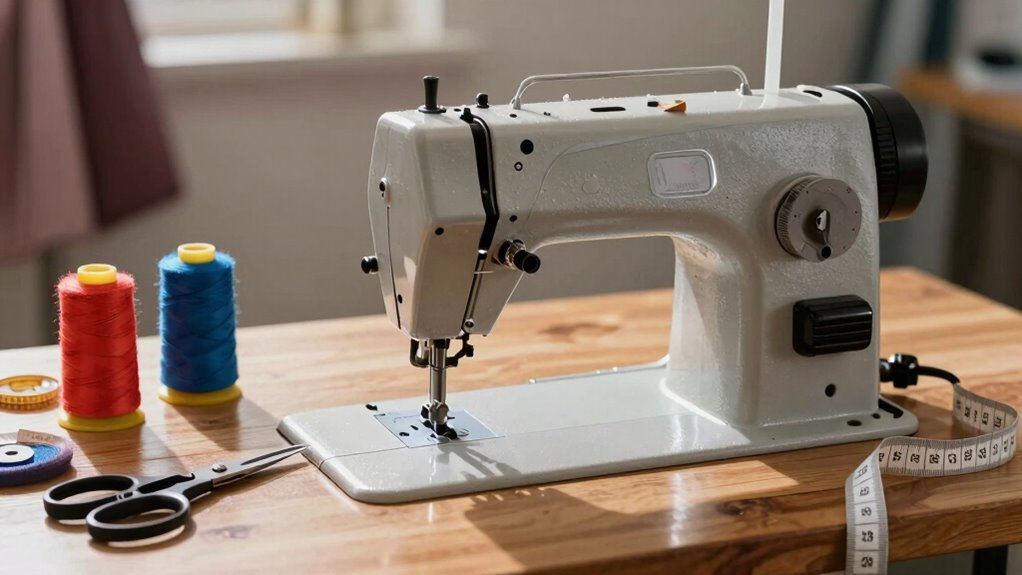
When you’re choosing an industrial sewing machine, start by identifying your specific sewing needs and project requirements. Consider key features like speed, versatility, and tension adjustments. Select the right machine type based on fabric weight and production volume. Don’t forget to check reviews, budget for costs and maintenance, and assess brand support. Pay attention to durability and ease of upkeep. Keep exploring to discover even more essential tips for making a smart investment.
Key Takeaways
- Assess your specific sewing needs by identifying fabric types and project requirements to choose the right machine.
- Focus on key features like high sewing speed, adjustable tension, and automatic functions for enhanced productivity.
- Research expert reviews and user experiences to gauge brand reliability and machine performance before purchasing.
- Prioritize regular maintenance and durability factors to ensure long-term performance of your sewing machine.
- Improve your workspace with comfort enhancements like anti-fatigue mats and proper ventilation for an optimal sewing environment.
Identify Your Sewing Needs
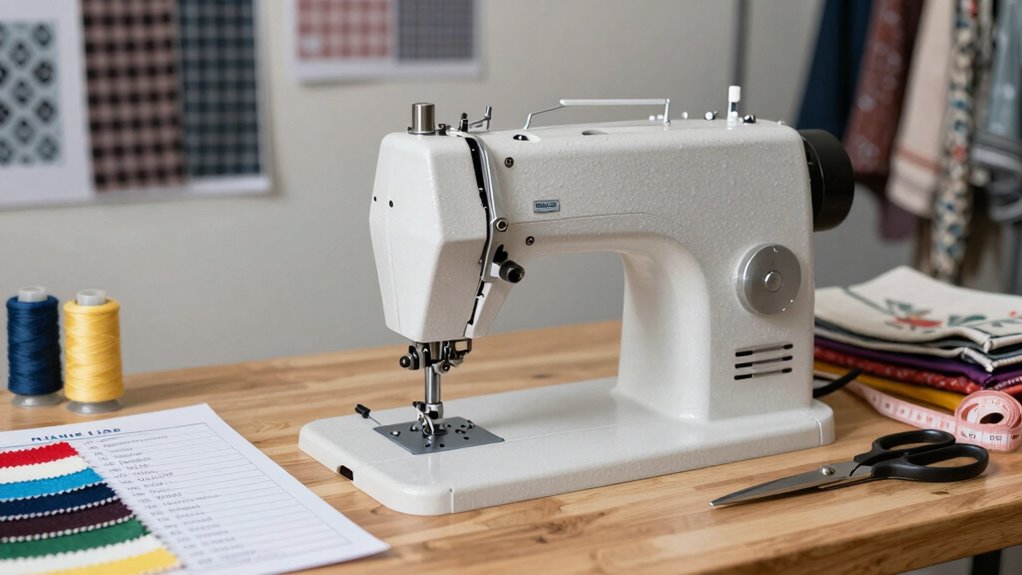
Before diving into the world of industrial sewing machines, it’s essential to identify your specific sewing needs. Think about the fabric types you’ll be working with, whether it’s lightweight cotton or heavy denim. Each fabric requires different handling and machine capabilities. Next, consider the thread options you plan to use; certain machines perform better with specific threads, affecting stitch quality and durability. If you’re sewing for a particular industry, like fashion or upholstery, your requirements will change. Take a moment to list the projects you’ll tackle most often, as this will guide your machine choice. By clarifying your needs now, you’ll make a more informed decision later, ensuring you select a machine that truly fits your sewing goals.
Understand Key Features of Industrial Machines
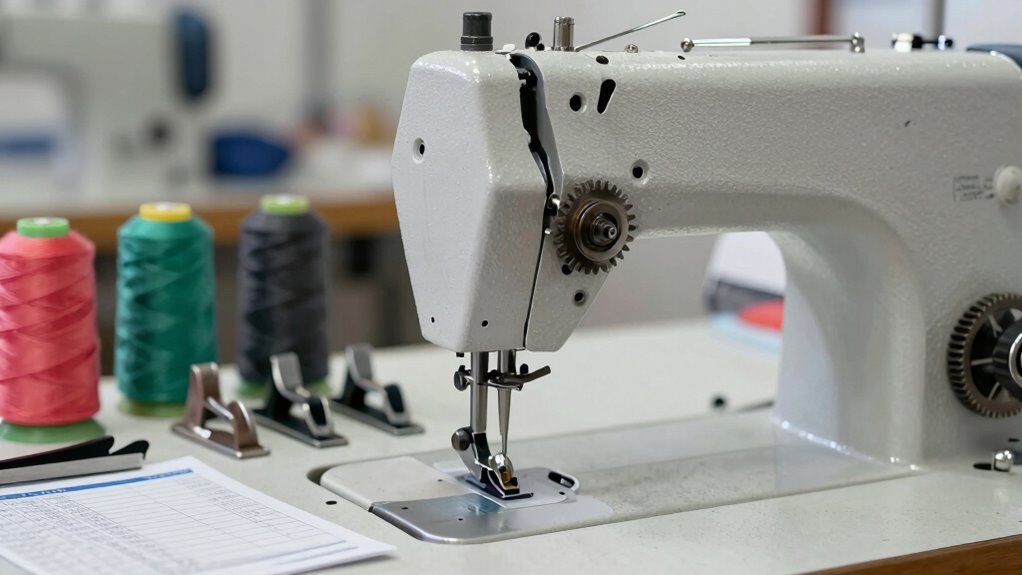
When you’re diving into industrial sewing machines, understanding the key features can make all the difference in your sewing experience. Knowing what to look for helps you choose the right machine for your projects.
- Sewing Speed: Look for machines that offer high sewing speeds, as this can considerably boost productivity, especially for large-scale projects.
- Thread Types: Verify the machine accommodates various thread types, as this versatility allows you to work with different fabrics and achieve the best results.
- Stitch Options: Consider the range of stitch options available to enhance creativity and adaptability in your sewing tasks.
Select the Best Machine Type for Your Needs
When choosing the right industrial sewing machine, start by identifying your specific sewing projects. Think about the features you’ll need to tackle those tasks efficiently. This focus will help you narrow down the options that best suit your needs.
Identify Your Sewing Projects
Identifying your sewing projects is essential for selecting the right industrial sewing machine, especially since different machines excel in various tasks. You need to take into account the fabric types and project sizes you’ll be working with. Knowing this will help you choose a machine that meets your specific needs.
- Fabric types: Will you work with heavy materials like denim or lighter fabrics like silk?
- Project sizes: Are you focusing on small items like bags or larger pieces like upholstery?
- Production volume: Will you sew in bulk or tackle one-offs?
Consider Machine Features Needed
Choosing the right features for your industrial sewing machine is vital to meet your specific project needs. Start by considering stitch quality; a machine with adjustable tension and various stitch options can enhance your projects considerably. If you’re working on high-volume tasks, speed efficiency is essential. Look for machines that can handle high speeds without compromising stitch quality. Additionally, features like automatic thread cutting or programmable patterns can save you time and effort. Think about the materials you’ll be using—some machines perform better with heavy fabrics, while others excel with lighter materials. Furthermore, understanding filtration basics can help maintain a clean sewing environment, which is crucial for achieving optimal results. Ultimately, choose a machine that aligns with your specific requirements to guarantee peak performance and satisfaction in your sewing endeavors.
Read Reviews of Industrial Sewing Machines
Before making a purchase, check out reviews of industrial sewing machines. You’ll want to explore expert insights, analyze performance ratings, and compare user experiences to make an informed choice. This step can save you time and money in the long run.
Explore Expert Insights
As you immerse yourself in the world of industrial sewing machines, reading expert reviews can provide invaluable insights that guide your decision. These reviews often highlight key features and performance, helping you align your choice with your sewing needs.
- Expert recommendations can pinpoint reliable brands and models.
- Staying updated on industry trends helps you select machines that incorporate the latest technology.
- Reviews often reveal common issues and how manufacturers address them.
Analyze Performance Ratings
When seeking the right industrial sewing machine, diving into performance ratings can reveal a lot about how well a machine meets your needs. Start by looking at performance metrics, which often include speed, stitch quality, and durability. These factors directly impact your workflow and output. User ratings provide insight into real-world experiences, showing you how a machine performs under various conditions. Pay attention to both positive and negative feedback; it can help you gauge reliability and ease of use. Don’t just focus on star ratings—read the comments for context. This combination of performance metrics and user ratings will empower you to make an informed decision, ensuring your investment aligns with your sewing goals.
Compare User Experiences
User experiences can provide a wealth of information that complements your analysis of performance ratings. By diving into user feedback, you’ll gain valuable insights into how machines perform in real-world scenarios. Look for user testimonials that highlight reliability and usability assessments to see if a machine meets your needs.
- Machine comparisons reveal how different models stack up against each other.
- Satisfaction ratings can indicate overall consumer happiness and brand loyalty.
- Experience sharing often uncovers hidden features or common issues you might not find in product descriptions.
These performance insights are essential for making informed decisions and ensuring you invest in a reliable machine that aligns with your sewing goals. Additionally, incorporating accountability and goal-setting can help you stay focused on your sewing projects and maximize your productivity.
Budgeting for Your Sewing Machine
Before diving into the world of industrial sewing machines, it’s vital to establish a clear budget. Determine your budget range first; this will help narrow down your options. Industrial machines can vary widely in price, so knowing what you can afford is important. Consider not only the upfront cost but also maintenance and accessories. If you find a great machine that exceeds your budget, don’t worry—explore financing options. Many retailers offer payment plans that make it easier to manage expenses over time. Just make sure you understand the terms before committing. With a solid budget in place, you’ll feel more confident in your purchasing decision and avoid overspending.
Assess Brand Reputation and Support
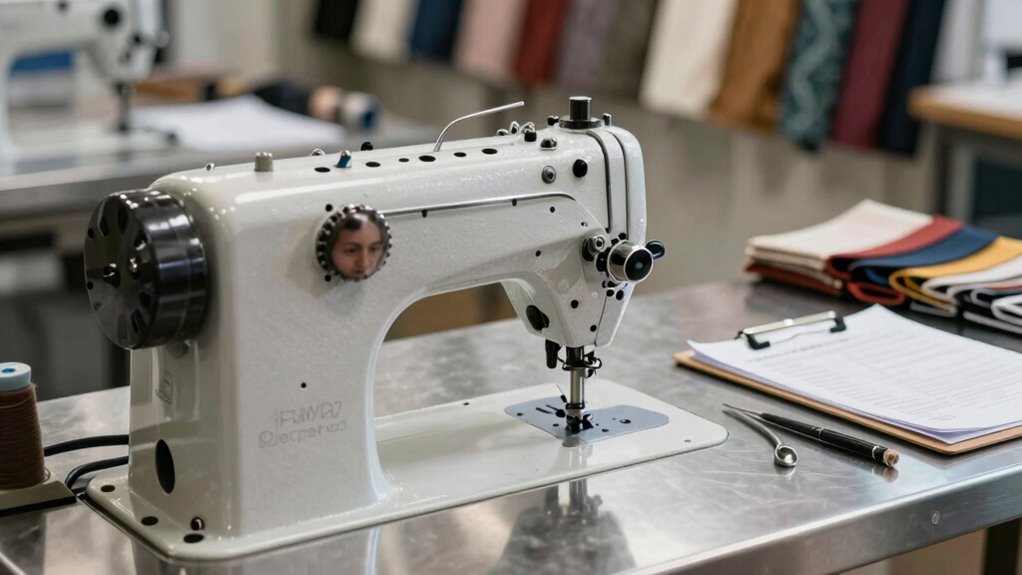
While you might be enthusiastic to purchase your industrial sewing machine, evaluating brand reputation and support can save you time and frustration down the line. You want to invest in a brand that inspires trust and offers reliable customer support. Researching online reviews and testimonials can give you insight into how a brand treats its customers.
- Look for brands with a solid history in the industry.
- Check their customer support options—are they readily available?
- Investigate warranty and repair policies to guarantee you’re covered.
Additionally, consider how customer support options can make a significant difference in your overall ownership experience.
Consider Maintenance and Durability
Sure! Here’s your revised content with the addition:
—
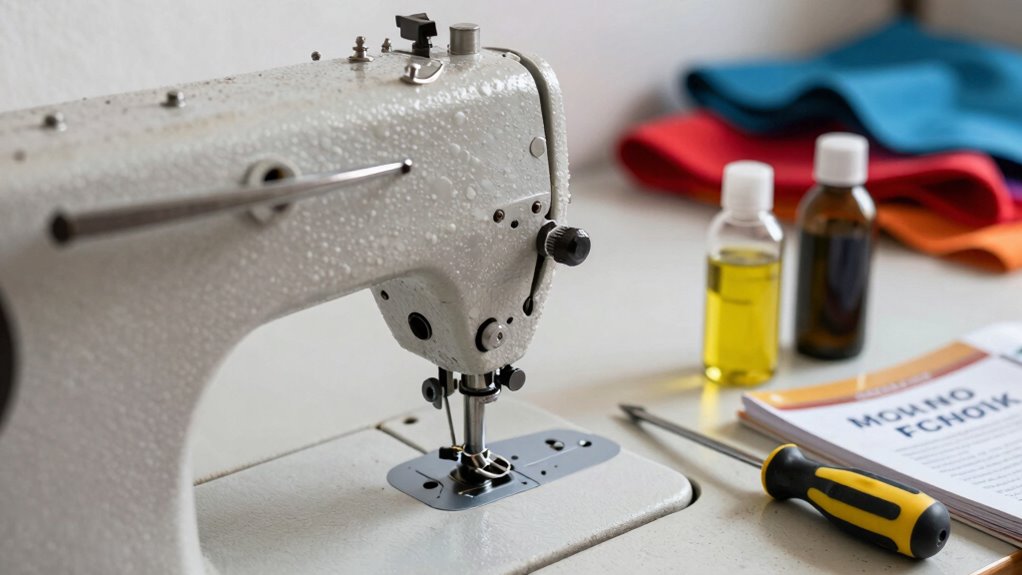
After confirming you’ve chosen a reputable brand, it’s important to think about maintenance and durability. Regular upkeep can extend your machine’s life and keep it running smoothly. Follow maintenance tips such as cleaning the machine after each use, lubricating moving parts, and checking for thread jams. Additionally, consider HEPA filters that can improve air quality while you sew, especially in enclosed spaces. Ensuring proper ventilation and using air purifiers can further enhance your indoor environment, reducing harmful pollutants as you work. Understanding safe movement basics is key to preventing strain while you sew. Regularly cleaning your machine can also enhance its efficiency, similar to how pre-soaking pads improve the performance of floor scrubbers.
Moreover, consider durability factors like build quality and materials used. A sturdy frame and high-quality components can withstand the rigors of industrial use. Look for machines designed for heavy fabrics if you plan to tackle tough projects. Investing in a durable model means fewer repairs and less downtime, ultimately saving you time and money. Prioritize maintenance and durability to confirm your industrial sewing machine meets your needs for years to come.
Routine check-ups can help identify potential issues, similar to ADAS sensor calibration in automotive repair, ensuring optimal performance and safety.
—
Let me know if you need any more changes or additions!
Make an Informed Purchase Decision
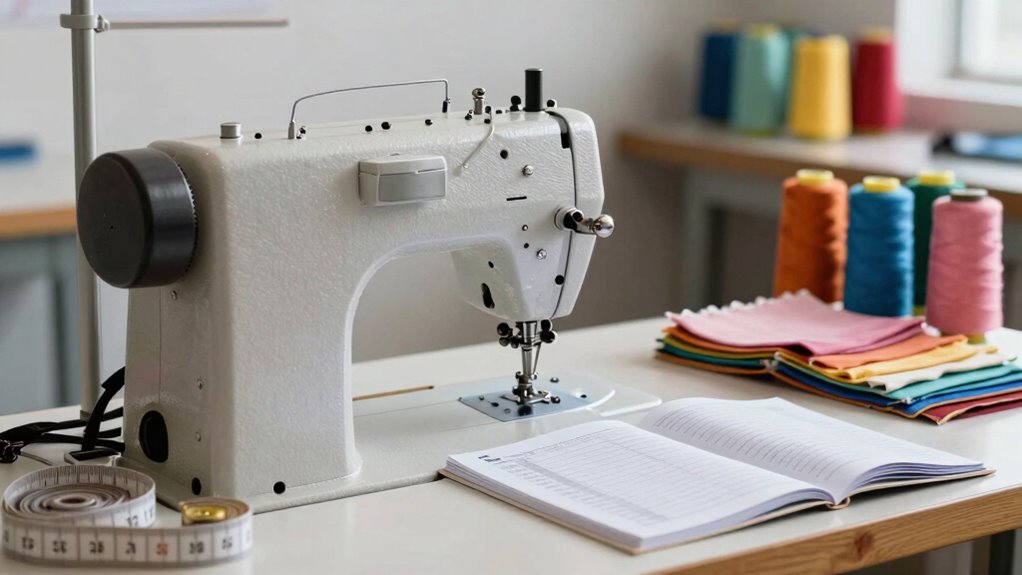
When you’re ready to make an informed purchase decision, it’s crucial to weigh all your options carefully. Start by considering the fabric types you’ll be working with and how different machines handle them. This can greatly impact your sewing efficiency and project outcomes. Additionally, understanding the science-informed guidance behind sewing machine features can help you choose the right model for your needs. Don’t forget about machine accessories, too; they can enhance your sewing capabilities and make your work smoother.
- Evaluate the machine’s compatibility with your preferred fabric types.
- Research the accessories that come with the machine, like feet and attachments.
- Check reviews for real-world performance and reliability.
It’s also important to explore acoustic treatment options which can significantly improve your sewing environment by reducing noise distractions. Additionally, consider how using an anti-fatigue mat can improve your comfort and focus while sewing, ultimately enhancing your productivity. Furthermore, investing in quality standing desk gear can also contribute to better posture and reduced fatigue during long sewing sessions. Incorporating smart storage solutions can help keep your workspace organized, making it easier to access tools and materials when needed.
Frequently Asked Questions
How Do I Know if I Need a Single or Double Needle Machine?
Did you know that about 30% of home sewers switch between single and double needle machines based on their projects? If you’re making simple seams or lightweight fabrics, a single needle machine’s advantages, like ease and versatility, will work great for you. However, if you’re tackling more complex designs or want to create decorative stitches, a double needle machine‘s applications will shine. Assess your projects to choose the right fit!
What Accessories Should I Consider Purchasing With My Machine?
When you’re choosing accessories for your sewing machine, consider investing in various foot pedal options to enhance your control and precision. Additionally, look into tools that help with thread tension adjustments; they’ll make a significant difference in your sewing quality. Don’t forget about extra presser feet for different techniques, bobbins, and high-quality thread. These accessories will elevate your sewing experience and guarantee you get the most out of your machine.
Can I Use Regular Sewing Thread in Industrial Machines?
Sure, you can use regular sewing thread in industrial machines, but it’s like putting a tiny toy car on a racetrack—it’s just not built for speed! Industrial machines thrive on specific thread types designed for durability and heavy-duty work. While you might get by with regular thread, it could lead to frustration and frequent breakage. Always check your machine compatibility to avoid a tangled mess that’d make a spider jealous!
How Do I Troubleshoot Common Machine Issues Myself?
To troubleshoot common machine issues, start by checking the thread tension; it’s often the culprit for uneven stitches. Adjust it according to your fabric type. Next, inspect your needle types—make sure you’re using the right one for your project. If you’re facing skipped stitches, try replacing the needle. Finally, clean the machine regularly to prevent lint buildup. By addressing these areas, you’ll solve many common sewing machine problems yourself.
What Is the Average Lifespan of an Industrial Sewing Machine?
The average lifespan of an industrial sewing machine is about 10 to 25 years, depending on usage and maintenance. To extend its life, follow maintenance tips like regular oiling, cleaning lint buildup, and checking tension settings. When considering buying advice, opt for machines known for durability and parts availability. Investing in quality can save you money in the long run, ensuring your machine runs smoothly for years to come.
Conclusion
Now that you’ve got your industrial sewing machine buying checklist, you’re ready to tackle any project that comes your way! By identifying your needs and understanding key features, you’ll find the perfect machine. Remember, this isn’t just a purchase; it’s an investment that’ll make your sewing dreams soar like a rocket! So take your time, do your research, and soon you’ll be stitching like a pro. Happy sewing!