
To print your own T-shirts at home, start with simple, bold designs that stand out and use high-contrast colors. Choose suitable inks like plastisol or water-based, and test them on fabric scraps for the best results. Keep your workspace clean and organized, ensuring proper screen alignment and even pressure during printing. Practice and experiment to improve your technique and create vibrant, professional-looking shirts—stay with us to discover more tips and ideas.
Key Takeaways
- Use simple, high-contrast designs and create stencils that accurately capture your artwork’s essence.
- Select suitable inks like plastisol or water-based, and test on fabric scraps for best results.
- Set up a clean, well-lit workspace with proper tools, including squeegees and screen holders, for precise printing.
- Practice consistent pressure and alignment during printing, and thoroughly clean screens after each use.
- Experiment with different designs and inks to develop your personal style and improve print quality.
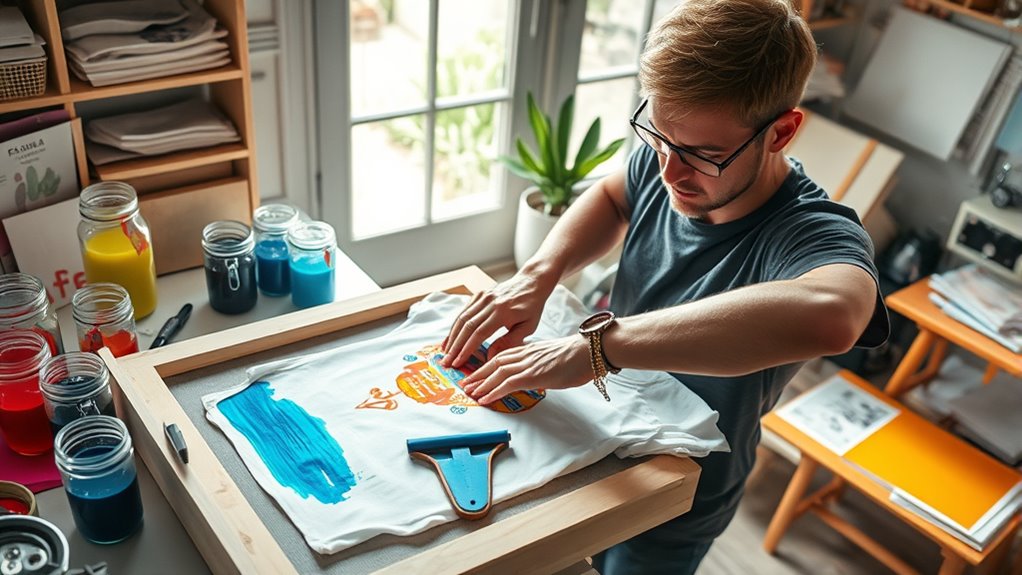
Have you ever wondered how to create professional-looking designs right in your own home? If you’re interested in screen printing your own T-shirts, understanding some basic design techniques is essential. The first step is to plan your design carefully. Keep it simple and bold, as intricate details can be tricky to reproduce accurately with home equipment. Use high-contrast colors and clear lines to ensure your design stands out. When it comes to translating your artwork onto fabric, the key is mastering design techniques that maximize clarity and durability. This involves creating a stencil that accurately captures your artwork’s essence, whether you’re drawing by hand or using digital tools. Once your design is ready, you’ll need to think about ink selection, which plays a crucial role in achieving professional results. Not all inks are created equal, so choose one that’s suitable for fabric and offers vibrant, long-lasting color. Plastisol ink, for example, is popular for its opacity and durability, making it an excellent choice for home screen printing. Water-based inks are another option, especially if you prefer a softer feel and eco-friendly approach. Whichever you pick, ensure the ink flows smoothly and is easy to work with, preventing clogging or uneven coverage. Before you start printing, test your ink on scraps of fabric to see how it applies and dries. This step helps you avoid mistakes on your actual T-shirts. Additionally, think about using the right tools—like squeegees with the proper edge hardness and width—to control ink application and maintain consistent pressure. When setting up your workspace, keep your materials organized and well-lit, so you can work with precision. Cleanliness is crucial, too, because any dust or debris can ruin your design. Once you’re ready, carefully position your screen over the T-shirt, apply the ink with even pressure, and pull the squeegee consistently across the stencil. Practice makes perfect, especially as you learn how different inks behave and how to refine your technique. Cleaning your screen thoroughly after each use ensures it stays in good condition and prevents ink buildup that can affect future prints. With patience and attention to detail, you’ll develop your own style and perfect your process. Remember, experimentation with design techniques and ink selection is part of the journey. The more you practice, the more professional and vibrant your homemade T-shirts will become. Screen printing at home isn’t just about creating custom apparel; it’s about expressing your creativity and mastering a craft you can enjoy for years to come.
Frequently Asked Questions
What Safety Gear Is Recommended for Home Screen Printing?
You should wear protective gloves to shield your skin from inks and chemicals, and eye protection like goggles to prevent splashes from reaching your eyes. These safety gear items help minimize risks associated with handling dyes, solvents, and cleaning agents. Always work in a well-ventilated area, and prioritize safety to make your home screen printing experience safer and more enjoyable.
How Long Does It Take to Complete a T-Shirt Print?
It typically takes about 30 to 60 minutes to complete a t-shirt print, depending on your printing speed and the complexity of your design. After printing, you should allow for drying time, which can range from a few hours to overnight, to guarantee the ink sets properly. Faster printing speeds can reduce overall time, but don’t rush the drying process to avoid smudging or incomplete curing.
Can I Use Digital Designs Directly in the Screen Printing Process?
Yes, you can use digital designs directly in the screen printing process. Just make sure your digital design is compatible with screen printing, meaning it should have high print resolution requirements—usually at least 300 DPI—to guarantee clarity. You’ll need to prepare your design in a suitable format, like a vector or high-resolution image, and create a stencil from it. This way, your design transfers cleanly onto your t-shirts.
What Are Common Mistakes to Avoid in Home Screen Printing?
You should avoid poor design alignment and inconsistent ink application in home screen printing. Double-check your stencil placement to guarantee your design stays aligned, and test your ink consistency before printing. Don’t rush the process or skip cleaning screens properly, as this can cause smudging and blurry images. By paying attention to these details, you’ll produce cleaner, more professional-looking prints and avoid common mistakes.
How Do I Troubleshoot Unclear or Uneven Prints?
You can troubleshoot unclear or uneven prints by checking your ink consistency; if the ink is too thick or too thin, it’ll affect the print quality. Make sure your screen is properly aligned—misalignment causes uneven designs. Clean your screen thoroughly before printing, and apply even pressure when squeegeeing. Adjust your ink flow and screen positioning as needed, and test on scrap fabric to refine your process for sharper, more consistent results.
Conclusion
Now that you know how to set up your own screen printing space, imagine transforming plain shirts into vibrant works of art. With each print, you’re not just creating clothing—you’re weaving your creativity into fabric, making every shirt a wearable masterpiece. Think of your space as a tiny studio, where your ideas come alive through ink and mesh. So, grab your supplies and start turning your visions into reality—your custom t-shirts await!