
To start sewing confidently, focus on essential techniques like choosing beginner-friendly fabrics, maintaining your machine regularly, and practicing straight and curved seams. Learn how to adjust tension and change needles to prevent common problems. Experiment with different materials to understand their behaviors, and develop good habits for fabric handling and machine upkeep. With patience and consistent practice, you’ll build skills that lead to professional-looking projects. Keep exploring these fundamentals, and you’ll master sewing in no time.
Key Takeaways
- Master basic stitches such as straight and zigzag stitches for versatile sewing projects.
- Learn how to properly thread your sewing machine and wind the bobbin correctly.
- Practice seam allowances and finishing techniques to achieve neat, professional-looking seams.
- Understand fabric handling and how to select suitable fabrics for different projects.
- Regularly maintain your machine with cleaning, oiling, and needle changes to ensure smooth sewing.
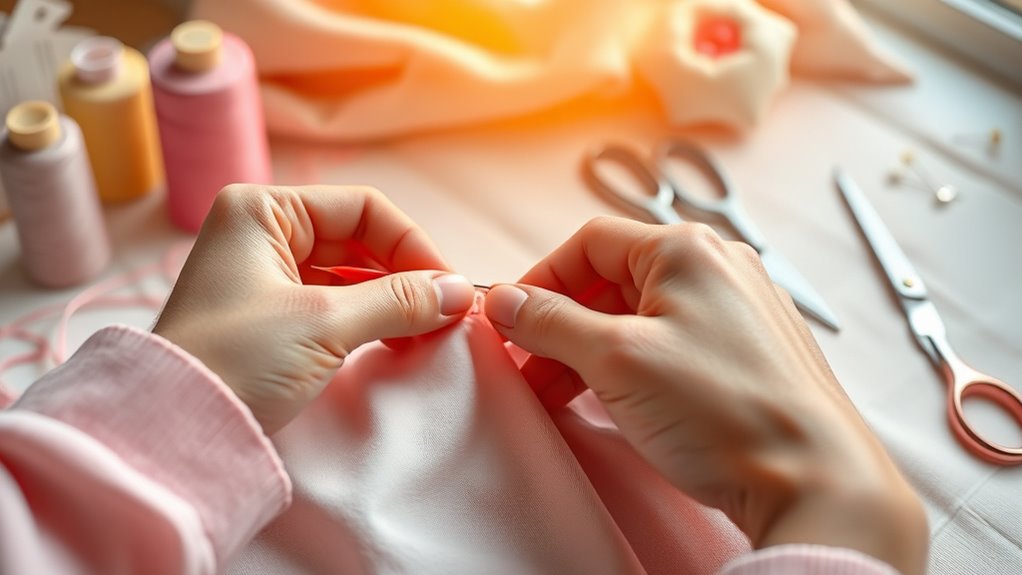
Are you curious about learning how to sew but unsure where to start? The first step is understanding the importance of fabric selection. Choosing the right fabric can make or break your project, so it’s essential to pick materials suited for your skill level and the item you want to create. Beginners should start with easier fabrics like cotton or linen because they’re stable, easy to cut, and forgiving when sewing. Avoid tricky fabrics like silk or chiffon until you gain more confidence, as they tend to slide and fray, making sewing more challenging. When selecting fabric, also consider the weight and drape to match your project. For example, a sturdy denim works well for bags or pants, while lightweight cotton is perfect for quilting or shirts. Learning to identify quality fabric from the beginning saves you frustration and guarantees your finished pieces look professional.
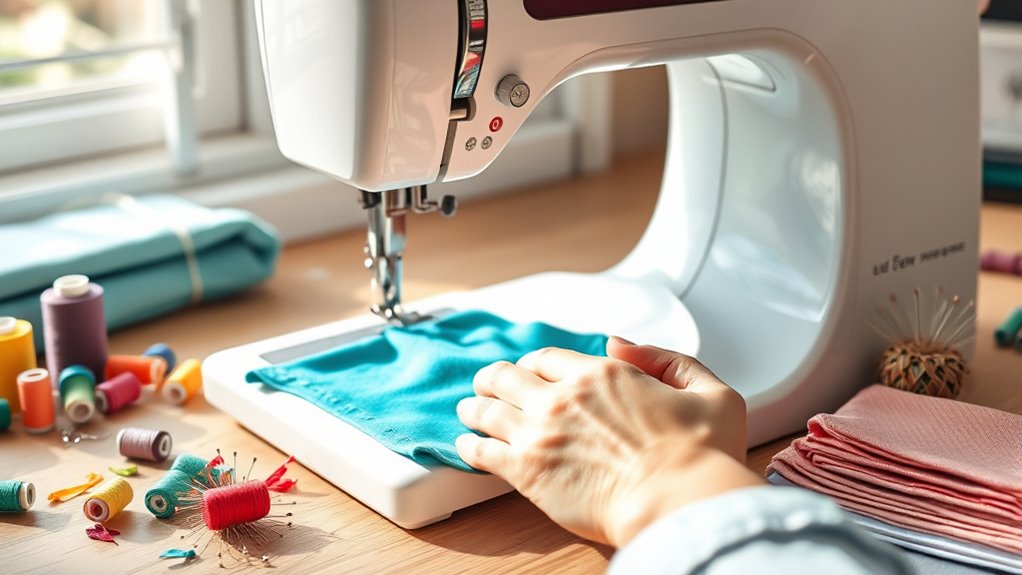
Alongside fabric choices, understanding sewing machine maintenance is pivotal. Your sewing machine is your primary tool, and keeping it in good condition helps prevent issues like skipped stitches, uneven seams, or thread jams. Regularly clean your machine, removing lint and dust from the bobbin area and feed dogs. Oiling it according to the manufacturer’s instructions keeps the moving parts functioning smoothly. Change needles frequently, especially if you notice skipped stitches or if they become dull or bent. Proper tension settings are also essential for even stitches; consult your machine’s manual to adjust tension properly depending on the fabric type. When you take good care of your machine, it runs more efficiently, and you’ll enjoy sewing without constant troubleshooting. Additionally, understanding the best airless paint sprayers can be useful for projects involving painting or finishing surfaces.
Getting comfortable with fabric selection and sewing machine maintenance sets a solid foundation for your sewing journey. Before diving into projects, spend some time experimenting with different fabrics and practicing basic sewing machine upkeep. This will boost your confidence and minimize mistakes later on. As you become more familiar with your machine and fabric behaviors, you’ll find it easier to troubleshoot problems and choose the right materials for your creative ideas. Remember, patience is key—sewing is a skill that improves with time and practice. By paying attention to fabric choice and keeping your machine well-maintained, you’re setting yourself up for success. Soon, you’ll be sewing simple projects with ease and enjoying the process of bringing your ideas to life.
Frequently Asked Questions
What Are the Best Beginner-Friendly Sewing Machines?
You should look for a sewing machine with easy-to-use features like automatic needle threading, adjustable stitch lengths, and a simple control panel. Brands like Brother, Singer, and Janome offer beginner-friendly options. Pair it with a beginner sewing kit that includes essential tools. Choosing a machine with clear instructions and versatile stitches will boost your confidence as you learn, making your sewing experience enjoyable and straightforward.
How Do I Choose the Right Fabric for My Project?
You choose the right fabric for your project by considering fabric types and textile properties. Think about the texture, weight, and drape of the fabric—smooth or textured, lightweight or heavy, stiff or flowing. Match these qualities to your project’s needs, whether it’s a dress, bag, or quilt. By evaluating fabric types and textile properties, you guarantee your project turns out beautifully and functions well.
What Common Mistakes Should I Avoid as a Beginner?
You should avoid common mistakes like neglecting thread tension, which can cause uneven stitches or fabric puckering. Also, don’t overlook correct pin placement; placing pins improperly can lead to fabric shifting or tearing. Always check your tension settings before starting, and use pins carefully to keep your fabric aligned. These small steps help prevent frustration and ensure your sewing projects turn out neat and professional.
How Can I Improve My Sewing Speed and Accuracy?
Did you know that consistent practice can boost your sewing speed by up to 50%? To improve your accuracy, practice consistency by setting aside regular time for sewing. Use proper tools, like sharp scissors and quality needles, to make your stitches cleaner and faster. Focus on maintaining steady hands and a good posture. Over time, these habits will help you sew more quickly and precisely, making your projects smoother and more enjoyable.
Are There Any Safety Tips for Sewing at Home?
To guarantee sewing safety at home, always keep your workspace organized and clear of clutter to prevent accidents. Use sharp tools carefully and store them safely when not in use. Be mindful of home sewing hazards like loose threads and electrical cords, avoiding tripping or electrical issues. Keep your fingers away from the needle while sewing, and unplug your machine when not in use. These tips help protect you during your sewing projects.
Conclusion
So, after mastering these 10 essential sewing techniques, you’re officially ready to conquer the world of fabric and thread. Who knew that all it took was a little patience, a keen eye, and a few stitches? Irony’s on your side now—turns out, what seemed intimidating at first is actually pretty manageable. So go ahead, plunge in, and prove that even beginners can create something truly impressive… or at least avoid turning your project into a tangled mess!