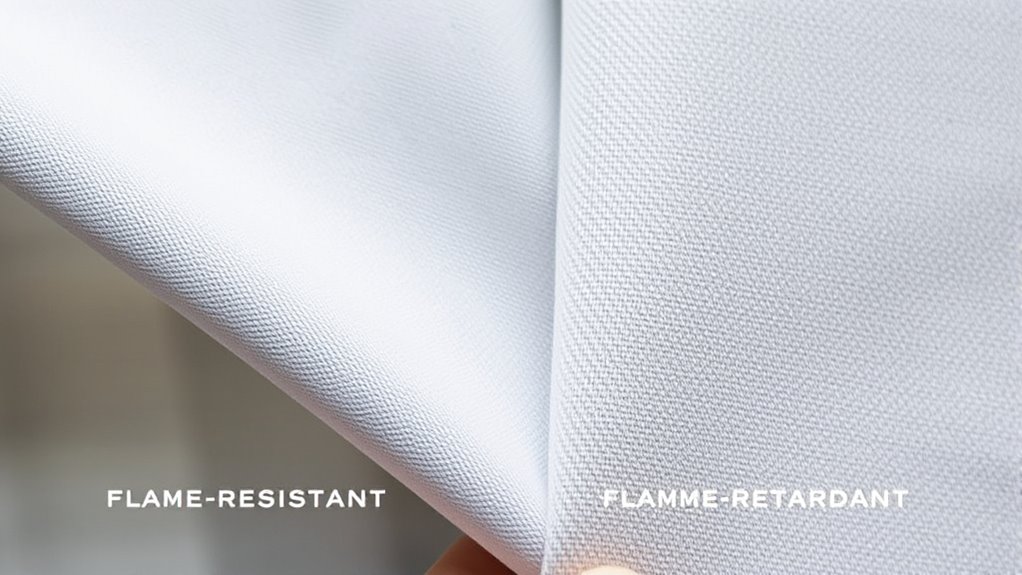

Flame-resistant fabrics are inherently built to resist ignition and self-extinguish quickly, making them highly durable for safety gear. In contrast, flame-retardant fabrics are treated with chemicals that reduce flammability but may lose effectiveness over time and require re-treatment. Understanding these differences helps you choose the right fabric for your safety needs, whether for ongoing industrial use or specific hazards. Continuing further will uncover more about how each fabric performs in various environments.

Get your wardrobe favorites delivered free with Prime
- Fast, free delivery on millions of items
- Prime Video, Amazon Music and more included
- Member-only deals all year
Key Takeaways
- Flame-resistant fabrics are inherently fireproof and self-extinguish, while flame-retardant fabrics are chemically treated and may lose effectiveness over time.
- Flame-resistant textiles maintain their protective properties through multiple washes, unlike flame-retardant fabrics that require re-treatment.
- Fire-resistant fabrics resist ignition and prevent flame spread, whereas flame-retardant fabrics primarily slow down ignition and flame propagation.
- Industry standards like NFPA 2112 test and certify flame-resistant fabrics for durability and safety, while flame-retardant fabrics are tested for ignition delay.
- Using the correct fabric type ensures compliance with safety regulations, especially in electrical and industrial environments, to protect against specific fire hazards.
Are flame-resistant and flame-retardant fabrics truly the same? Not quite. While both types of fabrics are designed to provide protection against flames, they serve different purposes and are created through distinct processes. Understanding these differences is vital, especially when it comes to complying with safety regulations. For instance, arc flash standards specify the kind of protective clothing workers should wear in high-voltage environments. These standards highlight the importance of using fabrics that can withstand unexpected electrical arcs without igniting or melting. To guarantee fabrics meet these standards, manufacturers rely on fabric testing methods that evaluate their performance under specific conditions. These tests simulate real-world hazards, revealing how fabrics react to heat, flames, and electrical arcs, which helps determine whether they qualify as flame-resistant or flame-retardant.
Flame-resistant fabrics are inherently designed to resist ignition and self-extinguish when exposed to flames. They are typically made from fibers that contain flame-resistant chemicals, which are either embedded during manufacturing or applied as a treatment. Because they are inherently flame-resistant, their protective properties are durable and usually last the lifetime of the garment, even after multiple washes. This durability is especially important in industrial settings where safety is vital. In contrast, flame-retardant fabrics are often made from regular fibers like cotton or polyester that are treated with chemical finishes to reduce flammability. These treatments can diminish over time, especially with repeated washing or exposure to harsh conditions, making it necessary to periodically re-treat the fabric to maintain its protective qualities. Additionally, testing methods for these fabrics include assessments of fire spread and how well the fabric maintains its integrity under stress.
The fabric testing methods for these protective textiles are rigorous. For flame-resistant fabrics, tests like vertical flame testing evaluate how quickly a fabric self-extinguishes after exposure. For flame-retardant fabrics, tests assess how well the chemical treatments delay ignition and reduce flame spread. Both testing methods aim to verify whether a fabric can meet industry standards such as NFPA 2112 or ASTM F1959, which specify performance criteria for flame-resistant and flame-retardant materials. These standards are vital for guaranteeing workers’ safety and regulatory compliance.
As an affiliate, we earn on qualifying purchases.
Frequently Asked Questions
Are Flame-Resistant Fabrics Suitable for Everyday Wear?
Yes, flame-resistant fabrics are suitable for everyday wear, especially if you prioritize safety without sacrificing comfort. These fabrics are designed to provide protection while still offering the durability and flexibility needed for casual wear. You’ll find that flame-resistant clothing can deliver daily comfort, making it a practical choice for work environments or activities where safety is a concern. Just choose styles that suit your daily routine and comfort preferences.
How Often Do Flame-Retardant Fabrics Need to Be Treated?
You should treat flame-retardant fabrics according to the manufacturer’s recommended fabric treatment frequency, usually after a certain number of washes. This is essential because treatment durability after washing can decline over time, reducing protective effectiveness. To maintain safety, regularly re-treat the fabric as advised, especially after commercial or industrial laundering. Doing so guarantees the fabric continues to provide the intended flame-resistant properties and stays compliant with safety standards.
Can Flame-Retardant Fabrics Be Washed Without Losing Effectiveness?
You can wash flame-retardant fabrics without losing effectiveness, but you’ve got to be careful—like walking on thin ice. Proper washing techniques help maintain fabric longevity and ensure washing durability. Use mild detergents and avoid harsh chemicals, as these can degrade the treatment over time. Following manufacturer instructions also helps, so your flame-retardant gear stays protective and in top shape longer.
Are Flame-Resistant Fabrics More Expensive Than Flame-Retardant Options?
Yes, flame-resistant fabrics tend to be more expensive than flame-retardant options. This cost difference is mainly due to the advanced manufacturing processes and durable treatments involved, which enhance their safety and longevity. When comparing costs, consider durability factors—flame-resistant fabrics often last longer and maintain their protective qualities through multiple washes, making them a more cost-effective choice over time despite the higher initial price.
Do Flame-Resistant Fabrics Provide Protection Against All Types of Fire Hazards?
Think of flame-resistant fabrics as your reliable shield, but even they have fire safety limitations. They don’t protect against all fire hazards, especially intense or prolonged flames. Their chemical treatment durability can weaken over time or with washing, reducing effectiveness. So, while they offer valuable protection, you shouldn’t rely solely on them for every fire scenario; understanding their boundaries keeps you safer.
Conclusion
Just like Icarus avoiding the sun’s fatal blaze, understanding the difference between flame-resistant and flame-retardant fabrics keeps you safe. While both act as shields against fire’s fury, knowing which to choose is your guide through the perilous sky. With this knowledge, you can navigate your work environment confidently, avoiding the pitfalls of ignorance. Remember, safety isn’t just a myth—it’s your wings, keeping you grounded yet protected in the face of danger.
Halloween Picks
halloween
As an affiliate, we earn on qualifying purchases.