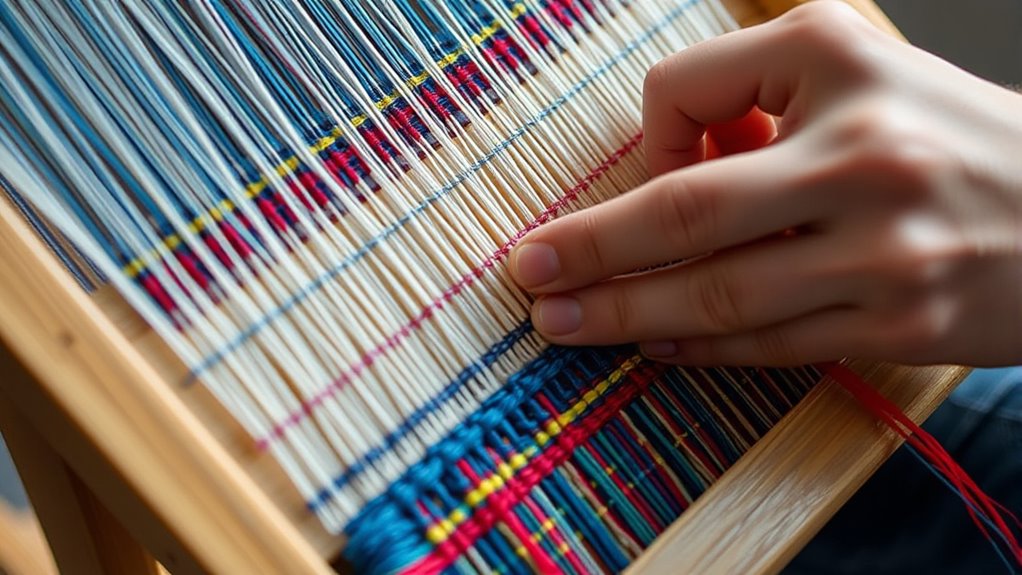

Weaving on a frame loom is a simple, accessible way to create textiles, perfect for beginners and experienced crafters alike. You’ll start by choosing your colors and planning your design, experimenting with patterns like plain weave, twill, or basket weave to add texture. Practice on small pieces to refine your skills and discover your style. With some basic tools and a bit of patience, you’ll soon be making beautiful woven projects—there’s always more to explore ahead.

Get your wardrobe favorites delivered free — and shop member deals
- Fast, free delivery on millions of items
- Access to Prime Big Deal Days deals on October 6–7
- Prime Video, Amazon Music and more included
Key Takeaways
- Start with a simple plain weave to familiarize yourself with the loom and basic technique.
- Choose contrasting or harmonious colors to enhance your design’s visual impact.
- Plan your pattern and color scheme beforehand by sketching to visualize the final piece.
- Practice on scrap pieces to refine tension, technique, and pattern variations before working on your main project.
- Experiment with different weaving patterns and textures, such as twill or basket weave, to develop your skills and style.
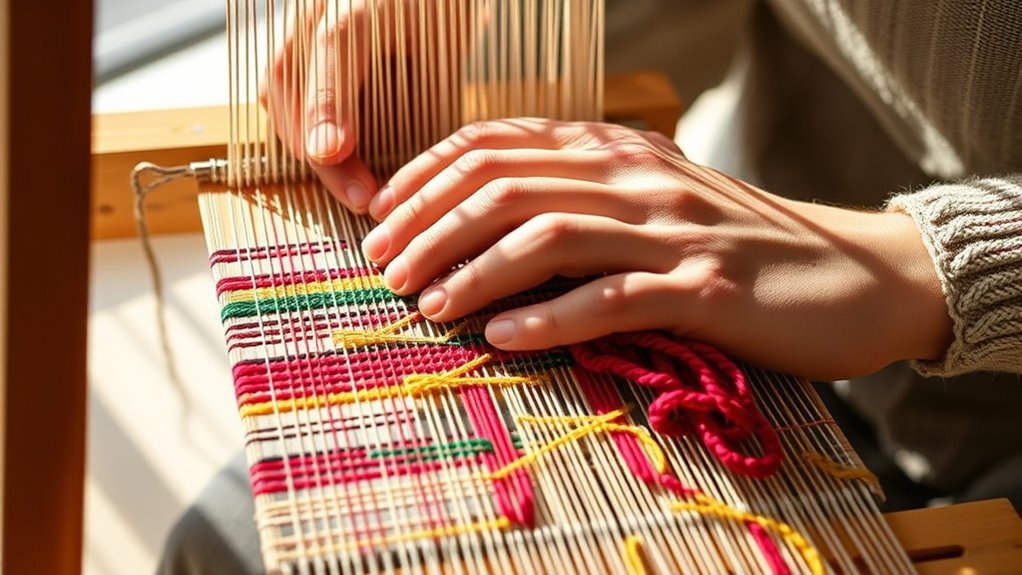
Weaving on a frame loom is a simple and accessible way to create beautiful textiles, whether you’re a beginner or an experienced crafter. It’s an excellent project to start with because it requires minimal equipment and allows you to experiment with different design ideas. One of the most exciting aspects of weaving on a frame loom is choosing your color combinations. By selecting contrasting, complementary, or harmonious colors, you can craft pieces that stand out or blend seamlessly. Think about the mood you want to evoke: vibrant reds and oranges can energize a piece, while soft pastels create a calming effect. Your color choices will influence the overall look and feel of your textile, so take your time to experiment with different palettes before starting your project.
Once you’ve picked your colors, it’s time to contemplate weaving patterns. Patterns add texture and visual interest to your woven piece, transforming it from a simple fabric into a work of art. There are many basic patterns you can try, such as plain weave, where the weft threads go over and under the warp threads in a straightforward manner. As you become more comfortable, you can explore more complex patterns like twill, basket weave, or herringbone. These patterns introduce variations in the way threads cross, creating interesting textures and movement within your woven fabric. You can also combine different patterns within a single piece, playing with stripes, blocks, or chevron designs to make your textile more dynamic.
When planning your project, sketching out your pattern ideas can help you visualize the final outcome. Think about how different weaving patterns will interact with your chosen color combinations. For example, a bold stripe pattern may look striking with high-contrast colors, while a subtle twill can be enhanced by soft, tonal shades. Keep in mind that the choice of pattern influences the tension and density of your weave, so practice on scrap pieces if needed before committing to your main project. As you gain confidence, don’t shy away from experimenting with new patterns and colors. Each project becomes an opportunity to refine your skills and develop your unique style. Additionally, understanding the types of weaving patterns can help you select the most suitable design for your desired textile.
frame loom weaving kit for beginners
As an affiliate, we earn on qualifying purchases.
As an affiliate, we earn on qualifying purchases.
Frequently Asked Questions
What Types of Yarn Are Best for Beginner Weaving?
For beginners, soft, smooth yarns like acrylic or wool blends work best because they have a friendly yarn texture and are easy to handle. Choose yarns with good fiber durability to prevent breakage as you learn. Avoid very thin or slippery yarns at first, as they can be tricky to work with. Starting with thicker, stable yarns helps you master weaving techniques and build confidence quickly.
How Do I Choose the Right Frame Loom Size?
You should choose a frame loom size based on your intended weaving patterns and project size. Smaller looms, around 8×10 inches, work well for practice or small items, while larger ones, like 12×16 inches, suit more detailed designs. Consider loom materials—wood or cardboard—since sturdier materials support broader patterns. The right size helps you work comfortably and achieve the weaving results you envision.
Can I Weave With Recycled or Eco-Friendly Materials?
Absolutely, you can weave with recycled or eco-friendly materials. Using sustainable fibers like organic cotton, hemp, or recycled polyester helps reduce environmental impact. Pair these with eco-friendly dyes to further your sustainability efforts. Just make sure your fibers are strong enough for weaving and compatible with your loom. By choosing eco-conscious materials, you create beautiful, environmentally friendly textiles that align with your values and support a greener future.
How Do I Fix Mistakes or Tension Issues?
Oh, the irony of perfect tension—hardly ever happens, right? To fix tension issues or mistakes, you’ll want to do some tension adjustment by loosening or tightening your warp threads. Carefully remove your weaving, correct the mistake, then re-establish even tension across the warp. This way, you keep your work neat and avoid snagging or uneven weaving, ensuring your project stays on track and looks great.
What Are Some Creative Project Ideas for Beginners?
You can create vibrant textile patterns by experimenting with different color palette choices and simple shapes. Start with projects like small wall hangings, coasters, or bookmarks, which allow you to explore various stitches and color combinations. Mix bold and subtle hues to develop your style and add visual interest. These beginner projects help you build confidence while enjoying the process of designing unique, personalized woven pieces.
Conclusion
Remember, practice makes perfect. With your frame loom ready and a bit of patience, you’ll soon create beautiful woven pieces. Don’t be discouraged if it takes time to get the hang of it—every expert was once a beginner. Keep weaving, stay curious, and enjoy the process. As the saying goes, “Rome wasn’t built in a day.” Before long, you’ll be amazed at what you can craft with a little dedication and your new weaving skills.
Fall Picks
fall essentials
As an affiliate, we earn on qualifying purchases.