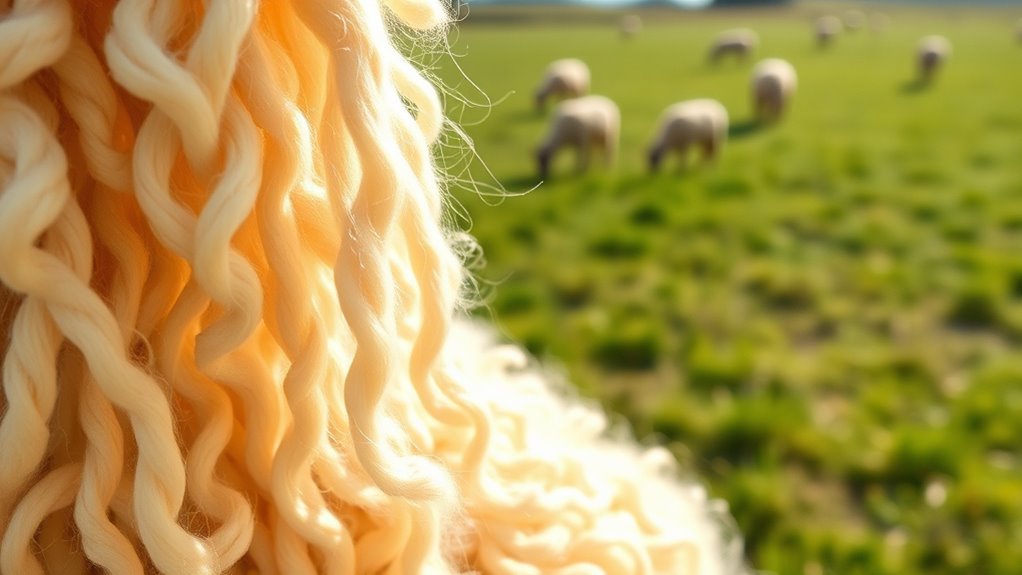
Choosing ethical wool means supporting farm practices that prioritize animal welfare, environmental health, and sustainability. Responsible certifications, like the Responsible Wool Standard, ensure sheep are treated humanely, with access to grazing and proper care. These farms avoid harmful practices, reduce pollution, and promote land conservation. By opting for certified wool, you help promote eco-friendly farming and compassionate treatment of animals. Continue exploring to discover how ethical wool aligns with your values and contributes to a better planet.
Key Takeaways
- Certified ethical wool ensures sheep are raised with humane treatment, respecting natural behaviors and avoiding harmful practices like mulesing.
- Responsible Wool Standard (RWS) certification verifies farms adhere to animal welfare and sustainability standards.
- Ethical wool supports eco-friendly grazing and land management practices that protect biodiversity and soil health.
- Choosing certified wool promotes environmentally conscious fashion by reducing pollution and resource use.
- Ethical wool guarantees high-quality fibers through humane treatment, aligning with values of sustainability and animal protection.

When you choose ethical wool, you’re supporting sustainable farming practices that prioritize animal welfare, environmental health, and fair labor conditions. This means the wool you select isn’t just soft and warm; it’s produced with integrity and responsibility. Wool certification plays a vital role here, serving as a trusted mark that verifies the wool has met strict standards related to sustainability and ethics. Certifications like Responsible Wool Standard (RWS) ensure that farms adhere to rigorous animal welfare standards, which focus on humane treatment and the well-being of sheep throughout their lives. By choosing wool with such certifications, you’re making sure that the animals are raised in environments that respect their natural behaviors, avoid unnecessary stress, and prevent harmful practices like mulesing or overcrowding.
Understanding animal welfare standards is fundamental when shopping for ethical wool. These standards are designed to protect sheep from cruelty and neglect, emphasizing proper shelter, balanced diets, and gentle handling. Farms that meet these standards often allow sheep to graze freely, giving them space to express their natural instincts. The welfare-focused approach also includes regular health checks and prompt medical care, ensuring the animals remain healthy and stress-free. When you buy wool certified under recognized animal welfare standards, you can feel confident that the sheep’s lives are prioritized over profit. This commitment to ethical treatment translates into higher-quality wool, as animals that are treated well tend to produce better, more durable fibers. Additionally, choosing certified wool supports sustainable farming practices, which are essential for reducing environmental impact and promoting ecological balance.
Choosing ethical wool also means supporting environmentally sustainable practices. Certified farms often implement eco-friendly grazing techniques that prevent overgrazing and land degradation, helping to maintain biodiversity and soil health. These farms tend to minimize chemical use and waste, reducing pollution and conserving resources. By opting for wool with credible certification, you’re encouraging a supply chain that values sustainability just as much as animal welfare. This holistic approach ensures that your purchase aligns with your values, promoting a more ethical and environmentally conscious fashion industry.
Frequently Asked Questions
How Can I Identify Truly Ethical Wool Brands?
To identify truly ethical wool brands, you should look at their fiber sourcing and animal treatment practices. Check if they use transparent labels or certifications like GOTS or Responsible Wool Standard, which assure humane treatment and sustainable sourcing. Research their supply chain, and avoid brands that don’t disclose their practices. By prioritizing these factors, you can confidently choose wool that’s both eco-friendly and cruelty-free.
Does Ethical Wool Cost More Than Conventional Wool?
Yes, ethical wool often costs more than conventional wool due to the price difference stemming from sustainable practices and animal-friendly standards. As a consumer, your awareness of these differences influences your purchasing decisions. Ethical wool involves higher costs for fair treatment of animals and eco-friendly processes, which are reflected in the price. While it might be more expensive, you’re investing in sustainability and animal welfare, making your choice more responsible.
Are There Certifications That Guarantee Ethical Wool?
A stitch in time saves nine, and certifications can save your conscience. Yes, there are certifications that guarantee ethical wool, ensuring it meets strict standards for wool farming and animal welfare. Look for labels like GOTS, Responsible Wool Standard (RWS), and Woolmark. These certifications verify that the wool is sustainable, cruelty-free, and responsibly sourced, giving you confidence that you’re supporting ethical practices every time you buy.
How Does Ethical Wool Impact Local Communities?
When you choose ethical wool, you support community empowerment and promote economic development in local areas. By purchasing from certified sources, you help farmers earn fair wages and improve their living standards. This sustainable approach encourages responsible practices, preserves traditional livelihoods, and boosts local economies. Your choice fosters a positive cycle where communities thrive, and eco-friendly wool production becomes a catalyst for lasting social and economic benefits.
Can Ethical Wool Be Used in All Types of Clothing?
Yes, ethical wool can be used in all types of clothing. Its versatility is enhanced through fiber dyeing, which reduces water use and chemical waste, and wool blending, which combines ethical wool with other fibers for different textures and durability. This allows you to create everything from lightweight shirts to warm coats, all while supporting sustainable practices. Ethical wool’s adaptability makes it suitable for virtually any garment you want to produce.
Conclusion
So, as you explore ethical wool, you might find it’s more than just sustainable—it’s a choice that aligns with your values. When you pick animal-friendly, eco-conscious wool, you’re not only helping the environment but also supporting better treatment for animals. It’s funny how what seems like a small decision can connect so deeply to a bigger picture. Ultimately, choosing ethical wool becomes a natural step, turning coincidence into conscious action for a better world.