Hemp is much more sustainable than cotton because it requires less water, grows quickly in just a few months, and naturally resists pests, reducing chemical use. It also improves soil health through its deep roots, minimizing erosion. In contrast, cotton demands large amounts of water and pesticides, which harm the environment. If you want to understand why hemp is a greener alternative and how it benefits the planet, there’s more to explore ahead.
Key Takeaways
- Hemp requires significantly less water and fewer pesticides than cotton, reducing environmental impact.
- Hemp’s rapid growth cycle allows multiple harvests annually, conserving resources and promoting sustainability.
- Cotton cultivation is water- and chemical-intensive, contributing to environmental degradation and ecosystem stress.
- Hemp improves soil health with deep roots, preventing erosion and decreasing dependence on chemical fertilizers.
- While cotton benefits from established infrastructure, hemp’s low resource needs and ecological benefits make it more sustainable overall.
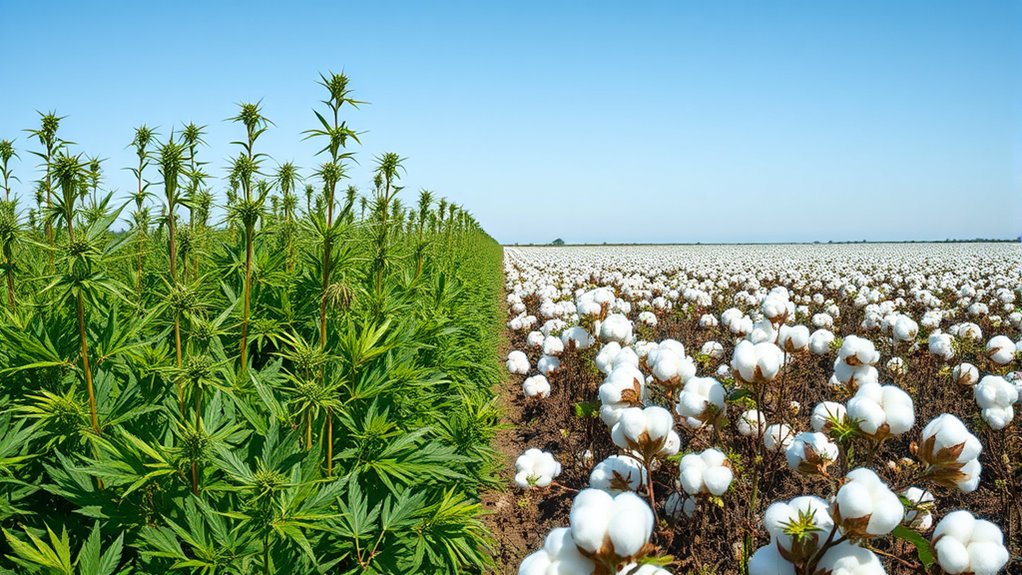
When choosing between hemp and cotton, understanding their environmental and practical differences is essential. Both fibers have unique qualities, but their sustainability impacts can greatly influence your decision. Hemp is often praised for its minimal environmental footprint, while cotton has long been a staple in the textile industry but faces criticism for its resource-intensive cultivation. Knowing the environmental impact and economic viability of each helps you make informed choices that align with your values and needs.
Hemp’s environmental impact is markedly lower than cotton’s. It requires much less water to grow, often thriving in regions with limited rainfall, which reduces strain on local water resources. Additionally, hemp plants grow quickly, usually reaching maturity in around three to four months, allowing for multiple harvests per year. This rapid growth cycle means you can produce more fiber in less time, making hemp a more efficient crop overall. Hemp also has natural pest resistance, meaning farmers don’t need to rely heavily on pesticides or herbicides, which can harm ecosystems and pollute waterways. Its deep roots help prevent soil erosion and improve soil health, reducing the need for chemical fertilizers. These environmental benefits make hemp a more sustainable choice for those concerned about ecological footprints.
From an economic perspective, hemp offers promising viability. Its fast growth cycle and minimal input costs can translate into lower production expenses for farmers. As demand for sustainable textiles increases, hemp’s market is expanding, opening new opportunities for economic growth in the industry. However, hemp still faces regulatory hurdles in some regions, which can impact its widespread adoption. Despite these challenges, the rising consumer interest in eco-friendly products boosts its potential for profitability. Cotton, on the other hand, remains a dominant crop globally because of its established infrastructure and widespread availability. It benefits from a well-developed supply chain, which can sometimes make it cheaper and easier to source. But the economic viability of cotton is increasingly questioned due to its environmental costs. Cotton cultivation consumes vast amounts of water—up to 2,700 liters for a single T-shirt—and relies heavily on pesticides, which add to production costs and raise health and environmental concerns. The increasing pressure for sustainable practices is pushing the industry to seek alternatives, including organic cotton, but these options often come with higher prices.
Frequently Asked Questions
How Does Hemp Impact Soil Health Compared to Cotton?
Hemp improves soil health more than cotton by enriching the soil with nutrients and reducing the need for chemical fertilizers. It’s excellent for soil enrichment because it has deep roots that help prevent erosion and break up compacted soil. Additionally, hemp’s fast-growing nature makes it ideal for crop rotation, which maintains soil fertility and reduces pest buildup, unlike cotton, which often depletes soil nutrients and requires intensive chemical use.
What Are the Water Consumption Differences Between Hemp and Cotton?
You’ll find that hemp generally uses less water than cotton, making it more water-efficient. Hemp’s irrigation needs are lower because it thrives in diverse climates and requires less frequent watering. Cotton, on the other hand, demands significant water for cultivation, especially in arid regions. This difference in water efficiency impacts sustainability, as hemp reduces water consumption and minimizes strain on water resources, making it a more environmentally friendly choice.
Are There Any Economic Benefits of Choosing Hemp Over Cotton?
Choosing hemp over cotton boosts your economic growth potential by tapping into growing market demand. While cotton relies on water-intensive farming, hemp offers a more sustainable crop, reducing costs and environmental impact. This shift can lead to increased profitability for farmers and entrepreneurs, opening new markets in textiles, construction, and eco-friendly products. Embracing hemp not only benefits the environment but also strengthens your economic opportunities in a competitive marketplace.
How Do Pesticide Requirements Differ for Hemp and Cotton?
You’ll find that hemp requires substantially less pesticide usage than cotton, making it a better choice for crop protection. Hemp naturally resists pests, reducing the need for chemical interventions. Cotton, on the other hand, relies heavily on pesticides to protect against insects and diseases. By choosing hemp, you support eco-friendly farming practices, decrease chemical runoff, and promote sustainable agriculture through reduced pesticide requirements.
What Is the Recyclability and Biodegradability of Hemp Versus Cotton?
You’ll find hemp has a higher recycling potential and biodegrades faster than cotton. Hemp fibers break down more quickly in natural environments, making it more eco-friendly after disposal. Cotton, while biodegradable, takes longer to decompose and can release microplastics if processed with synthetic chemicals. By choosing hemp, you support materials with better biodegradation rates and reduced environmental impact, making it a more sustainable option overall.
Conclusion
Ultimately, choosing hemp over cotton can make a real difference for our planet. Hemp’s fast growth, low water needs, and minimal chemical use make it a more sustainable option. Remember, “What’s worth doing is worth doing well,” so by supporting eco-friendly fibers, you’re investing in a healthier Earth. Every small choice counts—opt for hemp and help create a more sustainable future for generations to come.