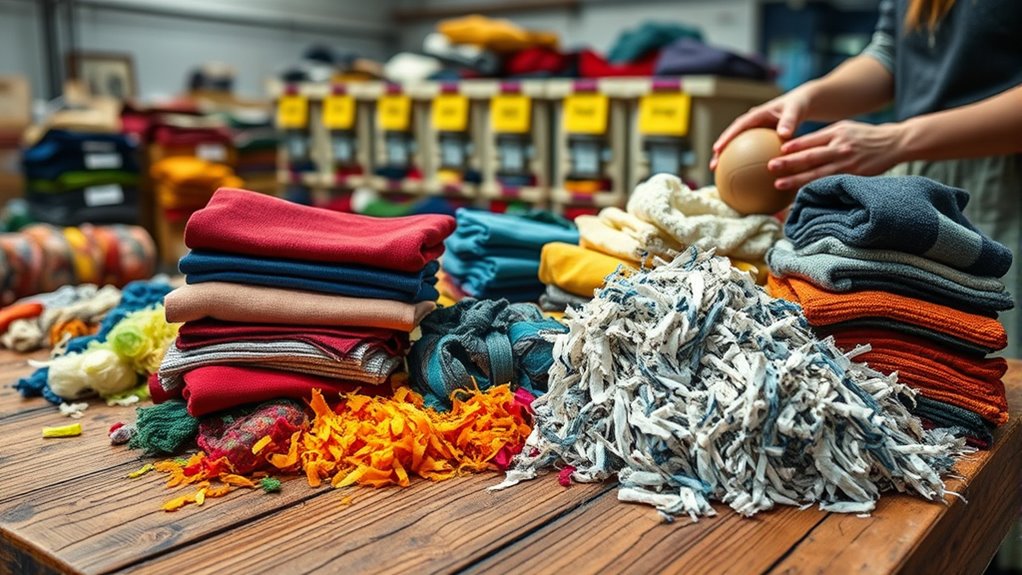

To recycle old clothes, start by donating them to charities, thrift shops, or textile recycling programs that accept fabric scraps. You can also repurpose worn-out garments into cleaning rags, craft projects, or accessories like tote bags and pillow covers. Upcycling keeps your clothes out of landfills and extends their life, helping the environment. To discover more creative ways and eco-friendly tips, continue exploring the best practices for sustainable textile reuse.
Key Takeaways
- Donate clothes to charity shops or clothing drives for reuse and extended lifespan.
- Repurpose or upcycle old garments into new items like bags, rags, or home decor.
- Participate in textile recycling programs that accept fabric scraps and worn-out textiles.
- Use damaged clothing as cleaning rags to prevent waste and promote sustainability.
- Support eco-friendly fashion by choosing brands that incorporate recycling initiatives and sustainable practices.
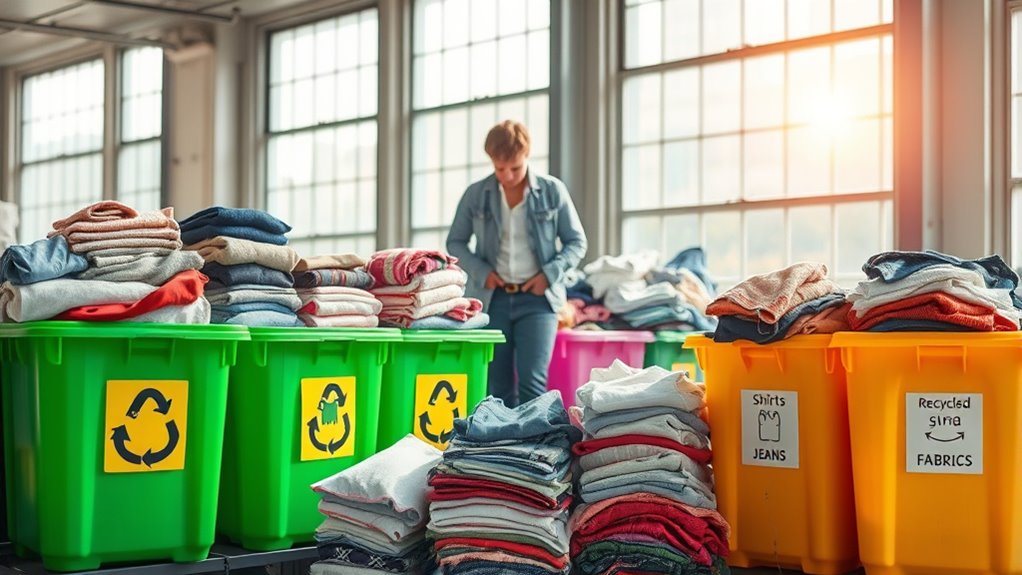
Every year, millions of tons of textiles end up in landfills, contributing to environmental pollution and resource waste. If you want to make a difference, start by exploring simple ways to recycle your old clothes. One effective method is to embrace upcycling techniques, which allow you to transform outdated or worn garments into something new and useful. Upcycling is a creative form of textile waste reduction that not only keeps clothes out of landfills but also gives them a fresh, personalized touch. You don’t need to be a sewing expert; even basic skills can help you convert an old t-shirt into a reusable tote or turn worn-out jeans into stylish patches for other garments.
By applying upcycling techniques, you can extend the life of your clothing, reducing the demand for new textile production. This process minimizes resource consumption, such as water, energy, and raw materials, making it an eco-friendly choice. For example, you might cut up an oversized sweater to create cozy pillow covers or turn a pair of damaged pants into cleaning rags. Upcycling also encourages you to think creatively, using your imagination to reimagine what your old clothes could become. This approach is not only sustainable but also fun, as it allows you to add personal flair and originality to your wardrobe while reducing textile waste.
Implementing textile waste reduction through upcycling also benefits the environment by decreasing pollution caused by textile manufacturing and disposal. When you avoid throwing clothes into the trash, you help slow down the cycle of production and waste. Plus, upcycled items often last longer or serve multiple purposes, further reducing your ecological footprint. If sewing isn’t your strong suit, consider repurposing clothes by donating them to charity shops or textile recycling programs that accept fabric scraps. These initiatives ensure your clothing gets a second life, either through resale or recycling into new raw materials. Engaging in textile recycling can further enhance your efforts to reduce environmental impact and promote sustainable fashion practices.
Top picks for "textile recycl recycle"
Open Amazon search results for this keyword.
As an affiliate, we earn on qualifying purchases.
Frequently Asked Questions
Can I Recycle Mixed Fabric Clothes at Home?
You can’t typically recycle mixed fabric clothes at home because they require fabric sorting, which is complex. At home methods include repurposing or donating if they’re still usable. For mixed fabrics, consider taking them to a specialized textile recycling facility that can handle fabric sorting and processing. This guarantees your clothes are properly recycled, reducing waste and environmental impact. Always check local recycling guidelines for the best options.
Are There Any Environmental Impacts From Textile Recycling?
Yes, textile recycling offers environmental benefits like reducing landfill waste and conserving resources. However, recycling challenges such as sorting mixed fabrics and chemical treatments can impact its efficiency. By participating in recycling programs, you help lower pollution and energy use. While there are some challenges, your efforts make a positive difference for the environment, promoting sustainability and reducing the ecological footprint of your clothing.
How Do I Find Local Textile Recycling Centers?
Start your search for textile recycling centers by scanning nearby clothing donation centers and community centers. Many cities also have dedicated textile waste disposal sites; check local government websites for details. You can also utilize online directories or apps focused on eco-friendly disposal options. Call ahead to confirm accepted items and hours. By doing so, you’ll divert textiles from landfills, making sustainable, smart, and simple strides toward eco-conscious clothing disposal.
What Are the Costs Associated With Professional Textile Recycling?
The costs overview for professional textile recycling varies depending on the facility and services offered. Typically, recycling fees can range from free for drop-offs at some centers to around $10-$30 per bag of clothes. Some recyclers charge based on weight or item type. Be sure to compare options in your area, as costs can differ, but many organizations aim to keep fees affordable to encourage responsible disposal.
Can I Recycle Old Clothes With Stains or Damages?
Sure, you can recycle stained or damaged clothes—think of them as fabric battle scars. First, use stain removal techniques like soaking or gentle scrubbing to revive the fabric’s dignity. Then, perform damage assessment methods to check if the item’s worth recycling or needs repurposing. If the damage is minor, recycling might still be an option; if not, consider upcycling or donating for creative reuse.
Conclusion
By recycling your old clothes, you’re turning clutter into a treasure trove for the planet. Think of your wardrobe as a garden—you can nurture it by giving textiles a second life instead of letting them go to waste. Every small step you take helps reduce pollution and conserves resources. So, embrace your role as a textile hero, and remember: your choices can make a world of difference, one fiber at a time.