Upcycling in textile art involves transforming discarded fabrics into eco-friendly, unique creations that highlight sustainability and creativity. By repurposing materials from thrift stores, scraps, or donation bins, you reduce waste and challenge traditional notions of beauty and value. Techniques like patchwork, embroidery, and dyeing bring new life to old textiles. Embracing upcycling fosters mindful consumption and resourcefulness, inspiring innovative art grounded in environmental respect. Keep exploring to discover how these reclaimed fabrics can inspire your own meaningful projects.
Key Takeaways
- Upcycling transforms discarded fabrics into eco-friendly textile art, promoting sustainability and reducing waste.
- Techniques like patchwork, appliqué, and embroidery maximize the potential of reclaimed materials.
- Creating art from recycled fabrics fosters mindfulness of material history and encourages ethical artistic practices.
- Upcycled textile art challenges consumption norms, highlighting beauty and value in repurposed materials.
- Incorporating themes of growth and transformation emphasizes renewal and resourcefulness in sustainable art.

Upcycling in textile art transforms discarded fabrics into stunning, sustainable masterpieces. When you choose to upcycle, you’re embracing a form of creative reuse that not only reduces waste but also allows your artistic vision to flourish. Instead of tossing out worn-out clothes, scraps, or old textiles, you breathe new life into them, turning what might seem like junk into vibrant, meaningful art. This approach aligns perfectly with sustainable practices, helping to lessen the demand for new materials and decreasing environmental impact. You become part of a movement that values resourcefulness, innovation, and environmental responsibility, creating pieces that are both beautiful and eco-friendly.
Upcycling transforms discarded textiles into beautiful, eco-friendly art that promotes creativity and sustainability.
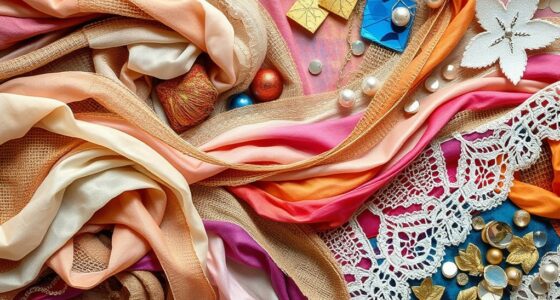
As you immerse yourself in textile art with upcycled materials, you’ll find that each piece tells a story rooted in sustainability. You might gather fabrics from thrift stores, donation bins, or your own closet, selecting textures and colors that inspire you. The key is to see potential in every scrap, envisioning how these remnants can be transformed into intricate quilts, wall hangings, or mixed-media artworks. Creative reuse encourages you to experiment with different techniques—patchwork, appliqué, embroidery, or dyeing—to maximize the potential of each fabric. This process not only challenges your artistic skills but also promotes mindful consumption by making the most of what’s already available.
Using upcycled textiles also fosters a deeper connection to your work. You become more aware of the materials’ history and the journey they’ve taken before reaching your studio. This mindfulness influences the choices you make, urging you to prioritize sustainable practices in every step. When you repurpose fabrics, you’re actively reducing textile waste and contributing to a circular economy, where resources are reused rather than discarded. It’s a responsible approach that emphasizes quality and creativity over mass production, ensuring that your art is meaningful both visually and ethically.
Furthermore, upcycling in textile art challenges societal norms around consumption and waste. It invites you to think differently about what constitutes beauty and value. Instead of chasing new, expensive materials, you learn to see potential in what others might throw away. Your creations become a proof of innovation, resourcefulness, and respect for the environment. By adopting sustainable practices through creative reuse, you help spread awareness and inspire others to see discarded fabrics as opportunities rather than trash, fostering a more mindful and sustainable artistic community. Incorporating second trimester overview knowledge can also inspire themes of growth and transformation within your work, emphasizing the beauty of renewal and change.

100g Silk Fabric Scraps, Recycled, Upcycled, Waste Remnants, Mystery Bag Lot, Mixed Fabric, Silk for Nuno
- Weight: 100g silk fabric scraps
- Material: Recycled and upcycled silk
- Contents: Mixed fabric remnants
As an affiliate, we earn on qualifying purchases.
As an affiliate, we earn on qualifying purchases.
Frequently Asked Questions
How Do Artists Select Fabrics for Upcycling Projects?
You select fabrics for upcycling projects by considering fabric texture and how well colors harmonize. You look for textures that add visual interest and complement your design, avoiding fabrics that are too fragile. You also guarantee the colors blend or contrast effectively to enhance your artwork’s overall aesthetic. By combining tactile variety with thoughtful color harmony, you create compelling, sustainable textile art that resonates visually and tactually.
What Tools Are Essential for Upcycling in Textile Art?
You need essential tools like sharp scissors, rotary cutters, and sewing needles for upcycling in textile art. Don’t forget a fabric sorting tray to keep pieces organized and easily accessible. Maintaining your tools is vital—clean blades and sharp needles make your work smoother. Think of your tools as your best allies; keep them in top shape, and your creativity will flow seamlessly, turning old fabrics into stunning art.
How Can Upcycled Textiles Be Preserved Long-Term?
To preserve your upcycled textiles long-term, you should focus on preventing fabric aging. Use preservation techniques like gentle cleaning, avoiding direct sunlight, and storing pieces in acid-free containers. Regularly check for signs of deterioration, and handle textiles with clean hands. Applying archival sprays or sprays that block UV rays can also help extend their life. These steps ensure your upcycled textile art remains vibrant and intact for years to come.
Are There Eco-Friendly Dyes Suitable for Reclaimed Fabrics?
Did you know that natural dyeing accounts for over 15% of eco-friendly textile practices? You can use eco-friendly dyes suitable for reclaimed fabrics by choosing natural dyes derived from plants, minerals, or insects. They’re biodegradable and non-toxic. While synthetic alternatives exist, they often contain harmful chemicals. Natural dyeing not only enhances your art’s sustainability but also adds unique, vibrant hues to your reclaimed textiles.
How Does Upcycling Impact the Value of Textile Art?
Upcycling boosts the value of textile art by emphasizing its uniqueness and sustainability, which appeals to eco-conscious collectors. You benefit from environmental benefits, as it reduces waste and minimizes resource use. Economically, upcycled art can command higher prices due to its originality and eco-friendly message, attracting a niche market. Additionally, it encourages creativity and innovation, making your work stand out while supporting sustainable practices that positively impact the environment.
Conclusion
By embracing upcycling in textile art, you transform discarded fabrics into stunning creations, proving that waste can become wonder. Just as old garments gain new life through your hands, your art challenges the notion of value, blending sustainability with creativity. In this act, you forge a delicate balance—between what’s broken and whole, discarded and cherished—highlighting that beauty often emerges from the most unlikely sources, inviting viewers to see the extraordinary in the overlooked.