Tensile strength and fabric testing measure how well textiles withstand pulling forces without breaking. You’ll apply controlled tension to small fabric samples, and sensors record how much they stretch and recover. These tests follow standard procedures to guarantee accuracy and consistency, helping you verify fabric durability, elasticity, and quality. Understanding these testing methods can improve your ability to select and evaluate fabrics that last longer and perform better—if you’re curious, there’s more to explore.
Key Takeaways
- Tensile strength measures a fabric’s ability to resist breaking under tension during stretching tests.
- Fabric testing involves applying controlled force to samples to assess elasticity, strength, and recovery.
- Standardized procedures ensure consistent, reliable results for fabric durability and performance evaluation.
- Tensile testing helps identify fabric weaknesses, ensuring textiles meet safety and quality standards before production.
- Results inform manufacturers on fabric suitability for specific uses, ensuring longevity, comfort, and proper fit.
Have you ever wondered how manufacturers guarantee fabrics meet quality standards before reaching your wardrobe? It all comes down to fabric testing, a pivotal process that ensures durability, comfort, and safety. One of the most important aspects of fabric testing involves examining fiber elasticity, which determines how well a fabric can stretch and return to its original shape. This characteristic affects everything from garment fit to longevity. To accurately assess fiber elasticity, manufacturers rely on specific testing procedures designed to simulate real-world stress and strain on textiles. These procedures involve carefully stretching fabric samples to measure their ability to elongate and recover without damage. This way, they can predict how the fabric will perform during wear and washing, helping to prevent issues like sagging, wrinkling, or tearing.
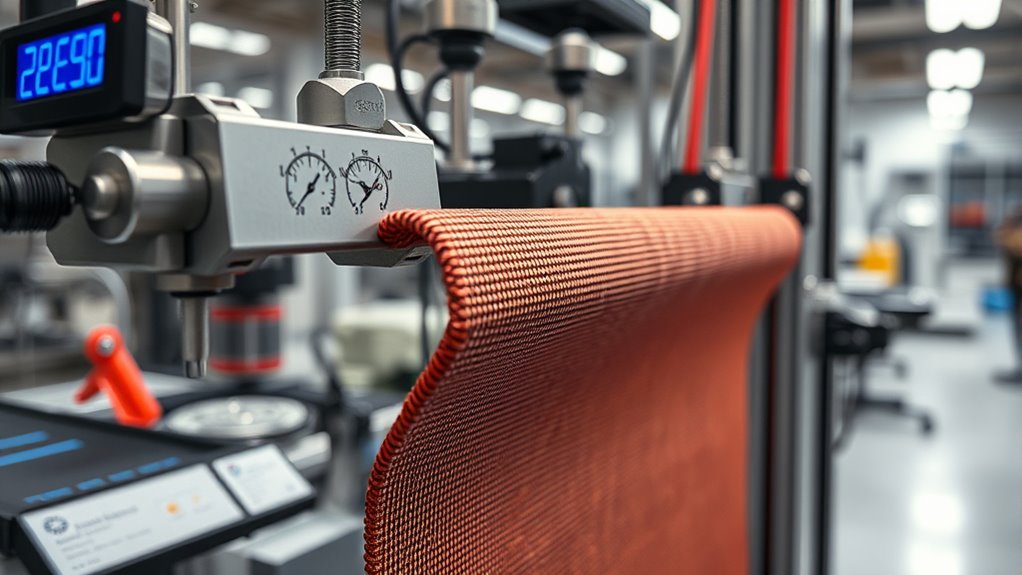
The testing procedures for fiber elasticity are standardized to guarantee consistency and reliability. Typically, a small fabric sample is securely clamped in a testing machine, which then applies a controlled force to stretch the fabric. As the fabric elongates, sensors record the amount of stretch and the force required to achieve it. Once the maximum stretch is reached, the machine gradually releases the tension, and the fabric’s recovery is closely monitored. This process provides essential data on how elastic the fibers truly are and whether they meet the required performance standards. It’s not just about how much a fabric can stretch, but also how well it bounces back. High elasticity indicates that the fibers can endure repeated stretching without losing their shape, which is essential for activewear, sportswear, and fitted garments.
Additionally, understanding the testing standards helps ensure that fabrics are safe and reliable for consumers, reducing the risk of product failure. These testing procedures are indispensable because they help manufacturers identify potential defects or weaknesses in the fabric before it reaches consumers. If a fabric fails to meet the specified fiber elasticity parameters, it might be prone to premature wear or deformation. By catching these issues early, producers can improve their manufacturing processes or select better raw materials, ensuring only high-quality fabrics make it to your closet. Fiber elasticity testing also plays a role in quality control during production runs, allowing manufacturers to maintain consistency across batches. Overall, understanding these testing procedures gives you confidence that the clothes you wear are designed to last, retain their shape, and provide the comfort you expect. It’s a meticulous process that combines science and craftsmanship, all working behind the scenes to deliver the durable, well-fitting garments you rely on daily.
Frequently Asked Questions
How Does Fabric Weave Affect Tensile Strength?
The weave pattern directly impacts fabric tensile strength by influencing fabric density. Tighter weaves, like plain or twill, increase density and enhance strength, making fabrics more resistant to tearing. Looser weaves, such as satin, reduce fabric density and weaken tensile strength. So, when selecting fabrics, consider the weave pattern, as it determines how well the fabric withstands tension and stress during use.
What Are Common Causes of Fabric Failure During Testing?
Your fabric might fail during testing due to seemingly minor issues that become major catastrophes. Fiber degradation weakens the material over time, while manufacturing defects like inconsistent weaving or flawed finishes create weak points. These flaws can cause sudden, dramatic tears under stress, making the fabric appear far less durable than it truly is. Addressing these issues early guarantees your fabric withstands the test, avoiding catastrophic failures during critical applications.
How Do Environmental Conditions Influence Test Results?
Environmental factors like temperature, humidity, and light can substantially influence your test results by affecting fabric properties. High humidity may weaken fibers, while extreme temperatures can alter tensile strength measurements. To guarantee testing accuracy, you need to control these conditions carefully, maintaining consistent environmental parameters. This helps you get reliable, repeatable data, ensuring your fabric performance evaluations truly reflect real-world conditions.
Can Fabric Testing Predict Real-World Durability?
Yes, fabric testing can predict real-world durability. By analyzing fiber elasticity and applying various testing methodologies, you can assess how fabrics respond to stretching, wear, and environmental stress. These tests simulate real-life conditions, helping you understand how the fabric will perform over time. Although no test can guarantee perfect durability, combining fiber elasticity insights with testing methodologies provides a strong indication of a fabric’s long-term resilience.
What Standards Govern Tensile Testing Procedures?
You should follow standards like ASTM D5034 or ISO 13934-1 for tensile testing procedures. These protocols ensure consistent testing of fabric material fatigue and strength. By adhering to these guidelines, you obtain reliable data on how fabrics perform under stress, helping predict real-world durability. Always verify that your testing setup matches the specific standards, so your results are accurate and comparable across different tests and applications.
Conclusion
Now that you know the essentials of tensile strength and fabric testing, you’re practically a fabric-testing superhero! Remember, understanding these tests can mean the difference between a fabric that holds up under pressure and one that falls apart like a house of cards. So, keep experimenting, stay curious, and don’t underestimate the power of a thorough test — it’s your secret weapon for fabric perfection! Stay sharp, and let your newfound knowledge elevate your textile game to legendary heights.