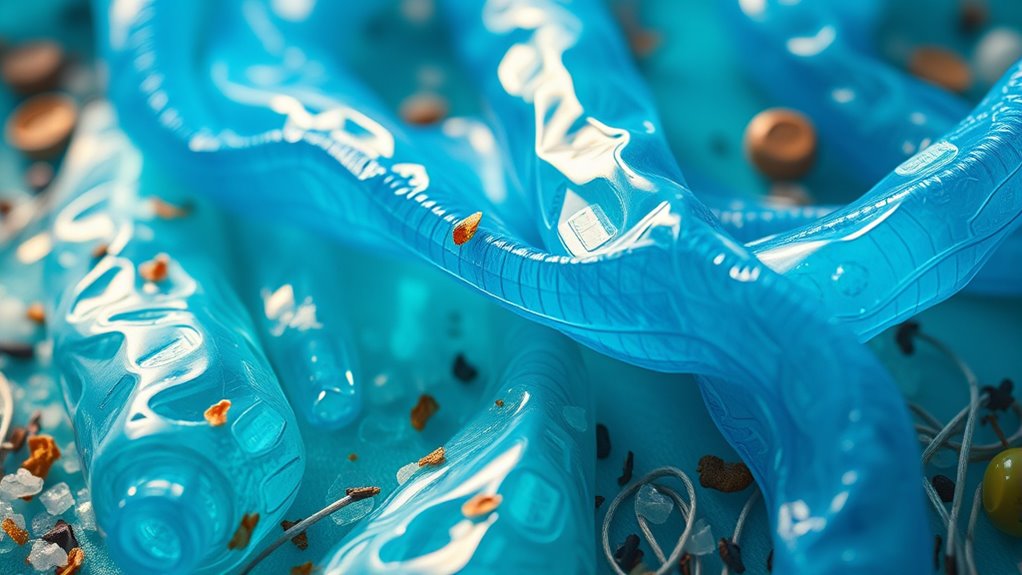

Turning bottles into clothes involves collecting and cleaning discarded ocean plastic and PET bottles, then shredding them into small flakes. These flakes are melted and extruded into fibers, which are woven into fabrics for fashion. This process helps reduce waste, prevent pollution, and promote sustainability in the industry. As more brands embrace this innovation, you’ll see eco-friendly fashion become more accessible and stylish—if you keep exploring, you’ll discover how it all works behind the scenes.
Key Takeaways
- Used bottles are collected, cleaned, and shredded into small flakes as the first step in recycling ocean plastic.
- The plastic flakes are melted and extruded into fibers suitable for textile production.
- These fibers are woven into fabrics used to manufacture clothing and accessories.
- Incorporating ocean plastic into apparel helps reduce ocean pollution and promotes sustainability.
- This process supports a circular economy, making eco-friendly garments more accessible and encouraging responsible consumption.
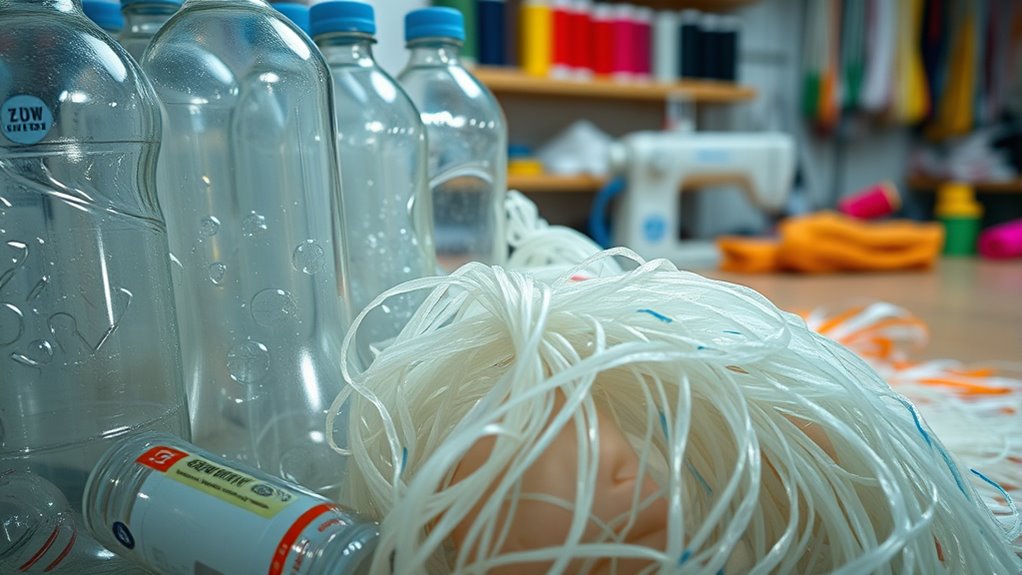
Many innovative designers are turning discarded bottles into stylish, eco-friendly clothing, proving that waste can be transformed into something useful and beautiful. This shift highlights the power of recycling innovations, which are pushing the boundaries of sustainable fashion. This approach not only reduces waste but also demonstrates that sustainability and style can go hand in hand.
Innovative designers turn discarded bottles into stylish, eco-friendly fashion, proving waste can be transformed into beauty and function.
The process begins with collecting and cleaning used bottles, often made of PET plastic, which is highly recyclable. Through advanced recycling innovations, these bottles are shredded into small flakes, then melted down and extruded into fibers. These fibers are woven into textiles that can be used to create a wide range of clothing items, from t-shirts to dresses. By transforming ocean plastic and other discarded bottles into fabric, the fashion industry is taking a *vital* step toward a circular economy—where waste materials are continually repurposed rather than discarded.
Incorporating recycled materials into clothing helps address environmental concerns associated with traditional textile production, which is often resource-intensive and pollutes the planet. When you choose garments made from recycled ocean plastic or bottles, you’re supporting sustainable fashion initiatives that prioritize reducing carbon footprints and conserving natural resources. These innovations in recycling are making it possible for brands to produce high-quality, durable clothing that doesn’t compromise on style or comfort.
Sustainable fashion isn’t just a trend; it’s a movement driven by technological advancements and a growing awareness of environmental issues. As a consumer, your support for brands that use recycled ocean plastic and bottles sends a powerful message: you value products that are eco-conscious and ethically produced. This encourages more companies to invest in recycling innovations, further expanding the availability of sustainable clothing options. Over time, this shift can lead to a more responsible fashion industry, where waste is minimized, and the impact on our planet is *considerably* reduced.
Ultimately, turning bottles into clothes is proof that innovation can lead to positive change. By embracing these new materials and supporting sustainable fashion, you’re helping to reduce ocean plastic pollution and promote a more sustainable future. Recycling innovations continue to evolve, making it easier and more affordable to create stylish, eco-friendly garments from what was once considered waste. Your choices, *thus*, play a *key* role in shaping a cleaner, greener world—one fashionable piece at a time. recycling innovations
Top picks for "ocean plastic fabric"
Open Amazon search results for this keyword.
As an affiliate, we earn on qualifying purchases.
Frequently Asked Questions
How Durable Are Fabrics Made From Recycled Ocean Plastics?
Fabrics made from recycled ocean plastics are quite durable, offering good fiber longevity and wear resistance. You’ll find that these materials withstand daily use, resisting tears and stretching over time. While not as fragile as some other fabrics, they still maintain their quality after multiple washes. So, if you choose clothing made from recycled ocean plastics, you can expect it to last, providing both eco-friendliness and resilience for your wardrobe.
What Is the Environmental Impact of Recycling Plastics Into Textiles?
Recycling plastics into textiles helps reduce microplastic pollution by repurposing waste that might otherwise end up in oceans. It also lowers your carbon footprint compared to traditional fabric production, which is energy-intensive. However, the process can generate microplastics during washing, contributing to environmental harm. Overall, it’s a positive step toward sustainability, but you should be aware of potential microplastic release and support innovations to minimize this impact.
Are There Any Health Risks Associated With Wearing Recycled Plastic Clothing?
Wearing recycled plastic clothing is like walking on a tightrope, with potential health risks lurking. You might face microplastic exposure as tiny fibers shed from the fabric, and chemical leaching could introduce harmful substances to your skin. While many textiles are tested for safety, it’s wise to stay informed about the materials used and wash your clothes regularly to reduce these risks. Staying cautious helps you enjoy eco-friendly fashion safely.
How Does the Cost of Recycled Ocean Plastic Clothing Compare to Traditional Fabrics?
You’ll find that the cost comparison between recycled ocean plastic clothing and traditional fabrics varies. Usually, recycled plastic tends to be slightly more expensive due to processing costs, but market affordability is improving as technology advances. While it might cost more upfront, many see it as a worthwhile investment in sustainability. Over time, as production scales up, expect recycled ocean plastic clothing to become more competitive price-wise.
Can Recycled Plastic Fabrics Be Recycled Again at the End of Their Life?
Yes, recycled plastic fabrics can be recycled again. While the plastic reuse process extends the textile lifecycle, it’s not always infinitely recyclable. Over time, fibers may degrade, making recycling less effective. You can keep these fabrics in circulation longer by recycling them at the end of their life, but some quality loss occurs. Ultimately, it’s a step toward reducing waste and conserving resources, yet continuous innovation is needed for better recyclability.
Conclusion
Now, imagine yourself as a hero, transforming trash into treasure with every choice you make. By turning ocean plastic bottles into fashionable fabrics, you’re not just dressing yourself — you’re helping to heal the planet’s wounds. Each piece of clothing made from recycled bottles is like a drop of hope in a vast ocean of change. Together, we can weave a future where waste becomes wonder, and the Earth breathes a little easier.